






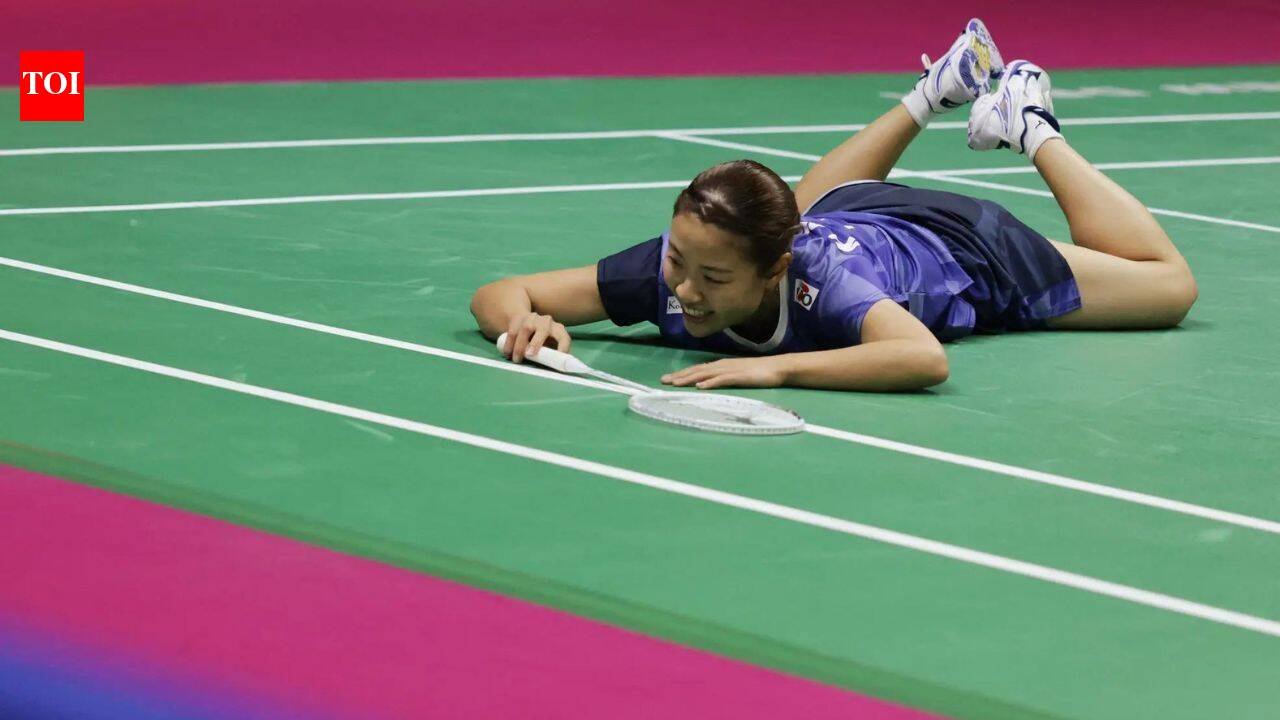

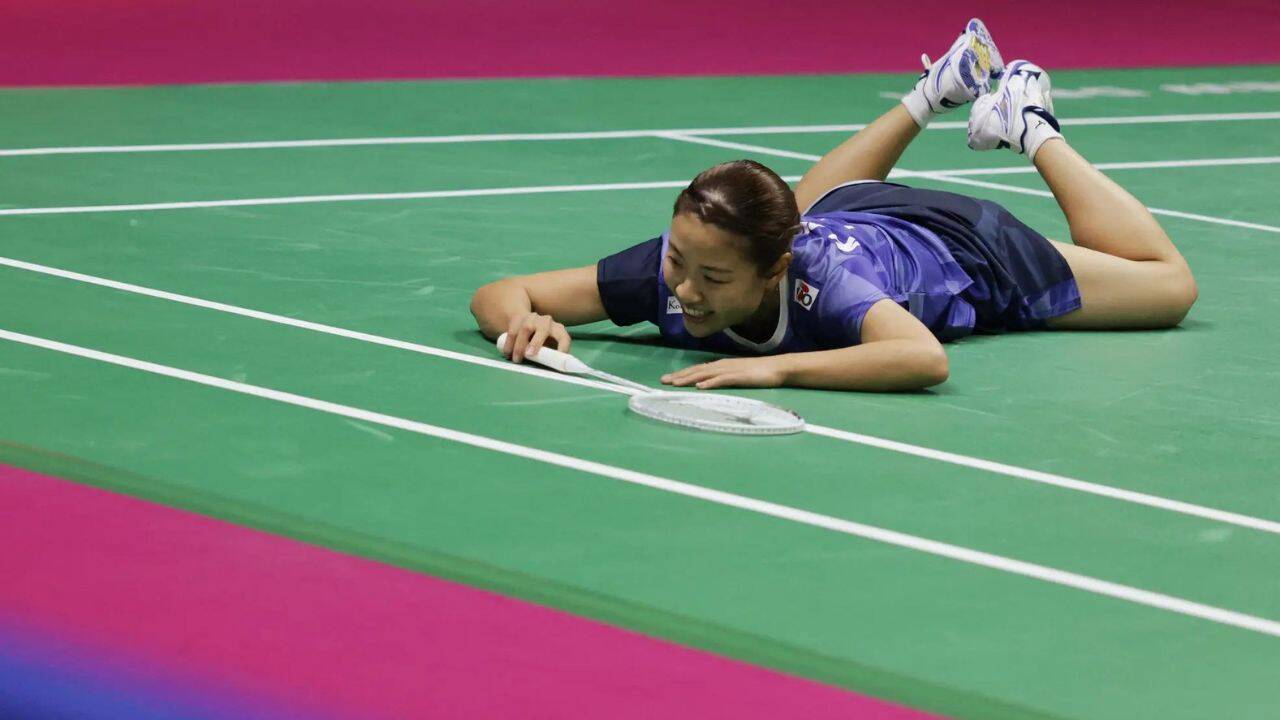
NEW DELHI: It was Day 5 of the BWF World Championships in New Delhi, but the smooth rhythm of the tournament was suddenly disrupted. Injuries to Thailand’s Dechapol Puavaranukroh and Japan’s Nozomi Okuhara, both suffering from knee problems, put the organisers on alert and threw a carefully choreographed schedule into disarray.Dechapol, playing in the mixed doubles competition alongside Supissara Paewsampran, was forced to give eventual gold medallists Thom Gicquel and Delphine Delrue a walkover. A recurring right knee injury, meanwhile, saw Okuhara hand Pornpawee Chochuwong, who went on to claim the bronze medal, a passage into the last four of the women’s singles draw.The Thai combination were due to play first on Court 1, while Okuhara vs Chochuwong was scheduled as the fourth match. In a sport where the schedule runs according to the matches preceding it, India’s Gayatri Gopichand and Treesa Jolly were moved from fifth to third on Court 1.In another shuffle, Alwi Farhan vs Chou Tien Chen was moved from Court 2 to Court 1 to follow the men’s doubles clash between Satwiksairaj Rankireddy/Chirag Shetty and Liang Wei Keng/Wang Chang.The requirement to come on court early didn’t hamper Jolly-Gopichand, or the boisterous crowd, as they went on to win and ensured at least a bronze medal for India.But not everyone was pleased with the scheduling over the course of the week.
France’s Christo Popov and Toma Junior Popov (File)
France’s Toma Junior Popov arrived much before 9 am for his singles first-round match against Dominik Kwinta on August 17, winning 21-19, 21-13. He was again on court a couple of hours later for his men’s doubles match alongside brother Christo Popov. The French duo went down tamely in 39 minutes, and Toma wasn’t happy with the scheduling.
I returned as fast as possible and came back for the next doubles and be ready. Even if I was not 100% in the doubles… I think I did my best
Toma Junior Popov
“It was really tough to recover. I didn’t feel good when I went on the court. I have no idea why the referee put me so close (in the) schedule. I did my best, so I tried to do the best recovery I could and to eat properly,” he told the media.“(I returned) as fast as possible and came back for the next doubles and be ready. Even if I was not 100% in the doubles… I think I did my best,” he continued.In July, PV Sindhu was left equally perplexed by the scheduling. After losing to Chen Yufei at the China Open, she rued the inconsistency in the break between matches for herself and her opponent.“About 16 hours for me between matches. 24+ hours for my dear friend Chen tomorrow after having a full day off before facing me today,” she wrote on X, earlier Twitter.“Lovely to see recovery being given the importance it deserves. Funny how schedules have a way of taking care of recovery. I only wish they took care of everyone the same way,” she continued.The 2016 Senior National Badminton Championships, however, takes the cake. Held in Chandigarh, B Sai Praneeth warmed up past midnight, Anand Pawar took the court at 1:30 am and Sameer Verma’s match only began at 2:40 am. As play finally culminated at 3 am, 231 matches had been played over the course of 18.5 hours!
BWF President hails India after successful World Championships in New Delhi
The World Championships in New Delhi last week were not as dramatic.A total of 64 matches were scheduled on the first three days across the four courts. It dwindled to 40 matches on Day 4, 20 matches on two courts on Day 5, 10 matches on a single court on the penultimate day and five medal matches on the concluding day.The delicate act of planning the schedule sat at the disposal of tournament referee Chris Lawrence of the USA, supported by deputy referees Lynne Nixey, Nicos Vladimirou and Carmen Martinez.Each evening, after the day’s play concluded, the tournament referee took multiple factors into consideration before signing off on the day’s order of play. These factors included any requests from the host broadcaster (JioStar), the host federation (Badminton Association of India) and any considerations from the governing body (BWF), while keeping player safety in mind.
Bronze medallists India’s Gayatri Gopichand, left, and Treesa Jolly pose for photographs after wiining bronze medal in the women’s doubles badminton event during the BWF World Championships, at IGI Stadium, in New Delhi. (PTI Photo)
As a result, players who were involved in both doubles and singles draws were given breathing room to recover between matches. Subsequently, with two courts televised, Court 1 and Court 2, the local players were given preference. PV Sindhu played all her matches on Court 1. Ayush Shetty, who sent World No. 1 Shi Yu Qi packing in the first round, was also given the same billing. The same approach was taken for eventual bronze medallists Treesa Jolly and Gayatri Gopichand.There is no perfect order of play. Every schedule is a compromise between television demands, player recovery, crowd interest and the unpredictability of injuries and marathon matches. The World Championships showed both sides of that balancing act, moments of frustration for some players, but also enough flexibility for organisers to adapt on the fly without derailing the tournament.


