








‘It is time that the UN moved to enhance its transparency and remake its ties with the people of the world, and not just the governments’
| Photo Credit: AP
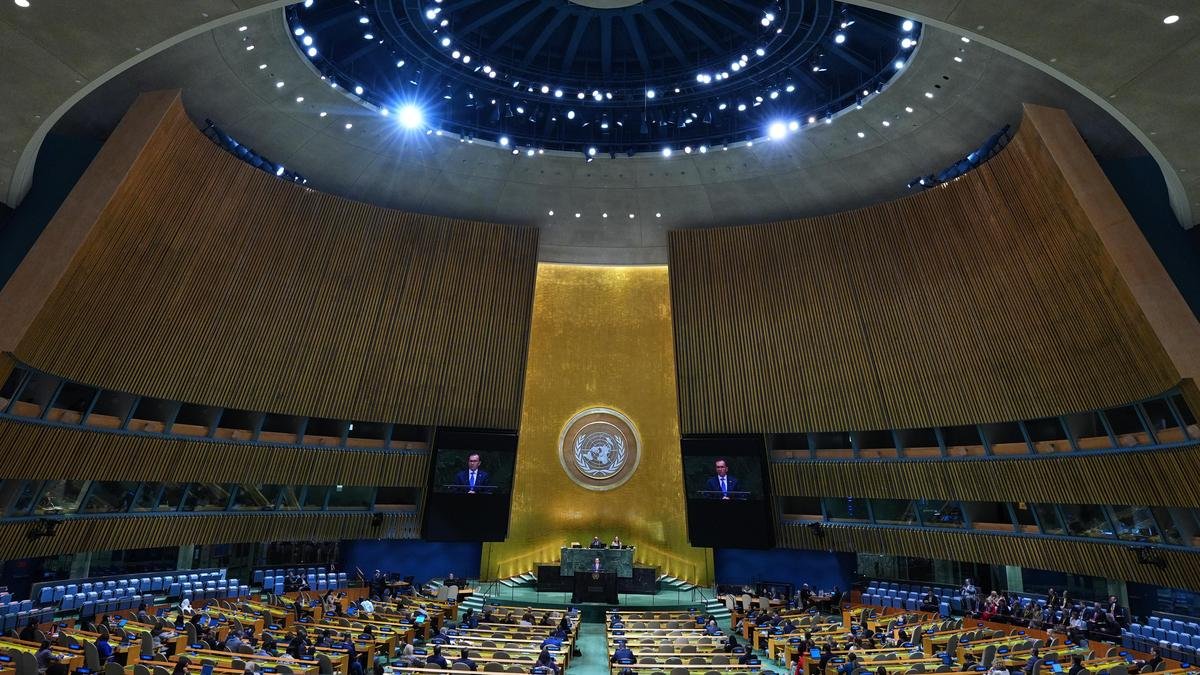
As world leaders gathered in New York for the high-level week of the 81st United Nations General Assembly, they debated an increasingly urgent question: trust. This year’s theme, chosen by wide-ranging consultations, was: “Restoring Trust, Managing Transformation: a UN that delivers for all” — with “restoration” suggesting a collapse of trust. The world has historically been a low-trust society. Mistrust between nations has fuelled conflict throughout history. The UN was hence established after the Second World War to make the actions of nation-states more predictable, by creating a space for dialogue and an elaborate scaffolding of international law. The game of thrones would still be played, but with some rules. The UN has been one of humanity’s greatest achievements precisely because of its ability to build and channel trust between nations.
Surveys about the UN
But over the past three decades, that ability has frayed. Where once UN staff designed and seeded “trust-building” approaches between conflicting parties as part of peacebuilding, today the organisation is in a place where it needs to restore trust in its own approaches. Two surveys conducted last year by Edelman Trust and Pew found that both trust in and favourability towards the UN had declined in the countries surveyed.
A new poll by the non-profit UN Foundation found that 52% of respondents feel the UN is struggling to deliver results and want deep structural reform. Well over half believe that it has struggled to enforce international law and protect human rights, and that it is dominated by a few powerful countries. Another poll by the Rockefeller Foundation and Focaldata suggests that only 58% think that the UN can lead efforts to solve global problems, potentially a historic low for the organisation. There are at least four reasons for this situation. First, the persistent deadlock in the UN Security Council (UNSC) has eroded the General Assembly’s trust in the UNSC, so much that a resolution was passed (A/76/262) requiring the UNSC’s permanent members to explain each new use of veto to the Assembly.
Second, questions persist about the integrity and oversight of the UN’s internal processes ranging from recruitment, procurement to allocation of resources. When high-profile controversies such as a procurement scandal in Afghanistan (2013) or sexual exploitation and abuse cases involving peacekeepers (2017) or contracts for non-existent housing projects in Ghana and India (2021) broke out in the UN, the blame was placed on individuals but systemic accountability was seldom addressed. Consequences for individual malfeasance have been limited.
Financial muscle is a factor
Third, a few countries have come to prevail over the UN system on the strength of their financial contributions. They wield influence through advocacy for their nationals to be recruited into the system, extra-budgetary grants for cherry-picked UN programmes or a combination of the two. For instance, a 2024 report of the UN’s highest financial oversight body (ACABQ) pointed out that in one UN agency, eight out of nine technical experts recruited were sponsored by a single government. In such a case, can the policies recommended to a beneficiary country by the entity be deemed completely neutral? The UN development system’s transparency about its own programme spending too is increasingly limited to these donor governments and not to the public of their beneficiary countries. When it comes to preventing conflict, a fear of upsetting these powerful countries — which in turn could affect contributions as well as individual careers — has made the UN bureaucracy increasingly risk-averse and hesitant.
Fourth, though the bulk of the UN’s programme delivery is in the Global South and trust in the UN is higher in the Global South (UN Foundation poll), only a fraction of the decision-making power rests with the Global South. Developing nations, which account for 84% of the world’s population, hold only 44% of UN civil service leadership positions. Only a third of the UN leadership in Africa is African. Only two-fifths of the cities in which various UN entities have headquarters are cities in the Global South. When, as part of a cost-cutting measure, thousands of posts were moved out of New York and Geneva in 2025, cities in the Global South (except those mentioned) got a miss despite their cost advantages.
Reverse the shrinking space
The UN commendably delivered global humanitarian assistance and protection in 2025-26 to 98 million people, or roughly 1.1% of the world population. But aid effectiveness and the proportion of funds transferred to local actors remains an issue.
In wars such as Ukraine, Gaza and Iran, the UN made tactical interventions such as keeping grain exports flowing through the Black Sea, or preventing an oil spill in the Red Sea, but could not build on the goodwill thus earned to create mechanisms for the belligerents to sit and talk. Taking the initiative to facilitate peacemaking has become untenably centralised at the highest rungs of the organisation’s bureaucratic ladder.
It is time that the UN moved to enhance its transparency and remake its ties with the people of the world, and not just the governments. The United Nations is more than an inter-governmental organisation. It reflects the best of humanity’s hopes for itself. The “transformation” that the 81st General Assembly aims for, would indeed have to start, by restoring trust.
Raja Karthikeya is Adjunct Fellow, Takshashila Institution
Published – September 30, 2026 12:08 am IST


