


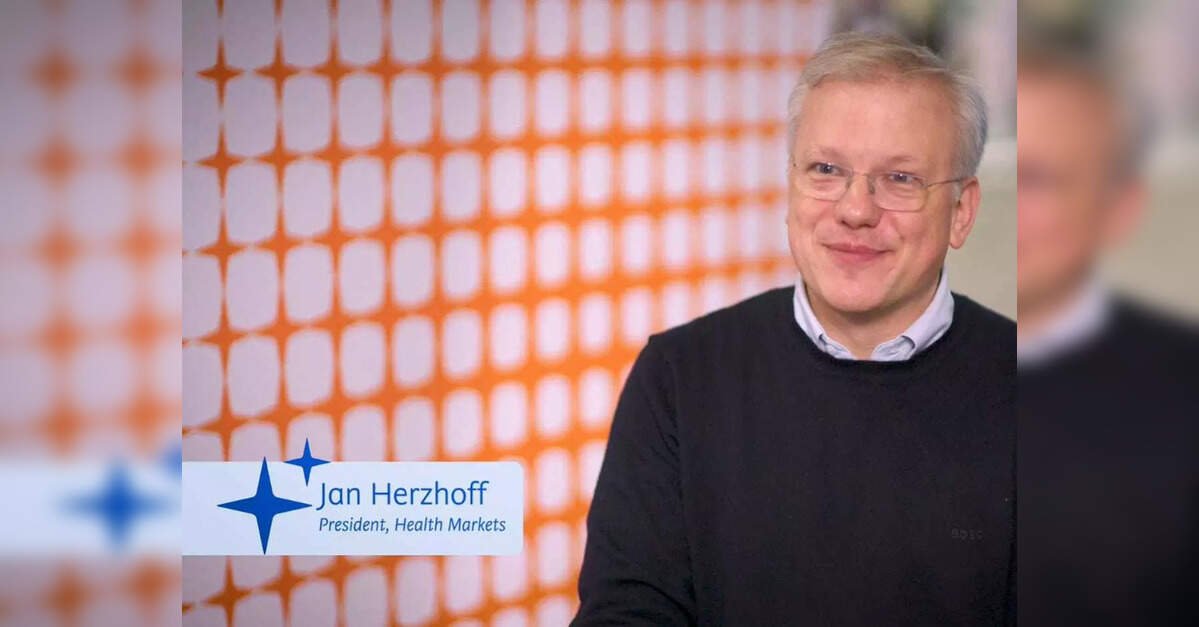
New Delhi: The concerns of de-skilling due to the use of artificial intelligence can be addressed when critical thinking is combined with expanding knowledge base, instead of solely relying on AI’s response, says Jan Herzhoff, president of global health businesses at the Dutch academic publisher Elsevier.
Herzhoff, who was attending the India AI Impact Summit 2026 from February 16-20, reflected on a 2025 study in The Lancet Gastroenterology and Hepatology journal and said that de-skilling happens when clinicians don’t apply critical thinking and rely on “that little answer chunk” before moving to the next patient.
The study found that the rate at which experienced health professionals could detect benign tumours in colonoscopies without using AI fell by 20 per cent three months after starting to rely on AI for assistance.
“Clinicians are extremely busy, they don’t have time. When they have a question, they send it to an AI, and get an answer. In the best case, (they) might just check the reference, then they go back to the next patient,” Herzhoff told PTI.
“You rely a lot then on the response from AI without critical thinking, without expanding your current knowledge base, without making new connections (in the mind), and that’s when de-skilling happens — if you just only look at that little answer chunk then that’s it, move on to the next patient,” the US-based executive added.
Inaugurating the fourth edition of the summit at Bharat Mandapam here on Thursday, Prime Minister Narendra Modi pitched for democratising artificial intelligence and making it a tool for inclusion and empowerment. The summit saw representation from over 100 countries, including more than 500 global AI leaders, according to a government statement.
Herzhoff noted that AI is at a place where it can both help society and create challenges for it.
“It’s the absolute right time to have an AI summit. Let’s say from a regulatory business agenda, when you look at all these different lenses, I would say AI is really on the very top of how it can influence society, how it can help society, but also create challenges for society,” he told PTI.
Elsevier, a publisher of over 2,900 journals including The Lancet, is a collaborator with the Indian government on the ‘Digital Innovations and Interventions for Sustainable HealthTech Action’, or ‘DIISHA’, a project aimed at digitally empowering and upskilling India’s ASHA workers.
Recruited under the National Health Mission launched in 2013, Accredited Social Health Activist (ASHA) health care workers help create awareness in the community by educating, promoting healthy practices and helping people access services.
‘ClinicalPath Primary Care’ (CPPC) is an AI solution developed by Elsevier to support ASHA workers in clinical decision-making, aimed to “bridge the urban-rural healthcare divide” by bringing “expert-level screening and assessment capabilities to the most remote corners of the country”.
A pilot study conducted in Uttarakhand’s Dehradun district involved 20 ASHA workers from a primary health centre in Raiwala who were trained to use CPPC. The healthcare workers were then surveyed over 12 weeks post-study.
“I think the feedback from the ASHA workers is really, really positive. The evidence is really positive. It’s more about how we have more government support for it on all different levels — state government, central government, institutional support. You need that in every single state,” Herzhoff said.
A report of the pilot, to which authors from the department of community medicine of All India Institute of Medical Sciences, Rishikesh, contributed, was shared with PTI.
It states, “CPPC was found to be a helpful, easy-to-use tool that improved the confidence, efficiency, and adherence to clinical protocols among ASHA workers.”
“Further training, inclusion of more disease conditions (or) health conditions, and offline functionality (or) net accessibility are needed to enhance its (CPPC’s) utility,” it suggested.
Another of Elsevier’s AI solutions, ‘ClinicalKey AI‘, was launched in November 2023 as a search tool to help clinical decision-making that can be interacted with in a conversational manner.
Regarding the tool’s uptake, Herzhoff said, “We have about 300 hospitals across the globe using ClinicalKey AI, and we are on-boarding a lot at the moment. What’s interesting is when the (AI) system is integrated into an EHR (electronic health record), we see the usage doubling, because it’s easier for clinicians to access it.”
However, a fragmented landscape of EHRs in India presents a challenge for the broad uptake of ClinicalKey AI in India, he added.
Addressing the issue of medical misinformation, Herzhoff said, “It starts really with how we provide critical thinking skills to medical students early and then how we can build in what we call ‘trust markers’ into the (AI) solutions.”
“The trust markers tell you, for example, that the information is from a very high quality journal or it could be the impact factor of a journal. There are many different ways of how you can mark and build and ensure that current and future clinicians can differentiate between something that’s of good quality versus bad,” he said.
ClinicalKey AI is currently available to medical students in the US and Canada.


