



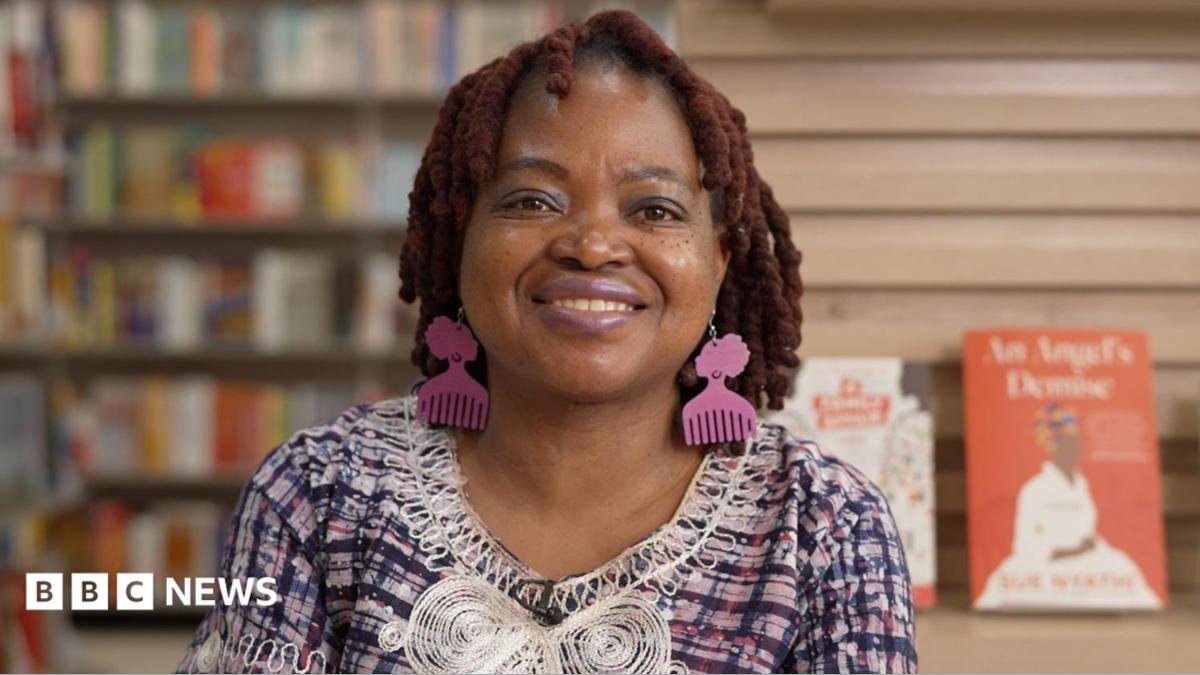
If there is a note of frustration in her, it surfaces around the question of who gets to write at all. Nyathi wanted to be a writer from childhood, but her parents pushed her towards a more traditional profession.
She worked in finance for almost two decades and says her time as an investment analyst taught her to see writing as both a craft and a business. While her financial career paid the bills, writing remained her passion and she wrote The Polygamist in the evenings after she had finished work. She left corporate life at the age of 40 to write full time, a few years after she had published the novel. She is now 48.
“People say, ‘Oh, you’re an overnight success.’ Not at all,” she says. “The recognition is overnight, but the work has been put in over many years, and I’ve made a lot of sacrifices.”
Most writers, she adds, cannot live on their books, least of all in Africa. She says that often successful writers are supported by wealthy husbands, by grants, by residencies.
But those options were not available to her – a single mother who had to put her son through school, she has juggled various jobs to keep writing.
“There’s a long period between when you start a book and you finish it. It could be two years, it could be eight years. How do you survive? Practically bills still need to be paid,” she says. “I’ve walked that journey and it’s erratic… you’re definitely going to have to stay in that day job.
“Writing is a luxury that most people can’t afford,” she says, adding that the cost is measured in the voices that are rarely heard.
She also feels an imbalance in how African writing travels. “It’s easier for an African writer published overseas to gain traction. Books are traditionally sold down to us. It’s hard for our work to sell upwards.”
What the “Netflix effect” has given her is precisely the visibility she had never enjoyed across four novels and more than a decade of writing, often on politically charged topics.
Nyathi is now finishing the first draft of a historical novel which she has been working on for the past two years – she says the themes will resonate with many people.
As for the craft of writing, “everything starts with a story”, she says, advising any woman who thinks she has a book in her and no money, to start with a pen and paper, and do it for love.
“Money should never be the motivation. The love is what will fuel you when it gets hard.”


