



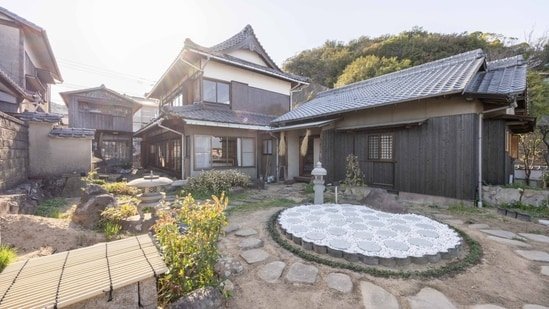
When Melanie Ooi and Cristian Paluso-Serrano picked up the keys to their new home in the port town of Uno, Japan, they were awestruck.
The house cut an impressive figure, jutting out from the main road with its traditional wooden architecture and curved roof tiles. The seller’s agent said it was believed to be an old tea school built in the 1950s. It looked like a castle on the hill.
Then they went inside.
The garden was overgrown and the kitchen smelled musty. They later discovered termites under the tatami mats.
That’ll happen when you buy a home that’s been sitting empty for seven years—after touring it on FaceTime. “The process is not for the fainthearted,” said Ooi, 47.
The couple, who moved from Portland, Ore., are among a growing number of foreigners buying up Japan’s akiya, translated as empty or vacant homes. There are over nine million of these properties, which remain unpopular among locals who prefer new homes in centrally located areas. Some towns have even tried giving them away.
But to foreigners undaunted by a fixer-upper, buying an akiya is a chance to own something permanent in Japan. Against the weak yen, many of them can be relatively affordable.
Ooi previously lived in Japan and always wanted to run a guest house. Paluso-Serrano, 30, dreamed of living in the Japanese countryside. They were looking for something that could function as both home and inn, and the 2,000-square-foot property fit the bill.
Many buyers go through the process remotely. Viewings are held virtually and contracts can be signed via proxy. The day buyers pick up the keys can be their first day inside.
Ooi and Paluso-Serrano paid $91,000, wiring the full amount in cash since foreigners aren’t eligible for loans.
“We had arrived the night before and we were, like, so nervous,” Paluso-Serrano said. “Like this could be the biggest mistake we’ve ever made.”
The quality of these homes varies. There are century-old historic gems in the countryside or simple homes in the suburbs. The roof can be caving in or they can be well-loved properties with absentee owners.
Buyers often inherit the belongings of the seller. For Tony Gallardo and his partner, David Carroll, closing a $7,000 property remotely from Australia was the easy part. More challenging was the emotional toll of removing the deceased previous owner’s things.
There were still family pictures on the wall and notes tacked around a calendar. Japan’s garbage disposal laws meant they had to hire a licensed company to throw it out.
Heirs who inherit property are incentivized to leave homes standing, since tearing them down comes with a higher tax bill. The decaying structures can invite pests and become a blight.
Friends Take Kurosawa and Joey Stockermans saw an akiya as a path to owning property when they felt priced out of their home countries of the U.S. and Canada.
The pair, who met in college in Tokyo, spent $40,000 on their first akiya in the hot spring town of Beppu. They tore down walls they weren’t supposed to, intent on fixing the house themselves. Realizing they were in over their heads, they spent another $40,000 on renovations with a contractor.
“All my friends in Tokyo are like, why the heck are you buying that piece of crap?” said Kurosawa.
They’ve now bought six properties. In 2023, they co-founded AkiyaMart, a platform that helps foreigners find and purchase real estate in Japan.
They say AkiyaMart has grown from around 8,000 users to over 60,000 in the past year, and they’ve directly assisted over 150 clients, including Ooi and Paluso-Serrano.
Buying an unwanted property in Japan isn’t a path to residency. Foreign owners generally can only stay for the length of their tourist visa.
Applying for a business manager visa used to be a popular route to becoming a resident, but that got more difficult last year when the country increased the minimum capital needed to qualify.
Navigating cultural differences can be tricky. Japanese sellers can take offense to efforts to negotiate, said Haruka Oide, who consults buyers.
They can also be wary of selling to foreigners. Deborah and Jason Brawn had to submit a declaration of intent before they could look at a 150-year-old house that was vacant for 12 years.
The pillars tilted and some of the floor boards showed signs of rot. There was a laundry list of renovations needed to make the former sake brewery livable.
They got approval to purchase with one caveat: a promise to stay for at least six months a year. Luckily, that was always the plan. “We’ve got a full life in Australia and a full life over there,” Deborah said. “It’s a big commitment to us.”
When they’re in town, the Brawns go to the community center to help with river cleaning and read English books to kindergarteners.
Ooi and Paluso-Serrano opened the doors of Sadou Inn last April. Neighbors helped them clean the windows and weed the garden. A friend recommended a carpenter, who helped with the termites and trickier renovations.
The couple keeps an open-door policy to curious neighbors. “When you tell them that you have invested in their community,” Ooi said, “they just embrace you.”
Write to Fruhlein Chrys Econar at fruhleinchrys.econar@wsj.com


