



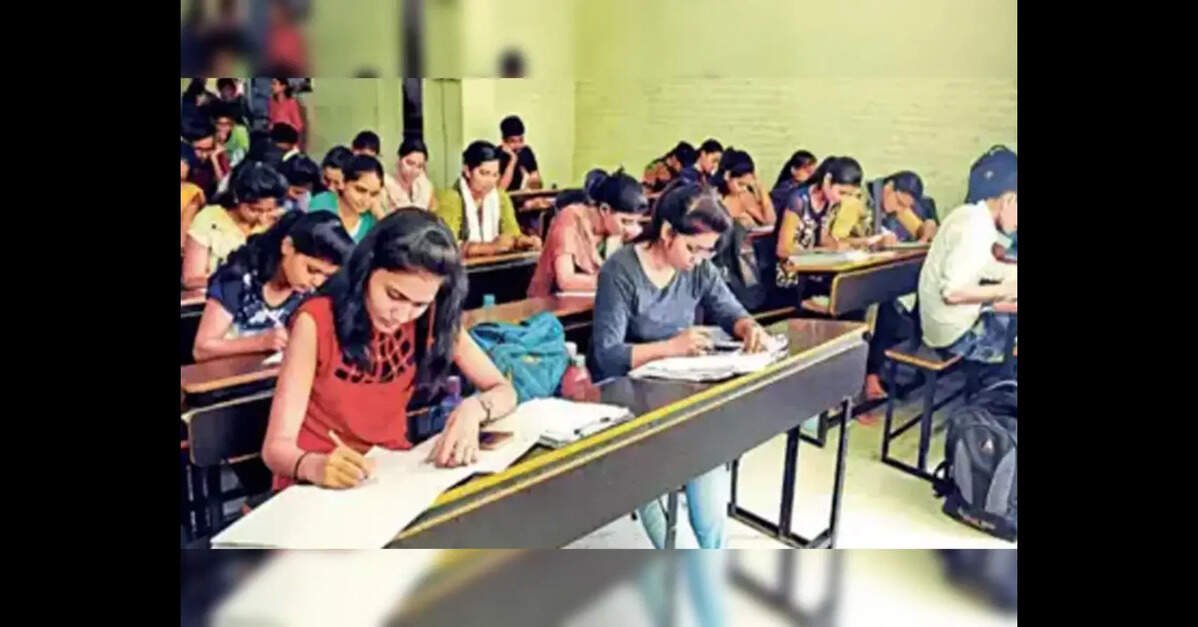
With registrations open and the exam scheduled for June 7, the IISER Aptitude Test (IAT) is steadily emerging as a national gateway for students who want to pursue fundamental science and research careers rather than traditional professional degrees.
For decades, India’s competitive education ecosystem has largely channelled its brightest students toward engineering or medicine through entrance exams like JEE and NEET. But a quieter shift is underway.
The IAT, the dedicated entrance examination for the Indian Institutes of Science Education and Research (IISERs) is increasingly attracting students interested in research, interdisciplinary science and innovation-driven careers.
Registrations for IAT 2026 are open until April 16, with the computer-based exam scheduled for June 7. This year, 11 institutions will admit students through IAT scores, reflecting the expansion and growing credibility of the IISER ecosystem. Educators say the exam is gradually positioning itself as India’s premier entry point into research-oriented science education.
A New National Pathway for Fundamental Science Education
Unlike competitive exams designed primarily to funnel students into professional degrees, the IISER Aptitude Test aims to identify students with strong conceptual thinking and scientific curiosity.
According to faculty members at IISERs, the examination has become the primary channel for students interested in pursuing fundamental sciences, creating a distinct pathway separate from engineering or medical admissions.
Prof. Rajeev Kini, Dean (Student Affairs) at IISER Thiruvananthapuram says the test is designed to identify students who demonstrate the mindset required for scientific inquiry.
“The IISER Aptitude Test is now the dedicated channel for students interested in joining IISERs to pursue fundamental sciences. Unlike other exams that lead primarily to professional degrees, IAT identifies students with strong conceptual foundations and curiosity for scientific inquiry who will become future scientists or even entrepreneurs,” he said.
Over time, educators believe the exam could evolve into a national gateway for careers in research, academia and deep-science innovation.
At Indian Institute of Science Education and Research Berhampur, director Ashok Kumar Ganguli observes growing interest among school students in pursuing higher studies in basic sciences and interdisciplinary research.
“IAT is gaining wide popularity among students interested in higher studies in the basic sciences and long-term scientific careers,” Ganguli said.
He added that landmark scientific achievements, from vaccine research during the pandemic to India’s space missions have helped renew student interest in scientific research.
Rising Interest in Curiosity-Driven Science Careers
Traditionally, many science students viewed research as a niche career option compared to engineering or medicine. But IISER educators say this perception is slowly changing. Institutes are observing greater curiosity among applicants about research opportunities, interdisciplinary learning and global collaborations, rather than focusing only on job outcomes.
Faculty members note that emerging fields such as artificial intelligence, big data, quantum technologies, advanced materials, and sustainability science are encouraging students to pursue research-oriented science education.
“There are encouraging signs of a gradual shift,” said IISER Thiruvananthapuram faculty member Vinayak B. Kamble. “Students interacting with IISERs increasingly ask about research opportunities and interdisciplinary learning.”
Prof Ganguli also points to the steady growth in IAT applications as evidence of this shift. “More students are becoming interested in research-based science careers. IISERs also offer opportunities to build careers in industry through interdisciplinary programmes,” he said.
Interdisciplinary Programmes Aligned with Deep-Tech and AI
A key factor driving interest in IISERs is their five-year BS-MS programmes, which combine undergraduate and postgraduate training with early exposure to research.
These programmes allow students to explore multiple scientific disciplines before specialising, creating a foundation suited to emerging technology domains.
Recent curriculum developments have strengthened the integration of computational science, data science and AI-driven approaches across traditional scientific disciplines such as physics, chemistry, biology and mathematics.
Courses introduced in recent years include areas such as:
Machine learning for physical sciences
Quantum information theory
Cryo-electron microscopy and advanced imaging
Drug discovery and biomaterials
Stem cell research and regenerative medicine
Faculty say such programmes are designed to produce scientists capable of working across disciplinary boundaries, where many modern scientific breakthroughs occur.
At IISER Berhampur, academic programmes are also being aligned with national priorities in deep-tech innovation and scientific research. Prof Ganguli noted that courses across biological, physical, chemical and computational sciences are structured to help students contribute to emerging technologies and innovation ecosystems.
Institutes regularly host international conferences, research seminars and AI-ML discussions, providing students early exposure to frontier scientific work.
Scaling Research Mentorship as IISERs Expand
With IAT participation expected to grow, IISERs face the challenge of expanding their programmes while preserving their hallmark small-cohort, research-focused education model.
Faculty members say expansion is being approached cautiously through faculty recruitment, advanced laboratories and interdisciplinary research facilities.
“IISERs remain committed to maintaining a favourable student–faculty ratio and strong mentorship culture,” said Kini and Kamble.
IISER Berhampur, Director added that students begin engaging with research environments early in their academic journey. “From the first semester onwards, students have opportunities to visit and work in research laboratories during summer and winter internships,” he said.
In addition, IISERs organise science expos, research festivals and semester-long research projects, ensuring students gain practical exposure to scientific inquiry before graduation.
Important Dates for IAT 2026
Registration deadline: April 16, 2026
Admit card release: May 24, 2026
Examination: June 7, 2026 (Computer-based test)
Results: Fourth week of June 2026
Counselling: Last week of June 2026


