



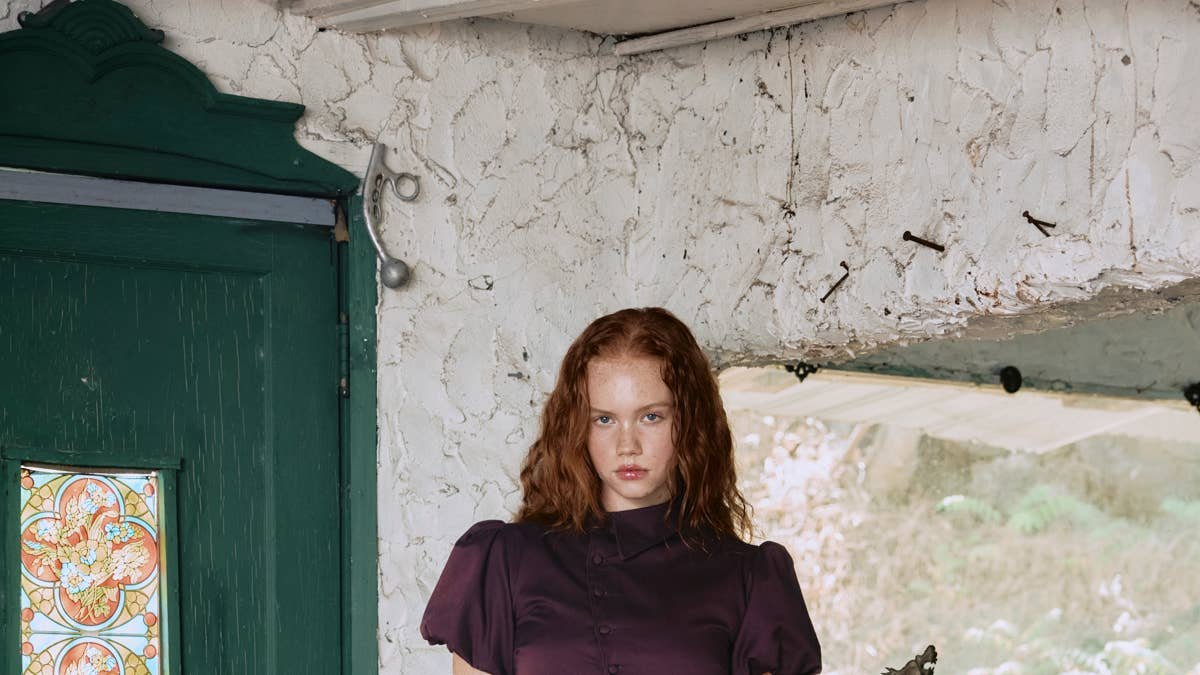
Growing up in Crestone, Colorado, a small mountain town with a population of 200, you could say designer Ella Mae wasn’t exactly raised in a style hub. Yet, at 5 years old she already knew she was destined to become a fashion designer.
“I always felt like I was too big for Crestone,” she tells Fashionista. “I always wanted to make crazy outfits. I was just so obsessed with fashion for as long as I can remember.” She’d show up to school — in her class of two people — wearing bold outfits. Eventually, Mae’s mother taught her how to sew, and from there, she locked in to her pursuit of design.
The budding designer’s first official stepping stone in building her career was attending the Rhode Island School of Design (RISD) to hone her skills. “RISD completely shaped my tastes and fine tuned the artistry in my brain,” she says. “I always had dedication to want to sew and want to create, but then I think I came out of RISD knowing, ‘Okay, this is what I want to create that reflects me.'”
Upon graduating in 2021, she knew she was ready to launch her eponymous brand. That first year, she juggled running her brand while also working as an assistant designer at Simkhai. In 2022, she committed to running Ella Mae full-time.
Ella Mae Spring 2026. Photo: Sarah Shen/Courtesy of Ella Mae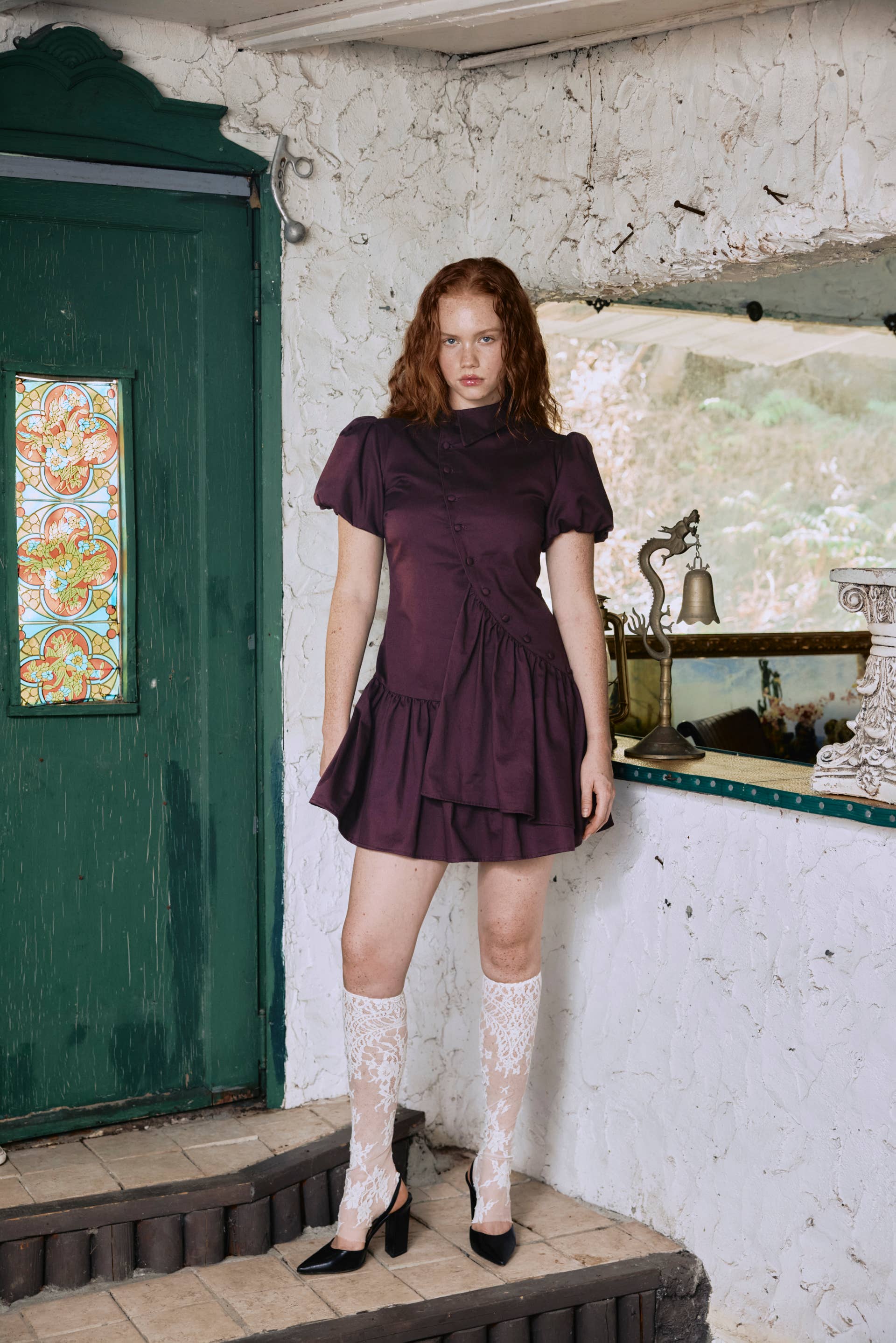

The Los Angeles-based label is known for its “feminine utilitarianism” codes, Mae explains, adding, “I definitely feel like we have some signatures now that have really solidified us.” Said signatures include romantic ruffles, big gathered hemlines and various uses of twisting ties.
“Our customer is someone who is feminine and wants to feel empowered in that femininity and embrace romanticism with purpose,” she says of her clientele. But that’s not to be confused with Ella Mae only catering to women: The brand has attracted a range of customers, from old to young, from men to nonbinary folks, from city dwellers to suburbanites.
For Mae, creating an inclusive, safe space has been exactly what she intended since the brand’s inception. “When I set out to make Ella Mae, I really wanted to make a space that was almost anti-fashion fashion,” she explains. “We’re kind to people. We include people. There’s no need to be super stressed and chain-smoking cigarettes. I wanted to create a peaceful, mindful space.”
That ethos also extends into Ella Mae’s “earth-first” philosophy. Growing up off-grid in rural Colorado, surrounded solely by nature, it was a natural evolution for eco-consciousness to extend into Mae’s artistry. “I have this very earthy, grounded roots inside of me,” she says. “I was playing in the creeks and getting muddy. My parents built both of our houses. It’s inherent that my work would be related to the earth.”
Photo: Kate Kim/Courtesy of Ella Mae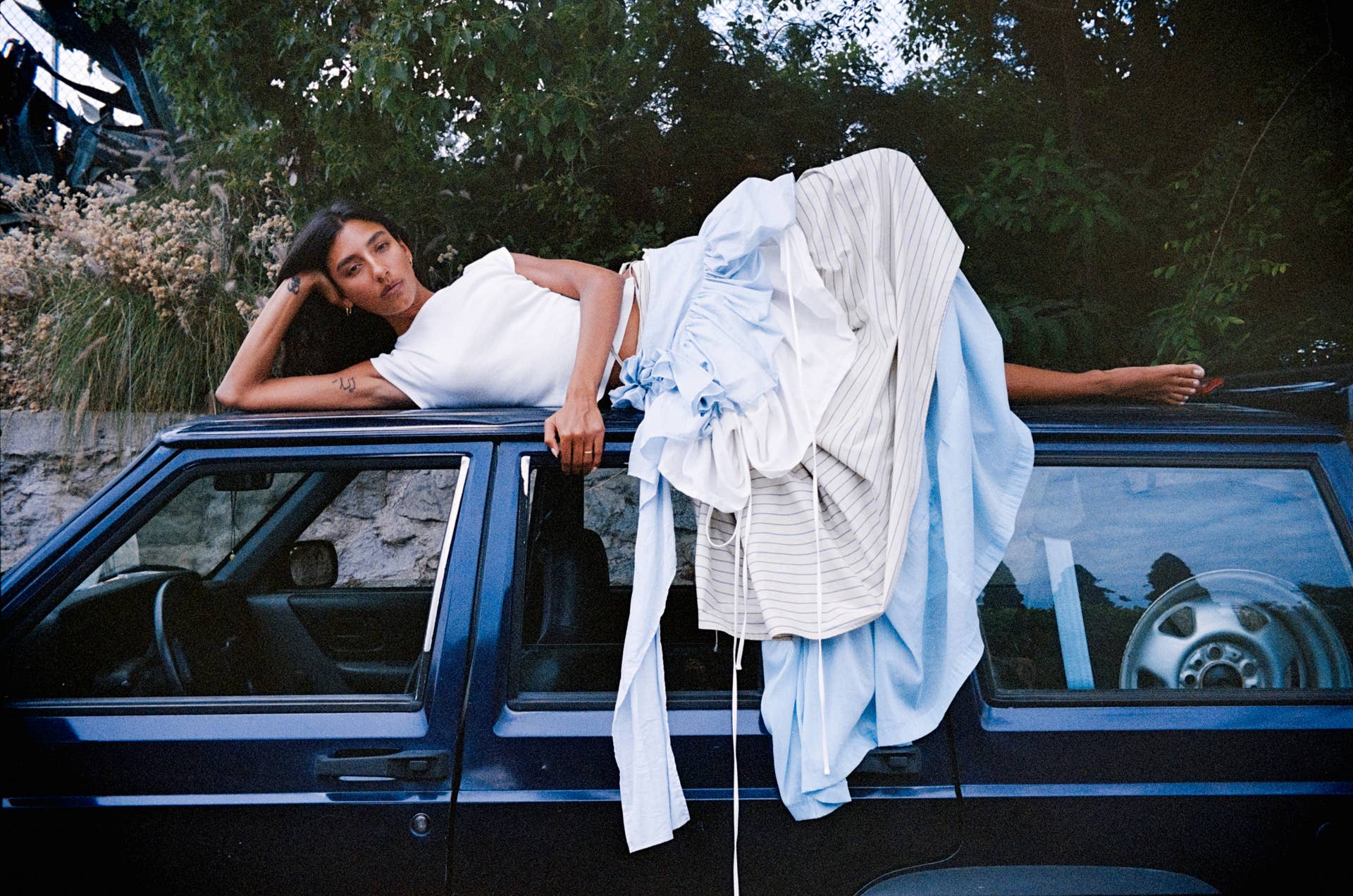

In application, Ella Mae predominantly uses natural fibers such as cotton, as well as deadstock fabrics. The label also utilizes natural dyes — derived from rust, botanical roots and food waste — during its textile-making process. “[How I view] nature is almost super spiritual to me,” Mae shares. “It’s what we come from, and my work is offering back to the earth.” Each garment is produced in small batches locally in Los Angeles.
Even when it comes to inspiration, Mae pulls from the environment. Aside from referencing vintage every now and then, she tries to avoid seeing what other designers are doing. Instead, she’ll turn towards natural phenomena like the movement of a tree or the way leaves fall, and see how that can take shape in a garment.
The biggest question that continuously toggles in Mae’s mind is how she can scale the brand without sacrificing its “earth-first” ethos. Ella Mae never mass-produced its clothes — the largest order it received was for 500 pieces, for which Mae and her assistants hand-dyed every item — with no plans to venture into that production model. Mae firmly believes that the label’s current small-batch model can still successfully accommodate wholesale demand.
Backstage at Ella Mae’s Spring 2025 show. Photo: Morganne Boulden/Courtesy of Ella Mae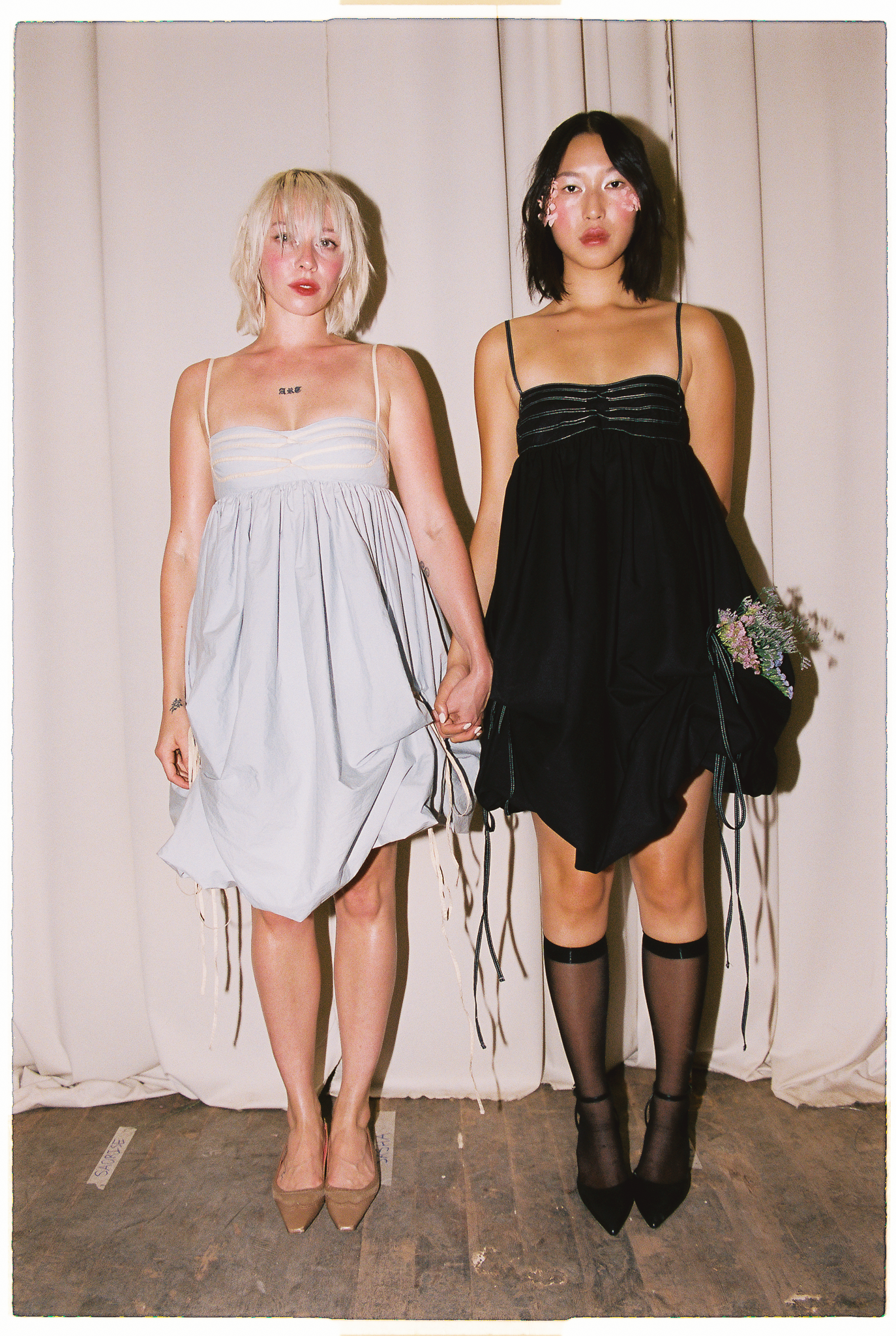

“We have done wholesale in the past and I think I’m open to continuing with it,” she says. “Scaling is okay as long as it’s mindfully done. We can always do wholesale sustainably as long as we choose the right partners with the right intentions.”
For now, Mae’s been using pop-ups as a growth strategy. She’s able to get her clothes in front of a new audience and let current fans try them on IRL, all while still producing them in limited batches. On June 5, the label held its first NYC pop-up, which Mae recalls was an astounding success.
“We literally had record sales and I was like, ‘This is incredible,'” she says. “But it’s not just incredible for the sales — it was the fact that we can show up in another place and people come out, know about the brand and are excited about the brand.”
One of Ella Mae’s unique competitive edges is that, despite its small-batch production and natural textiles, its offerings are relatively accessibly priced. Historically, most small, sustainable labels lean on the more expensive side. And while Ella Mae is definitely within the contemporary market — its most expensive item is $450 — it still sells apparel priced under $100.
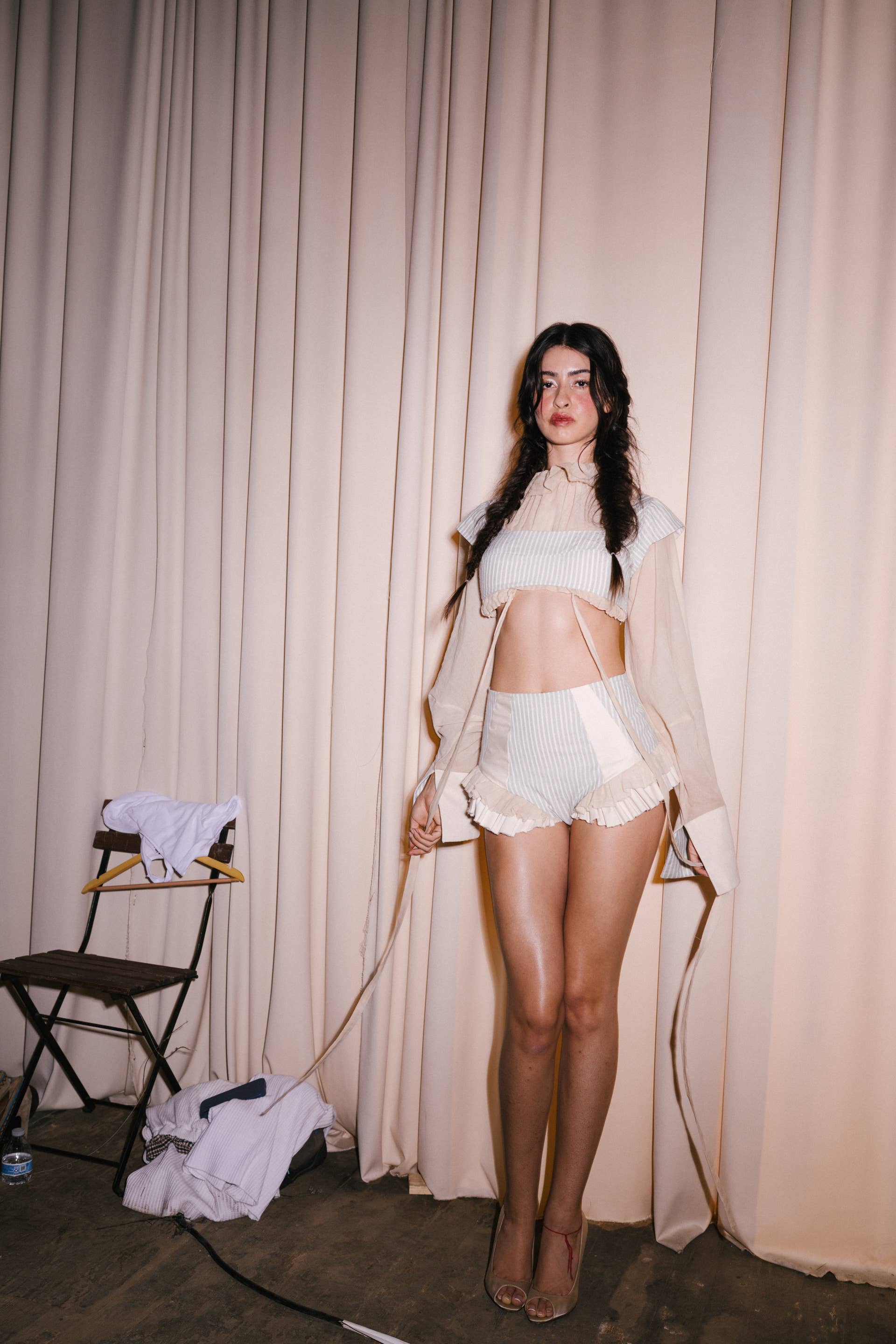
Photo: Morganne Boulden/Courtesy of Ella Mae
Mae’s decision to implement a wide price range was to draw in new customers who might be hesitant to invest hundreds of dollars in an unfamiliar product. “To have some products at a more entry-level price point is key to me,” she says. “I’ve sacrificed a little bit on margins, but that’s okay. Buying an entry-level piece lets people see the brand, fall in love with it and then maybe invest in a more expensive dress down the line.”
Of course, Ella Mae’s custom-order business also provides financial wiggle room. “Right now, we have this cool matrix of in-house customs, made to order and production runs,” she adds. She’s gained a steady clientele who are interested in one-of-a-kind pieces.
The label has also caught the attention of celebrity stylists. Most recently, Barbara Palvin attended the 2026 Cannes Film Festival wearing a coffee-dyed chiffon dress from its Spring 2026 collection. That red carpet placement was pure fate, Mae says. Stylist Marc Eram originally pulled the dress for a different client who didn’t end up wearing it. “Marc had it on his stylist rack and Barbara came by, saw it on the rack, fell in love with it and she asked to wear it,” Mae says. “All the stars aligned; she was made to wear it.”
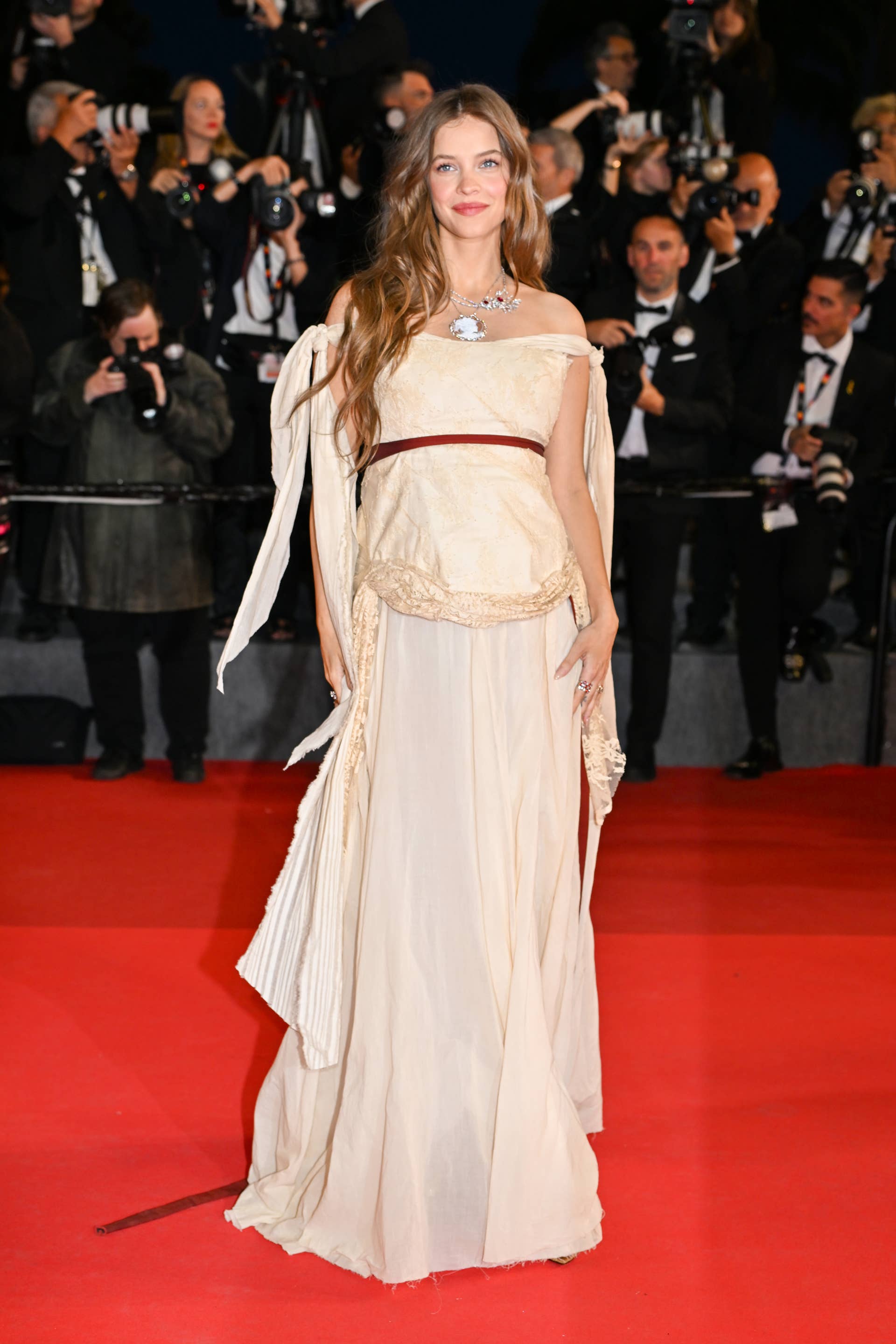
Palvin’s appearance garnered press for Ella Mae, as well as other brands reaching out for collaboration opportunities. It leaves Mae excited to see what’s in store for her upcoming Spring 2027 collection. “I am really jazzed thinking about who could wear this piece or who would look so good in this piece because the showpieces are just so special and fun,” she says.
As she focuses on developing her collection, Mae is also working to land on the New York Fashion Week calendar. Her long-term goal is to open a permanent storefront.
“I’ve just been trying to be super authentic to what I want to make, what I want to see and what I think the world needs to see more of,” she says. “As long as I’m really making from a point of authenticity and joy, then my pieces will show that.”


