



By Devansh Agarwal
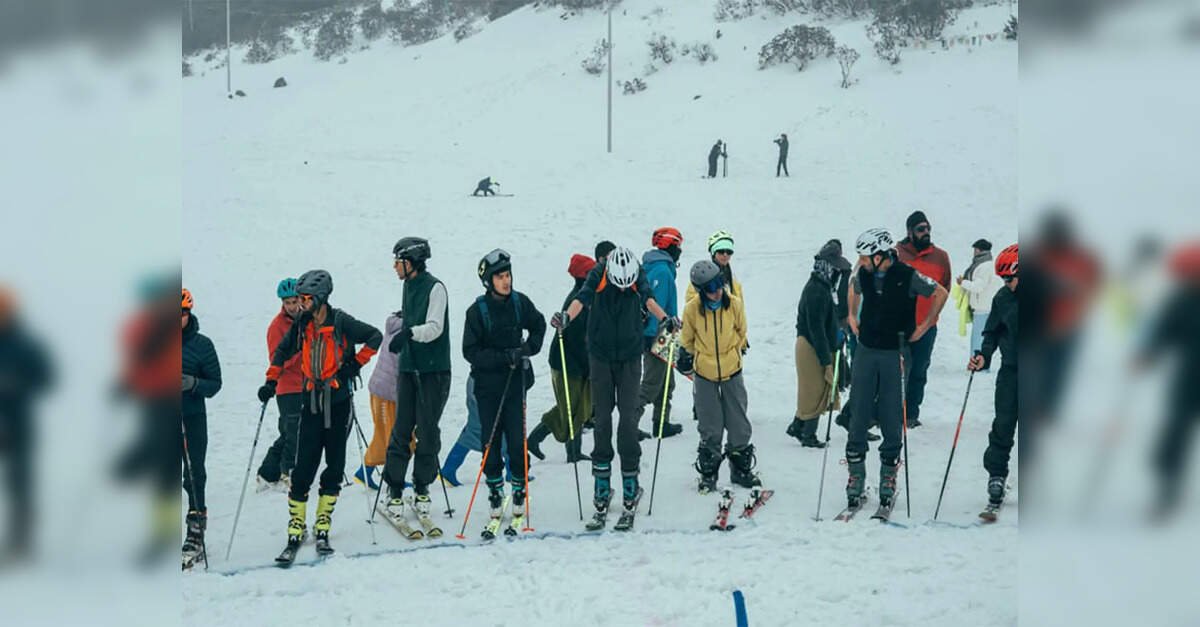
In an era increasingly defined by the National Education Policy 2020‘s call for “holistic, integrated, enjoyable, and engaging” learning, the pursuit of truly transformative educational experiences is paramount. The power of experiential learning was clearly shown last month when a group of young learners took on the Dayara Bugyal trek in Uttarakhand. This journey went beyond traditional teaching, ending with a tough climb to 11,830 feet. While the physical demands were significant, what these students brought back was far more profound than mere endurance; it was a living testament to the power of such experiences in cultivating essential 21st-century skills.The mountains, as they discovered, are not merely a scenic backdrop but a dynamic, consequence-rich classroom without walls. In this setting, what they read in books becomes practical experience, and complicated ideas suddenly become clear, real-world lessons.
One of the most striking lessons in resilience and self-awareness emerged from a student who, despite not reaching the summit, returned with an unexpected sense of achievement. He had to turn back after just one day at Raithal base camp, and everyone expected him to be disappointed. Instead, he showed quiet determination, immediately saying he would get fitter for next year’s attempt, starting with changes to his diet. This teaches us something profound: being tough isn’t about never having problems; it’s about being strong enough to adapt, learn, and recover after things go wrong. That’s a vital quality for anyone hoping to lead in the future.
The trek was also a powerful way to build teamwork and bring people together. We saw two students, one shy and one very outgoing, who joined the group without knowing anyone. But by the end, they all felt the same way: everyone in the group had become their best friend. Having to navigate difficult trails together, share everything, and help each other really broke down the walls that usually exist between students in a normal classroom. Since the mountains are the same for everyone, they created a powerful feeling of togetherness.
Ownership and self-motivation were illustrated by one of the faculty members who accompanied us. He confessed that he had joined the trek with the aim of helping the students, but instead found himself being motivated by the students. This kind of reciprocity is what characterises real ownership, whereby students take initiative in ensuring that they look after themselves as a group, something that cannot be taught through books or lectures alone.
The personal changes in the students were also striking. One student beautifully summed up his new appreciation for happiness, saying he learned to “never let fun out of life.” Another student, who used to be insecure, found climbing the mountain greatly helped him change. He realized that many “failures” aren’t due to inability, but simply a lack of belief in oneself.
The spirit of collaborative leadership shone through clearly when the students were proud not of being the quickest hikers but of those students who continued to be loyal to their fellow classmates. The student who was having a difficult time keeping up with the pace was truly grateful to his two friends who had stayed with him the whole way, encouraging and helping him. In the real-life setting of the trek, success was no longer determined by speed but rather by teamwork.
Even when things felt like too much to handle, it helped them gain perspective and learn to adapt. Many saw falling snow for the very first time. Their first feeling of happiness quickly gave way to realizing just how massive the natural world around them was. As one participant smartly said, “snow looks a lot more beautiful in Instagram photos than it does in real life.” This was an excellent reminder to understand the difference between how things look on the surface and what a real experience is like.
Apart from these fundamental changes in the individual, the students came back having gained an immense amount of gratitude and real-life skills. They acquired an increased admiration towards their parents, practised minimalist living, gained an appreciation for nature, and started appreciating simple pleasures in life. They became more vigilant about themselves, their possessions, and their decisions.
And then there were all the great stories! Like spontaneous cricket games out in nature, making snowmen taller than they were, incredible nights looking at the stars, and spirited discussions about where Earth’s oxygen comes from or how the moon was made. These stories aren’t just random bits; they prove that the students were truly engaged, both mentally and emotionally. It naturally helped them become more curious, think more critically, and build stronger bonds, all in a very organic, unplanned way.
These students are noticeably different in their classrooms now. You can see their leadership skills as they patiently help their classmates. They’ve become much more confident. They find it easy to join conversations and play sports with lots of enthusiasm.
Based on my firsthand experience of witnessing how these students had evolved and developed some of the necessary life skills from their experience at 11,830 feet above sea level, it is evident that some of the best classrooms do not necessarily have any walls. There are some lessons that can never be marked or evaluated in any exam. Some teachers speak much louder through their actions than any book ever will.
The author Devansh Agarwal is the Director – Trustee of Delhi Public School Bijnor.
DISCLAIMER: The views expressed are solely of the author and ETEDUCATION does not necessarily subscribe to it. ETEDUCATION will not be responsible for any damage caused to any person or organisation directly or indirectly.


