



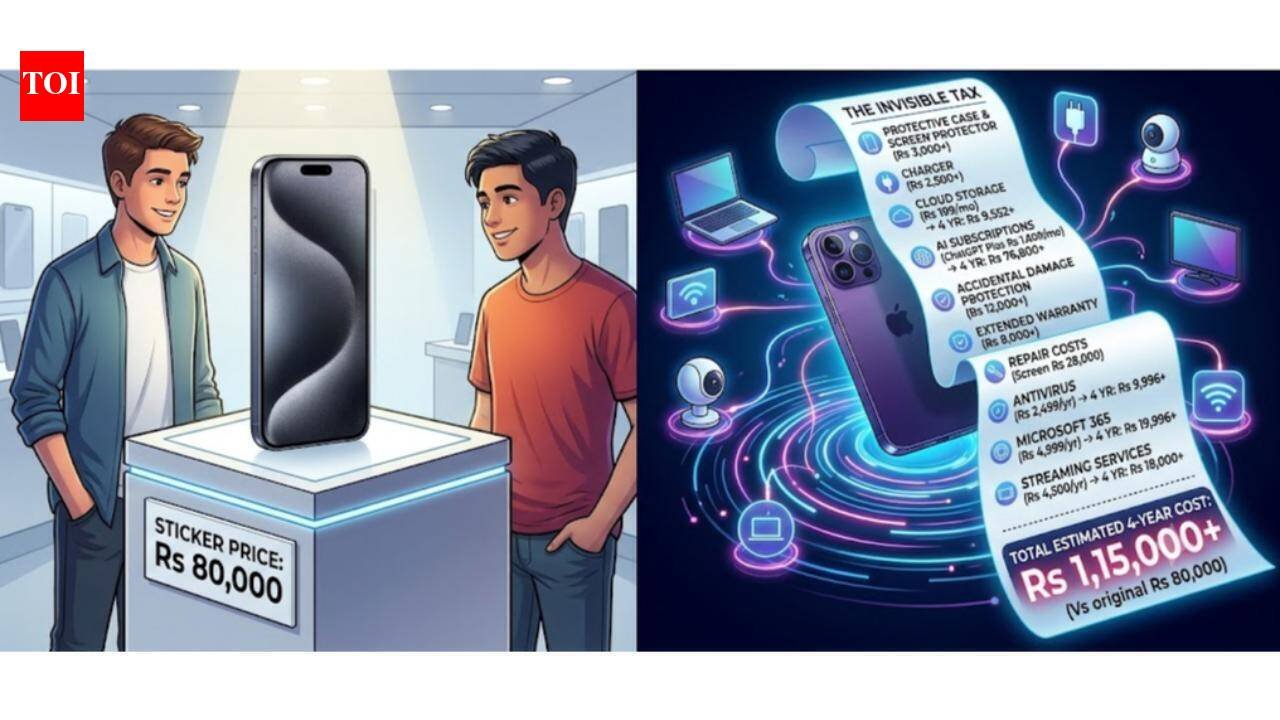
When buying a new smartphone or laptop, most consumers compare only one number: the price on the box. Is it worth Rs 79,999? Can I stretch to Rs 1 lakh? Is there a bank discount or a sale on any e-commerce platform?Increasingly, however, that sticker price is only the beginning.The real cost of owning modern gadgets has quietly shifted from a one-time purchase to a steady stream of recurring expenses. Between subscriptions, cloud storage, accidental damage plans, paid AI features, accessories and repairs, consumers are paying an invisible tax that rarely features in advertisements.Take a flagship smartphone. A device priced at Rs 80,000 today is rarely used in isolation. Most buyers add a protective case and screen protector, spending a little extra depending on your choice. Since many premium phones no longer include chargers, that is another cost which one has to incur sooner or later. Cloud storage, almost essential once photos and videos pile up, costs anywhere from Rs 75 to Rs 900 a month depending on the plan. Many users also buy extended warranties or accidental damage protection, adding another Rs 8,000-15,000 over the life of the phone.Then come AI subscriptions. ChatGPT Plus, Google AI Pro, Microsoft Copilot Pro and similar services are gradually becoming part of everyday workflows for professionals. While optional today, they increasingly unlock the very features manufacturers use to market their devices.Over four or five years, the ownership cost of an Rs 80,000 phone can comfortably exceed Rs 1 lakh without the buyer ever noticing where the money went.
The same pattern is emerging across almost every category of consumer electronics
A laptop is no longer simply a laptop. Buyers often pay separately for Microsoft 365, antivirus software, cloud backup services, AI assistants and extended support plans. Gaming laptops invite additional spending on peripherals, software subscriptions and accessories. Even televisions have escaped the one-time purchase model. While streaming subscriptions are hardly new, smart TVs are increasingly tied to ecosystems where premium content, cloud gaming and connected home services generate recurring revenue long after the hardware has been sold.
Smart home devices perhaps illustrate this transformation most clearly
Video doorbells, home security cameras and smart locks frequently advertise affordable hardware, but many reserve advanced features such as cloud recording, person detection, longer video history or emergency alerts for monthly subscription plans. Consumers often discover these limitations only after installing the product.
The economics of the gadget industry have quietly changed
Hardware margins have become increasingly difficult to sustain as components commoditise and competition intensifies. Companies therefore seek recurring revenue long after the initial sale. Investors also reward subscription businesses because predictable monthly income is generally viewed as more valuable than cyclical hardware sales.Apple’s Services division, Google’s cloud subscriptions, Microsoft’s productivity ecosystem and Amazon’s Prime strategy all reflect the same philosophy: the device serves as an entry point into a wider ecosystem rather than the end product itself.
Artificial intelligence is accelerating this transition
Many of the headline AI features showcased during product launches depend on expensive computing infrastructure. Running large language models is significantly more resource-intensive than traditional software features, making subscriptions an attractive way to recover those costs. As AI capabilities become more sophisticated, consumers may find that the most useful experiences increasingly sit behind monthly paywalls rather than arriving through free software updates.Repairability adds another layer to the ownership equation. Premium smartphones now feature more durable materials than ever before, but when something does break, repair bills can be startling. Replacing a flagship display or camera module often costs tens of thousands of rupees. That, in turn, nudges consumers toward purchasing insurance or extended protection plans at the time of sale—another expense that effectively becomes part of the product’s true cost.
Why it makes sense on one level
None of this necessarily represents bad value. Cloud backups protect irreplaceable memories. Extended warranties provide peace of mind. AI subscriptions can meaningfully improve productivity for many users. The problem is that consumers continue evaluating gadgets as though they remain one-time purchases, when they increasingly resemble ongoing financial commitments.Perhaps the better question before buying a gadget is no longer, “How much does it cost?” but rather, “How much will it cost me to own?”That distinction may seem subtle, but it reflects one of the biggest shifts in consumer technology over the past decade. The industry is moving away from selling products and toward selling ecosystems—where hardware is merely the ticket of entry.Looking ahead, the invisible tax of gadget ownership is unlikely to disappear. If anything, it may grow larger as AI, connected services and subscription-based software become integral to every device we buy. The smartest purchase decisions in the coming years may not be about finding the cheapest gadget, but about choosing the ecosystem that demands the least from your wallet long after you’ve left the store.


