



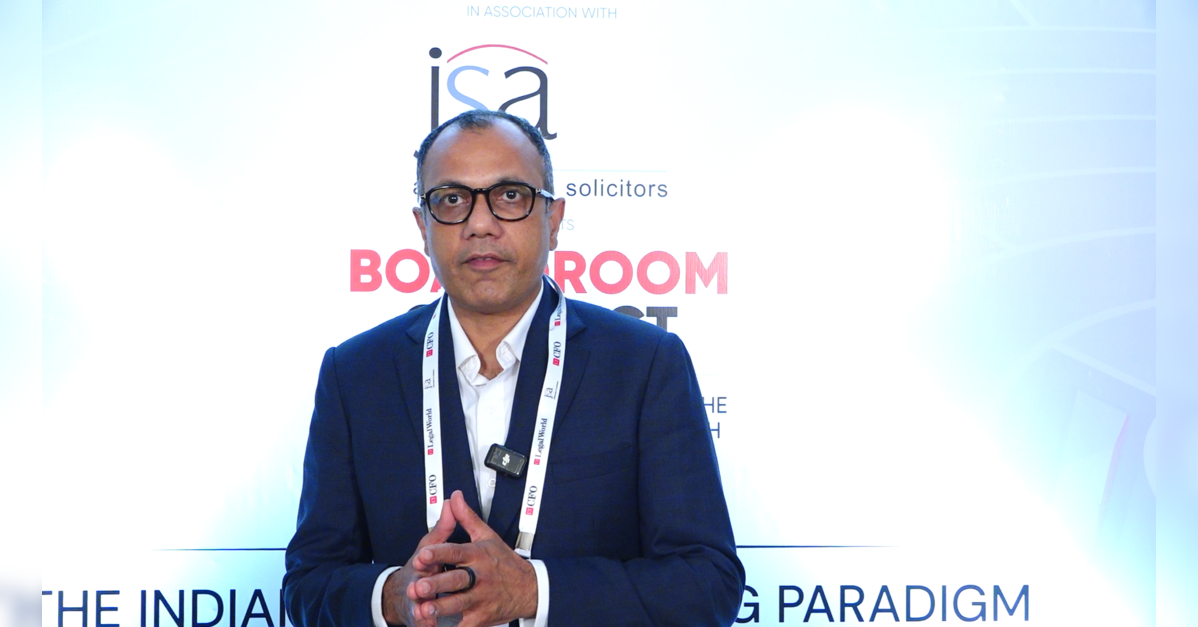
The sixth edition of the JSA Boardroom Connect in Chennai brought together legal, finance and industry leaders to discuss the evolving regulatory landscape for India’s manufacturing sector and the measures needed to take the industry to its next phase of growth.
Varun Sriram, Partner, JSA Advocates & Solicitors, said the roundtable, held on July 24, brought together participants from diverse industries, with a strong representation from the manufacturing sector. The discussion covered evolving regulatory and legal issues, succession planning, business continuity, data protection and AI governance.
“We discussed various evolving regulatory and legal issues and trends. We also shared some thoughts with respect to succession planning, business continuity planning, data protection and AI governance, and what we really see in the next five to 10 years and where possibly the regulatory landscape lies ahead,” Sriram said.
He added that the diversity of experiences among participants enriched the discussion and provided an opportunity for participants to learn from one another.
Vishnu P said the session highlighted the need to take Indian manufacturing to the next level, describing the discussions as being centred around moving the sector towards “version three”.
“The sixth edition of the Indian manufacturing ET session has been phenomenal. It was wonderful to have diverse participants giving their perspective from an industry perspective, from a finance perspective and from a legal perspective. All together, it boiled down to the simple issue — how to get manufacturing in India to the next level, to version three,” he said.
According to Vishnu, four key pillars emerged from the discussion — regulatory architecture, an agile regulatory framework, self-regulation and competitiveness.
While India has made progress on initiatives such as single-window clearances, he said the focus now needs to shift towards faster implementation and greater predictability in the regulatory process.
“One of the things that was presented by one of the panellists was to have a playbook — the sequencing. The second is to have an agile regulatory framework. The third is in terms of self-regulation. Fourth is in terms of overall competitiveness,” Vishnu said.
He said greater transparency and consistency in enforcement could also strengthen India’s manufacturing competitiveness.
The discussion also highlighted the growing role of family offices in supporting the manufacturing sector. Vishnu said family offices could play a larger role in building India’s manufacturing capacity and capability, particularly by adapting to attract foreign institutional capital.
“The key things are in terms of the safeguards that are required. The key takeaway was governance, control, boardroom and cultural strength. These are the four elements which have to be clearly articulated and dealt with,” he said.
AI emerges as key pillar
AI and data emerged as another significant area of discussion, with Vishnu noting that the impact of AI on manufacturing has been underestimated as the technology conversation has traditionally focused more heavily on services.
“When we go to version four of manufacturing, beyond version three, smart manufacturing, AI and data is going to be the key. How is it that you integrate AI and data into manufacturing is something very critical,” he said.
The adoption of AI, he added, will also require businesses to address issues around data protection, data leaks, product liability, data security, manufacturing safety and security, as well as insurance and risk management.
“These are things that are very critical and we need to evolve a landscape and an emerging market framework for it,” Vishnu said.
The session also examined the positioning of Indian manufacturing as a sector serving both domestic and global markets. Vishnu said ESG, competitiveness and capacity would increasingly need to be viewed together, requiring corresponding changes in the legal and regulatory framework.
He also called for greater transparency in assessing the regulatory and business environment across states, including the possibility of transparent rating frameworks.
“The moment you have that framework and transparency, it’s going to get a next degree of reforms and enforcement done in a different way,” he said.
Sriram said the discussions offered several takeaways for participants, given the varied experiences represented at the roundtable.
“All of us have had different experiences and it was wonderful to share some thoughts and also hear others and their perspectives,” he said.
Vishnu said the discussions could form the basis for a larger industry paper outlining the key reforms and recommendations emerging from the session.
“I hope that ET and JSA will put together a paper and take it to the next level,” he said, adding that the richness of ideas and openness of participants made the discussion particularly valuable.
