



The geopolitical fault lines of West Asia, long characterised by a simmering shadow war, have finally fractured into a direct, high-intensity conflict. The 2026 Iran war, initiated on February 28 with joint US-Israeli strikes, has transcended traditional military objectives to become a systemic assault on the world’s energy architecture. As missiles trade places with diplomatic cables, the global economy finds itself staring down the barrel of an energy crisis that mirrors, and likely exceeds, the shocks of the 1970s. This is no longer a localised dispute; it is a global economic contagion.


The current military doctrine has shifted toward what academic analysts call Upstream Attrition. In previous decades, engagements were limited to proxy battles or surgical strikes on nuclear facilities. Today, joint US-Israeli operations have targeted Iran’s economic lifeblood. On March 21, 2026, strikes hit the Natanz nuclear enrichment facility and various missile production hubs, following the assassination of top leadership including Supreme Leader Ali Khamenei. In a desperate act of asymmetric retaliation, Tehran has utilised drone swarms to strike regional energy hubs, impacting facilities in the UAE and Saudi Arabia. These calculated blows ensure that the cost of the conflict is paid at every petrol pump from London to New Delhi, proving that no energy asset in the Gulf is truly safe from the reach of the IRGC.
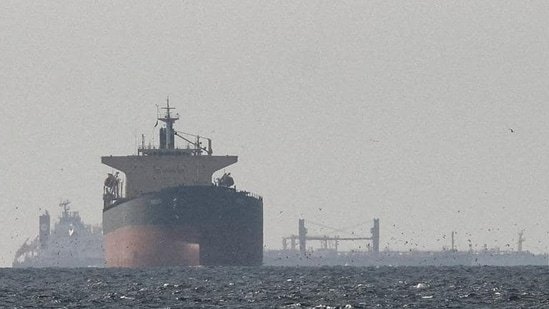
Central to this volatility is the Hormuz stranglehold. The Strait of Hormuz handles approximately 20% of the world’s crude oil and natural gas, as well as nearly 30% of global liquefied petroleum gas (LPG). Following the outbreak of hostilities, Iran effectively paralysed maritime traffic through this chokepoint. The impact has been instantaneous: Brent Crude has surged to nearly $120 per barrel, forcing the International Energy Agency (IEA) to release a record 400 million barrels of emergency reserves. However, even these historic measures are merely temporary. The physical destruction of upstream infrastructure including Qatar’s Ras Laffan gas hub means that even a ceasefire would not bring an immediate price correction. The global market is now contending with the loss of nearly 10 million barrels per day in production, the largest supply disruption in history.
For energy-dependent nations like India, the conflict is an existential threat to economic stability. India imports roughly 88% of its crude oil and 60% of its LPG for consumption. The closure of the Strait has triggered a domestic energy crisis, with the government already rationing commercial LPG and revising booking cycles to manage dwindling stocks. The Hormuz stranglehold hits India particularly hard as it relies on this narrow waterway for nearly 90% of its total LPG imports. To mitigate this, New Delhi has proactively secured emergency shipments from the US and explored discounted Russian crude as a non-Hormuz alternative. Yet, higher freight costs and longer voyages mean that “replacement energy” comes at a steep fiscal price, threatening to fuel imported inflation and stall the nation’s growth trajectory.
To survive this era of Upstream Attrition, India must adopt a multi-pronged mitigation strategy. First, it must accelerate the expansion of its Strategic Petroleum Reserves (SPR) from the current 74-day capacity to the global 90-day benchmark. Second, it should fast-track the Green Hydrogen Mission and the transition to electric cooking to structurally decouple domestic life from Gulf stability. Third, diplomatic engagement is key; India’s ability to maintain a dialogue with Tehran has already allowed some Indian-flagged vessels to navigate the Strait safely. In the medium term, diversifying toward the Chennai-Vladivostok Eastern Maritime Corridor and securing long-term LNG contracts with Australia and the US will be essential to bypass the volatility of West Asian chokepoints.
Perhaps the most significant long-term consequence is the potential for China to secure its energy needs while the West is bogged down in conflict. Beijing has spent years building a petroyuan ecosystem and diversifying its supply through Central Asian pipelines and Russian energy. While US and Israeli forces focus on military containment, China has positioned itself as a mediator for the Global South, offering an energy lifeline to Southeast Asian nations and utilising its naval presence to ensure safe passage for its own tankers. If China can guarantee energy flow where the West cannot, we may witness a permanent shift in energy hegemony, where the petroyuan replaces the petrodollar not through policy, but through the brute necessity of wartime survival.
Looking ahead, the resolution of this crisis requires a fundamental reimagining of energy diplomacy. The 2026 conflict is a sobering reminder that as long as the global economy is tethered to fossil fuels, national sovereignty is at the mercy of the world’s narrowest shipping lanes. The way forward lies in energy decoupling, where national security is no longer tied to a single geographic region. This involves not just a transition to renewables, but a massive investment in modular nuclear reactors and trans-continental energy grids that can bypass maritime chokepoints entirely. Ultimately, this conflict must serve as the final catalyst for a world where energy is democratised and localised, ensuring that the geopolitical ambitions of a few can never again hold the survival of billions to ransom.
This article is authored by Gunwant Singh, scholar, international relations and security studies, Jawaharlal Nehru University, New Delhi.


