


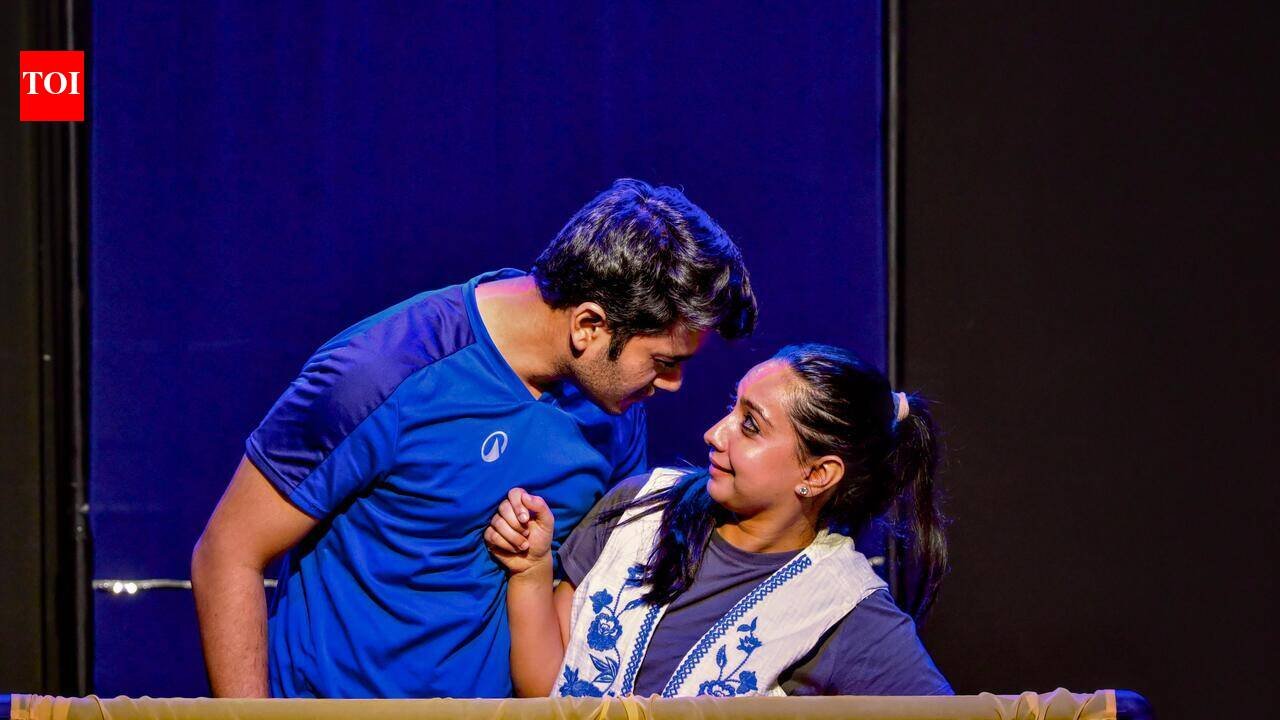
Pune: Ninety-minute anthology The End begins where most love stories stop — with declarations of eternal love.Nikhita Singh has directed Mumbai-based Parwana Theatre’s production, which she has written along with Sambita De and Mitali Kalagi. It follows three couples standing at what they believe is the end of their relationship, asking what happens after the happily ever after. It will be staged at Shreeram Lagoo Rang Avkash on Aug 7 at 7pm.The play emerges from an intensely personal chapter in Singh’s life. “I was on a work break in Oct 2023 after seven years in theatre, rethinking both my corporate career and my personal life. I was going through the end of a relationship and wanted to understand what I was feeling. Writing became a way of processing my emotions. I also found myself thinking about relationships I had witnessed growing up — that of my parents, friends and extended family.”The reflections became the foundation of a collaborative work. De drew from her parents’ relationship, while Kalagi explored the realities of several young live-in couples. “Although the stories are different, we realised they were all asking a similar question, especially for women. What does an ending mean when you have been conditioned to keep making a relationship work? Walking away is rarely a simple decision. Also, it is about preserving your dignity,” said Singh.The three stories unfold across distinct spaces, a college classroom, the home of a live-in couple and the unkempt house of a struggling married pair. Singh’s academic interest in theatre and spatiality shaped topics she explores. “I’ve always been fascinated by how people inhabit spaces, especially when they are emotionally struggling. The sets are deliberately minimal. We use three blocks and backdrop panels. The actors transform the stage themselves in full view of the audience,” said Singh.The production also blurs the boundary between performer and character. Between scenes, actors step out of their roles to speak to one another as themselves before slipping back into the narrative. Nearly a quarter of the stage time relies on movement rather than dialogue.“The body remembers things that language sometimes cannot express. Love is deeply physical, so movement became essential to tell these stories,” said Singh. The play opens with a choreographed sequence inspired by the seven stages of love in Sufi philosophy, tracing attraction, longing, union and ultimately death.Since its premiere a year-and-half ago, The End has travelled to five cities and completed 18 performances.“What stays with me are the conversations after every performance. People tell us they thought they were alone in their grief until they watched the play. Love falling apart can feel deeply isolating. If the play reminds someone that they are not alone, it has done what we hoped it would,” said Singh.
