


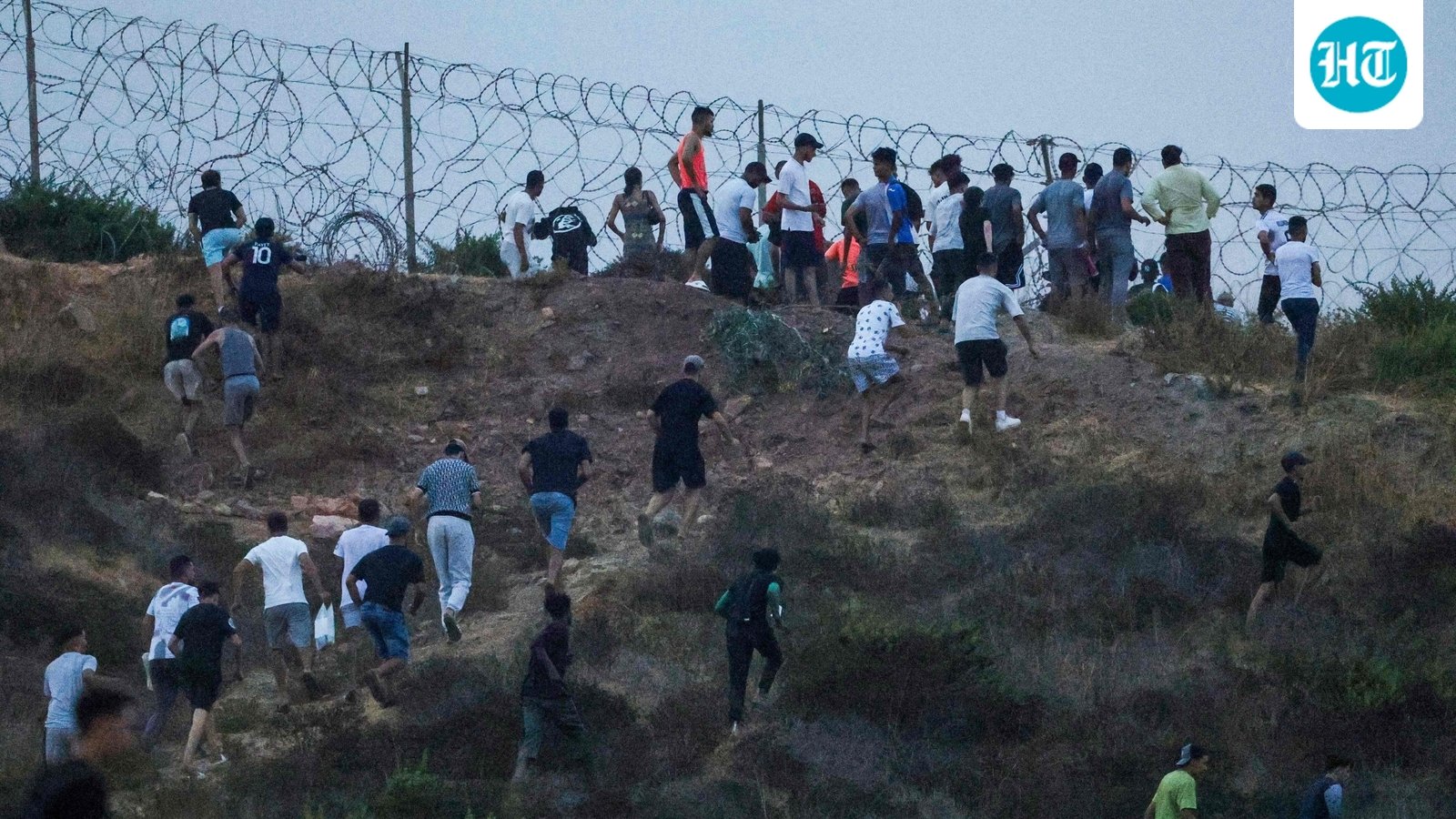
Thousands of migrants crossed from Morocco into Spain‘s North African enclave of Ceuta over the past two days, overwhelming local authorities and prompting Madrid to deploy the military to reinforce border security. The latest surge, which has claimed at least nine lives, has once again placed Ceuta at the centre of Europe’s migration debate and renewed attention on how the Spanish territory manages irregular arrivals.
What is Ceuta?
Ceuta is an autonomous Spanish city located on the northern coast of Africa, directly across the Strait of Gibraltar from mainland Spain. Together with Melilla, it represents the European Union’s only land border with Africa.
Although Ceuta has been under Spanish control since 1580, Morocco continues to regard both Ceuta and Melilla as occupied territories, making the enclaves a recurring source of diplomatic tension between Madrid and Rabat.
Home to around 85,000 residents, Ceuta has a diverse population that includes Christians and Muslims, as well as Spanish and Moroccan communities that regularly cross the border for work and trade.
How does Ceuta’s immigration policy work?
As a Spanish territory, Ceuta forms part of the European Union’s external border and is protected by strict border controls, surveillance systems and security fencing designed to prevent irregular migration.
People who enter Ceuta without authorization are typically intercepted by Spanish authorities. Many are returned to Morocco under bilateral cooperation agreements, while others are transferred to temporary reception centers where officials assess their legal status.
Migrants who wish to seek international protection can apply for asylum under Spanish law. Each application is reviewed individually, and applicants remain under administrative procedures while their claims are examined.
The enclave operates under a different migration framework from mainland Spain because of its geographical location and its unique border arrangements with Morocco.
A long-running migration flashpoint
Ceuta has experienced several migration crises over the past decade, but one of the largest occurred in May 2021, when about 8,000 people crossed into the enclave within 48 hours after Moroccan authorities relaxed border controls.
ALSO READ: History of currencies suggests US dollar’s dominance may fade – but it will happen slowly
The episode followed a diplomatic dispute over Spain’s decision to admit Western Sahara independence leader Brahim Ghali for medical treatment. Relations later improved after Spain backed Morocco’s autonomy proposal for Western Sahara, helping restore cooperation on border management.
The latest arrivals raise fresh questions about whether similar diplomatic or economic factors contributed to the current surge, although Spanish authorities have not announced any official cause.
Why migrants choose Ceuta
For many migrants from Morocco and sub-Saharan Africa, Ceuta offers one of the shortest routes into European territory. Some attempt the roughly five-kilometre swim from the Moroccan town of Fnideq, while others use shorter coastal routes near Belyounech.
Despite the attention Ceuta receives during major migration events, the enclave accounts for only a small share of Spain’s total migrant arrivals. Most people seeking to reach Spain instead travel by sea to the Canary Islands or, to a lesser extent, the Balearic Islands.
Spain remains one of Europe’s main destinations for migrants and foreign workers. Around 10 million of the country’s 50 million residents were born abroad, with many originating from Colombia, Venezuela and Morocco and working in sectors including agriculture, tourism and services.
The latest crisis has once again highlighted the strategic importance of Ceuta, where migration policy, border security and Spain’s diplomatic relationship with Morocco intersect on one of Europe‘s most sensitive frontiers.
Spain deploys military after border crossing surge
Videos circulating on social media showed large groups of migrants, many of them young Moroccan men but also families with women and children, entering Ceuta by walking around breakwaters near the Tarajal border crossing. Others reportedly attempted the journey by swimming from nearby Moroccan coastal towns.
Spanish Prime Minister Pedro Sánchez announced that the Armed Forces would support the Civil Guard in securing the enclave and was expected to visit Ceuta on Friday as authorities worked to restore order.
Officials have not yet identified what triggered the sudden increase in crossings, although the influx followed a smaller wave of arrivals a day earlier.
(With inputs from agencies)
