



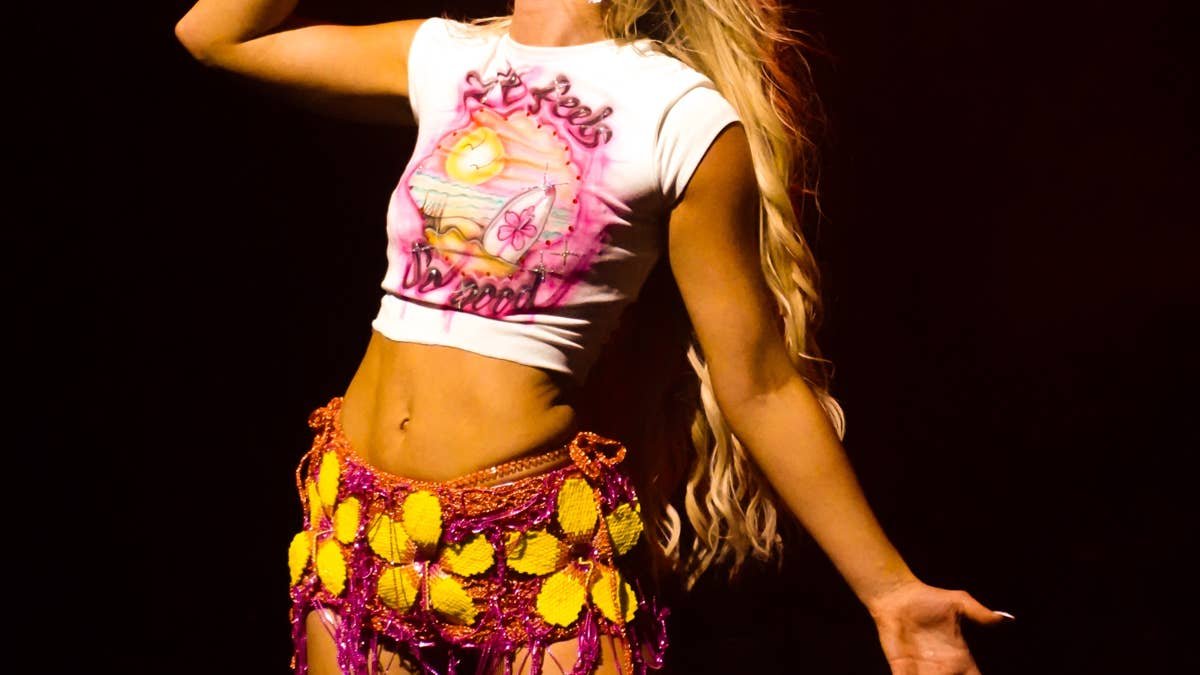
In August 2025, Zara Larsson stepped out on stage to open Tate McRae’s “Miss Possessive” tour, wearing a beaded, hibiscus flower-adorned mini skirt. That special little piece of intricately woven materials turned out to be part of the blueprint for her vibrant, Y2K-infused “Midnight Sun” fashion aesthetic. Of course, neither Larsson nor the emerging designer behind it knew that at the time.
“That piece kicked off a whole new era for her,” Cheshire, England-based knitwear designer Paul Aaron recalls over email. “I was the first person to make the hibiscus flowers that became part of her looks, and it turned instantly recognizable…After that, her stylist had many designers making hibiscus pieces for her.”

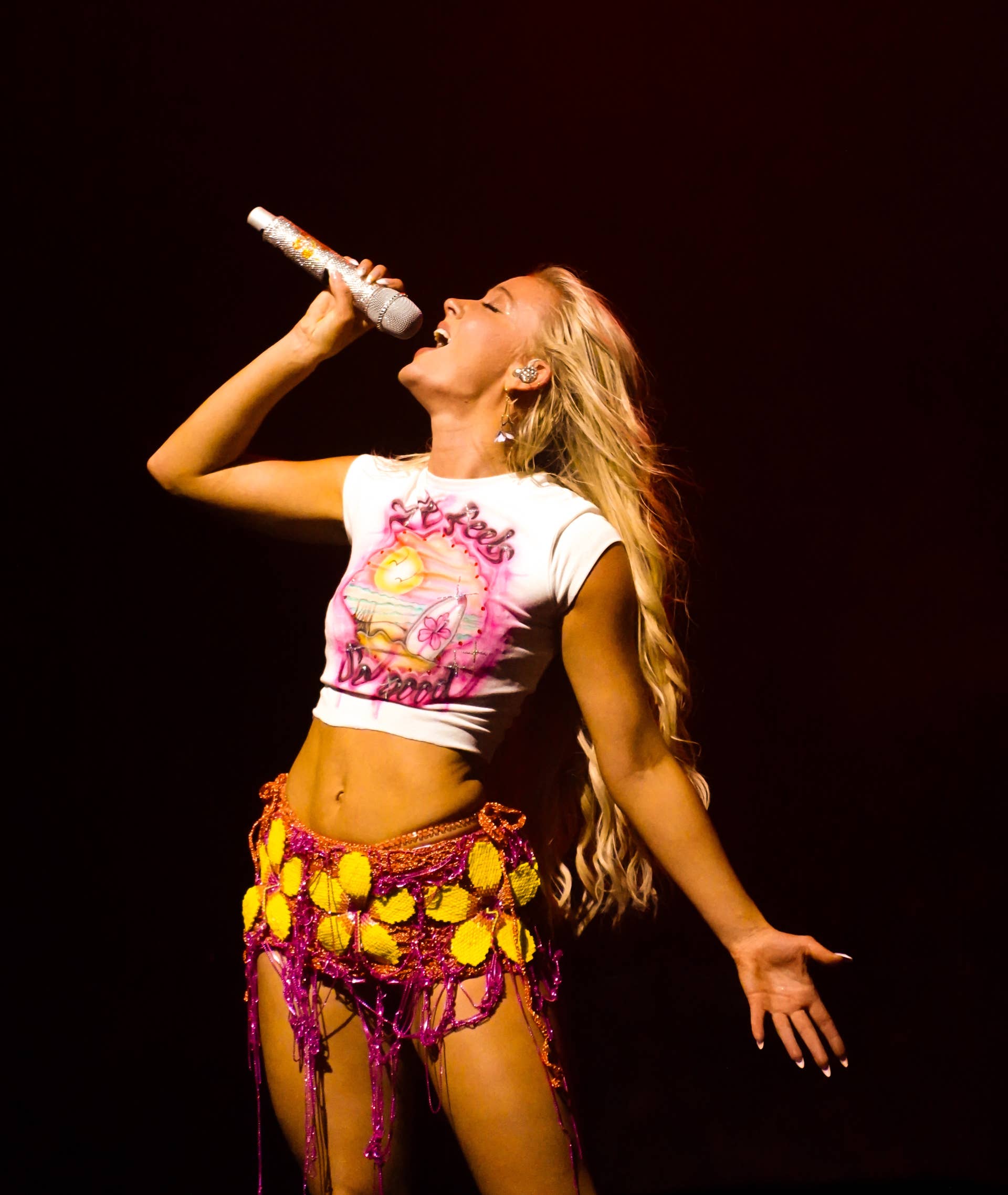
Zara Larsson in a Paul Aaron mini skirt.
Photo: Celina Giebel/Courtesy of Paul Aaron
The Central Saint Martins graduate first got on celebrity stylists’ radar in 2018, when Rita Ora’s stylist, Karen Clarkson, commissioned a custom look for Ora’s headlining set at Manchester Pride. “From there, things really took off,” he says. “It only takes one person to believe in you and give you a chance to prove yourself.” To date, his work has been worn by Shakira, Christina Aguilera, Shenseea, Blackpink’s Lisa, Kylie Jenner and more.
Most recently, Aaron designed a piece for Hilary Duff: Her stylist Neelo Noory tapped the designer to create a silver, fringe, beaded gown for the artist’s “Lucky Me” tour. “I grew up watching her play Lizzie McGuire as a kid,” Aaron says. “So, getting to work with her and her team now, all these years later, is genuinely a full-circle moment.”

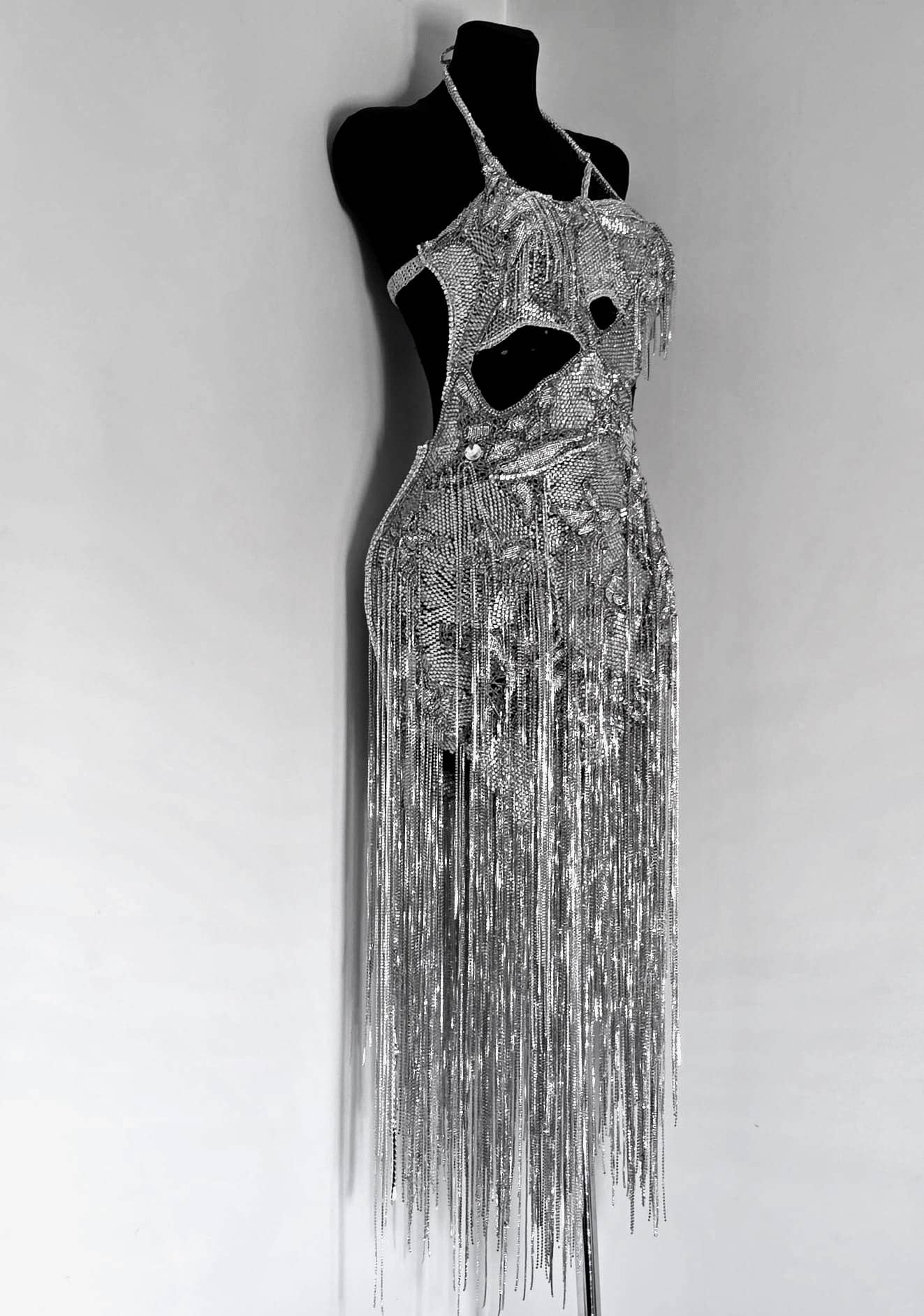
A close up Paul Aaron’s design for Hilary Duff.
Photo: Courtesy of Paul Aaron
Comprising more than 20,000 handwoven glass beads, the look was inspired by early-2000s party dresses — early Gianni Versace gowns were on the reference board. (“I wanted to bring that kind of gown back under the spotlight where it belongs,” he notes.) It took more than three months and 500 hours to put the dress together. Aaron says he hand-wove the glass beads between star crochet motifs to create the fabric, then embellished it with thousands of rhinestones and hundreds of meters of crystal chain for extra movement. “Every second was definitely worth it the moment I saw her wearing it on stage, especially watching it catch the light,” he says.
Would he consider any of these experiences his “big break,” though? Not quite. “I’ll let you know when that happens,” he says. “I’m currently being gatekept! But I am sure my big break will come soon.”
Aaron’s interest in fashion began with Barbie dolls. “I know, very typical,” he says. As a child, he’d play dress-up with his dolls and create new outfits for them from his mom’s old clothes. When he got older, he didn’t know what he wanted to do, so he applied for an art and design course at a community college. However, the school enrolled him in a Fashion Design and Textiles class instead. Clearly, what was presumably an accident turned out to be fate stepping in: He slowly fell in love with design and has never looked back.
Later, he attended Central Saint Martins. But despite it being one of the most notable fashion schools in the world, that wasn’t his favorite period of his life. “I didn’t have a great experience mainly because I didn’t have the resources a lot of the other students had,” he says. “If you don’t have the financial capacity to create what you imagine, it’s genuinely difficult. Scholarships meant for working-class students were often handed to kids who were already wealthy and didn’t need them […] it wasn’t always about pure talent and passion.”
He’d often skip class and grow his skills at home, he adds. He didn’t quite find his niche for beaded knitwear until after he graduated in 2020. “It came from a love of texture, and wanting to make absolutely everything by hand,” he says. “It is all personal — creating a piece out of imagination and watching it take form in front of you. I think it’s one of the most underrated feelings knitwear can give a designer; you’re not starting with a whole piece of fabric that you shape into a dress, but with a thread, building the entire thing from nothing.”
Even with the complexity of Aaron’s designs, he still operates as a team of one — no interns, admin or patternmakers. He alone does all the sourcing, sketching, sewing, rhinestoning and fitting. It’s certainly not the easiest gig, and it’s even more frustrating when his hard work goes unrecognized.
“One of the biggest challenges for an emerging designer trying to get their big break is people not crediting our work,” he says. “It’s definitely difficult when you haven’t been born into the industry, especially at a time when there are barely any jobs for designers, and new individual brands are launching every single day.”
Lack of financial support is another common struggle for independent designers like Aaron: “There’s no real way to start a brand, build a full team, use the highest-quality materials — which are the foundation of your craft and what your clients will come to know you for — and still turn a profit, all at once,” he explains. “It’s simply almost impossible.”
It’s why he’s working to partner with financial investors before he launches a full-fledged brand. Until then, he’s focused on custom work and perfecting his craft (and starting to hire some help). Ultimately, he hopes to change the way we all think about knitwear.
“I’m positive that people will start to recognize the impact of Paul Aaron knitwear in redefining knitwear away from the stigma of ‘cozy-wear,’ and shaping the craft into the future of red-carpet and stage performance looks,” he says. “I truly believe this is only the beginning.”


