There is a woman in a government hospital ward in Srinagar. She is twenty-eight years old, recently married, hoping for a child. She has been on tuberculosis treatment for four months. Her lungs are clearing. Her cough is almost gone. Her doctors call it a success story. But the gynaecologist in the same building has different news. The bacterium that entered her body through the air she breathed did not confine itself to her chest. It travelled silently, without announcement into her reproductive system. Her fallopian tubes are scarred. Both of them. She may never conceive.
This is the story that World Tuberculosis Day does not tell. Not because it is rare. Because it is unspeakable.
India accounted for 26 percent of the global TB burden in 2023, with 27 lakh cases, of which 25.1 lakh were diagnosed and treated, improving treatment coverage to 89 percent, up from 72 percent in 2015. These are good numbers. They represent genuine progress, real lives saved, a programme functioning under enormous pressure. And yet they remain, at their core, numbers — clean columns in reports that do not carry the weight of what TB actually does to human bodies and human futures.
Globally, tuberculosis remains the second deadliest infectious disease after COVID-19, surpassing even HIV/AIDS in its annual toll. The bacterium Mycobacterium tuberculosis has coexisted with our species for fifty thousand years. It has outlasted empires, pandemics, and antibiotics. In Laurie Garrett’s prescient The Coming Plague, she warned two decades ago that humanity’s complacency toward ancient diseases would be among its most consequential errors. TB, she argued, was not a disease of the past. It was a disease of poverty, of crowded living, of systems that choose not to see. We have spent thirty years proving her right.
Kashmir’s Reality: Progress and Persistence
Jammu and Kashmir recorded 11,754 TB cases in 2023 and 10,442 cases by October 2024. Three districts in Kashmir Budgam, Anantnag, and Pulwama have been declared TB-free, while Srinagar and Kupwara have achieved gold certification under the Sub-National Certification programme. J&K has also been recognised with a bronze medal for its efforts under the same programme.
Jammu and Kashmir recorded 1,647 paediatric TB cases over the past three years 600 cases in 2022, 531 in 2023, and 516 in 2024 showing a gradual decline mirroring national trends.
These figures carry a dual meaning. The decline is real and earned. The State TB Officer for Kashmir, Dr. Basra Mir, deserves recognition for leading a programme that has functioned through difficult terrain, cold winters, and rural inaccessibility. But challenges such as stigma, late diagnosis, and treatment dropout remain, particularly in reaching vulnerable populations including malnourished individuals, diabetics, smokers, and cancer patients.
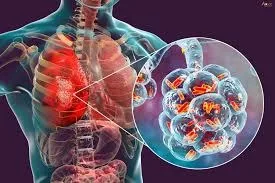
And then there is the challenge that no official report quantifies: the toll of extrapulmonary TB the variant that does not announce itself through coughing, but moves through the bloodstream into the lymph nodes, the spine, the kidneys, and most destructively and most silently, the reproductive organs.
The Fertility Wound Nobody Discusses
Genital tuberculosis, or GTB, is among the most underdiagnosed and socially devastating manifestations of this ancient disease. In women, Mycobacterium tuberculosis reaches the fallopian tubes through haematogenous spread carried in the blood from a primary pulmonary focus that may itself have been mild or even asymptomatic. Once inside the tubes, it triggers a granulomatous inflammatory response that causes progressive scarring, stricture, and in advanced cases, complete occlusion. The woman does not know. There is no pain. There is no fever. There is only, eventually, the quiet grief of repeated failed attempts at conception.
Studies from Indian gynaecology departments consistently show that GTB accounts for between 10 and 15 percent of all female infertility cases in high-burden regions a proportion far higher than in low-burden countries. In men, TB can reduce semen quality, impair sperm motility, and cause epididymal obstruction. The disease is not merely a pulmonary tragedy. It is a reproductive one reaching into marriages, into family expectations, into the particular social pressures that young couples in Kashmir, as everywhere in South Asia, are navigated through by forces far larger than medicine.
The cruelty is in the timing. A woman treated successfully for pulmonary TB is declared cured. She returns to her life. Only when she seeks a pregnancy does the deeper damage surface and by then, the lesions are established, the scarring permanent. Early detection of GTB through endometrial biopsy and laparoscopy, still not routine in district-level health facilities across J&K, could change this outcome. Early treatment can arrest progression. But late diagnosis, in this domain as in so many others, cannot be undone.
The Drug That Heals One Organ and Harms Another
The standard first-line regimen for tuberculosis isoniazid, rifampicin, pyrazinamide, ethambutol is one of medicine’s genuine achievements. These four drugs, given correctly, cure over ninety percent of drug-sensitive TB. They have saved millions of lives. They have also, in a significant subset of patients, damaged their livers.
Drug-induced hepatotoxicity is the most serious adverse effect of anti-TB therapy. Isoniazid, rifampicin, and pyrazinamide are all independently hepatotoxic; when combined, the risk compounds. A patient whose liver enzyme levels rise silently during the first two months of treatment may not experience symptoms until the damage is advanced. In Kashmir, where baseline liver conditions related to diet, viral hepatitis, or prior medication are not uncommon, this risk is not theoretical. It is a clinical reality that requires monitoring which rural and sub-district facilities are often not equipped to provide.
The management of hepatotoxicity during TB treatment forces clinicians into agonising choices suspend the drugs and allow the TB to progress, or continue treatment and risk acute liver failure. This is not a rare dilemma. It is an everyday one in TB wards across this region. It deserves public attention not for alarm, but because awareness drives better monitoring, earlier detection, and ultimately, better outcomes.
The Moral Architecture of a Curable Disease
Tracy Kidder’s Mountains Beyond Mountains, a portrait of physician Paul Farmer’s work against TB among the world’s poorest populations, carries a sentence that should be engraved above every TB programme office in India: the idea that some lives matter less than others is the root cause of all that is wrong with the world. Farmer spent decades arguing that TB is not merely a medical failure. It is a moral one. That a bacterium spread through shared air should kill more people in poor countries than in rich ones is not a law of nature. It is a consequence of choices about funding, about access, about whose suffering registers and whose does not.
Five districts, including Anantnag, Budgam, and Pulwama of Jammu and Kashmir, have achieved End TB targets under sub-national certification. This is worth celebrating. But the goal of TB elimination is not merely a reduction in pulmonary notification rates. It is the elimination of every dimension of the disease’s cruelty; the reproductive damage, the hepatic risk, the stigma that keeps young women from disclosing symptoms until it is too late, the shame that surrounds infertility and causes it to be absorbed in silence rather than addressed in clinics.
On this World TB Day, the column that should be written is not about statistics. It is about the twenty-eight-year-old woman in that Srinagar ward. About the man whose semen analysis returns with results, his doctor hesitates to explain. About the couple who has been told, gently and medically, that the disease came and went and left something behind.
That story is TB in its full dimension. That is the story our health systems must learn to treat, not just count
(The Author is Executive Editor of Rising Kashmir)