






You can almost hear the crowd behind her fall silent for a few seconds, just their hearts beating, waiting for her feet to touch the ground.
If your brain does that thing where it starts playing a montage of someone’s most stunning, memorable moments at the mere mention of their name, it is hard to think of Harmanpreet Kaur without the World Cup-sealing catch.
Every muscle in her body strained toward one purpose: fulfilling that dream. And it was only fitting that she was the one to take it to fruition. That picture carries the essence of Harmanpreet the leader.
For someone with her aura and swagger, she has never been the kind to be comfortable merely watching things unfold around her. She wants to be in the thick of it. It is almost as if she doesn’t know another way.
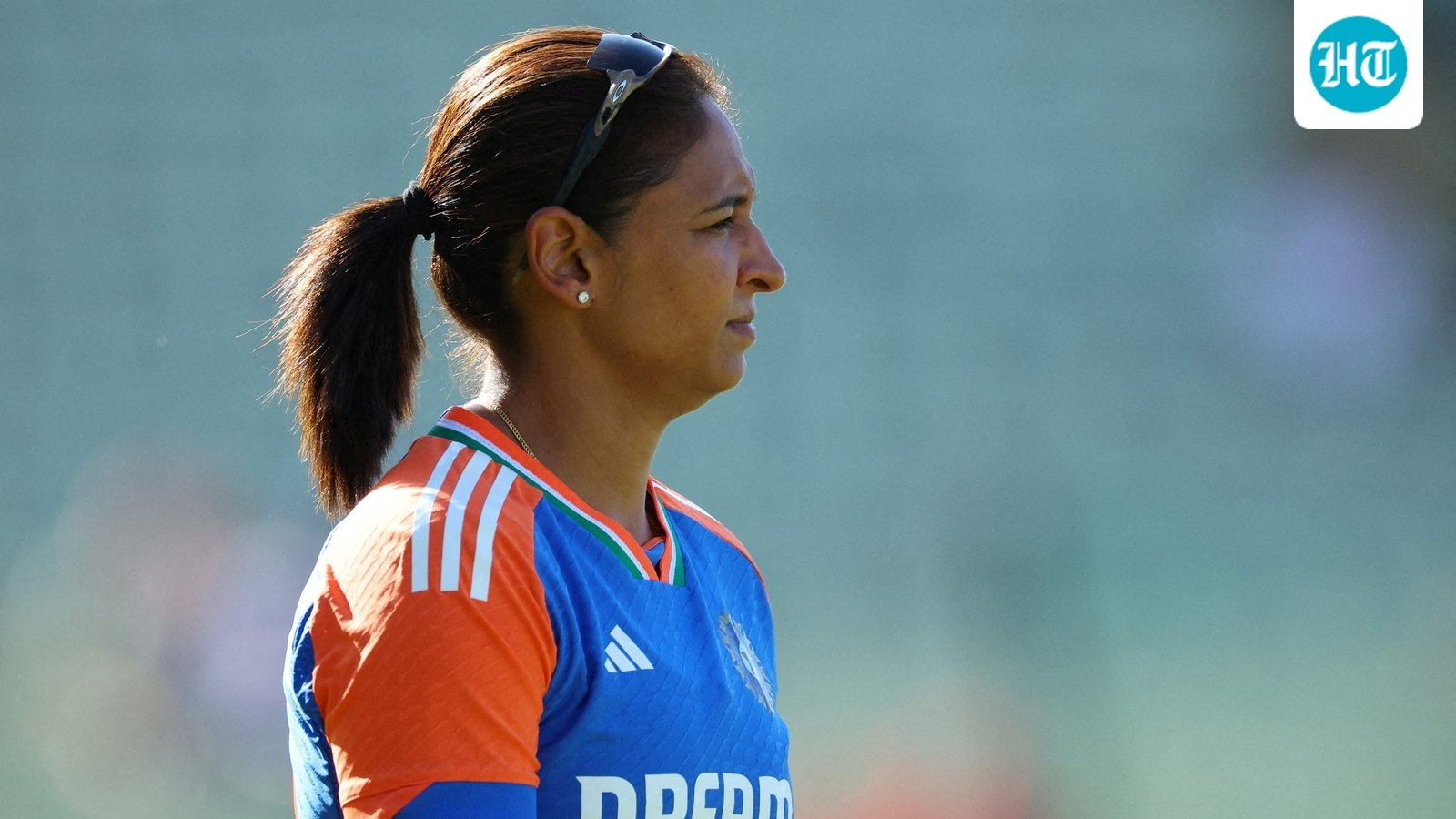
Which is why her decision to step down as India captain is so significant. Harmanpreet leaves as India’s most successful women’s captain. Literally. She led India to their first-ever ICC title, but her longevity and numbers as captain are remarkable. She led India in 211 internationals and won 126 of them with a win percentage of 59.72, more than any other captain in the Indian women’s cricket history.
From her first captaincy assignment in 2012 to 2026 now, she oversaw the team moving from hoping to win major tournaments to expecting to. There were four Asia Cup titles, two consecutive Asian Games gold medals and, the one India had chased for decades — an ODI World Cup. There was also a T20 World Cup semi-final in 2018 and a runners-up finish in Australia in the next edition.
Since she took over full-time in 2018, captaincy became so intertwined with Harmanpreet the cricketer that separating the two was never going to be easy. Perhaps that is why one of the most endearing moments from India’s World Cup triumph came after all the cricket was over and it showed a side to Harmanpreet that comes only out once in a while
The unguarded and vulnerable one, hidden beneath her calm and confident exterior. The Harmanpreet that loves grooving to Punjabi rap, who will break into bhangra on stage and the one who would run to her father, away from her feisty and fearless persona.
“If you see that clip of her where Harman runs to her father and jumps on him for a hug… that’s exactly what she did when she hit her first six as a kid 25 years ago,” her best friend and manager Noopur Kashyap told HT. “Some moments and expressions are so embedded in your subconscious mind that they get recalled and recreated in moments like that.”
Strip away the captaincy, trophies and responsibility, and underneath remains that girl who loved hitting sixes. And as she heads into the twilight of her career at 37, that is the Harmanpreet she wants back.
“We, and she herself, want to see the 2.0 version of her — where she’s just so expressive,” Kashyap added. “Just like the Harman we know.. the cricketer who started hitting sixes and breaking car windshields.
“After bearing so many responsibilities, you somewhere start to negotiate with your own performances.”
Harmanpreet spoke about that feeling with Kashyap: “Mereko jis cheez se mohabbat hai, woh mere se nahi chhinni chahiye, baaki sab kuch toh mera waise bhi nahi hai. (The thing I love shouldn’t be taken away from me. Everything else wasn’t mine anyway).”
Harmanpreet wanted to continue as captain until India’s next major assignment, the Champions Trophy but her instincts suggested that perhaps, it was the right time to let go.
“You cannot be weighing that responsibility and be answerable for everyone in the team, whether they are contributing or not. That probably was an eye-opener for her.”
Today, that weight of years of responsibility may have felt heavy but as been the case for many special leaders, responsibility rarely diminished Harmanpreet the batter.
If anything, it often unlocked her. Her ODI average rose from 33.8 without the captaincy to 44.0 as captain. In T20Is, from 23.3 to 32.8. She scored a colossal 5,486 international runs while leading India.
There had been murmurs in the last few months too, when the returns weren’t as aggressive or feisty and periods when numbers dipped. The early exit at the T20 World Cup this year didn’t help. In the backdrop, Smriti Mandhana’s runs and growing leadership credentials made questions about succession grew more frequent.
Yet even when Harmanpreet wasn’t at her explosive best, she continued to create the big moments. Rather, they continued to find her. At the 2024 T20 World Cup, with India’s campaign hanging by a thread against Australia, she made an unbeaten 54 in a lost cause.
A year later, when Australia stood in India’s way again. With India chasing 339 in an ODI World Cup semi-final. At 59/2, Harmanpreet walked into the kind of situation that has followed her throughout her career, especially against the mighty Australia. She made 89 off 88, adding 167 with Jemimah Rodrigues and helping India pull off a historic chase.
She finished with 331 runs in Women’s ODI World Cup knockout matches across editions, a reminder that when the stakes rose, Harmanpreet found a way of rising too.
Perhaps stepping down was simply another instinctive decision. Her instincts had long told her when to take charge, when to attack and when to make the big call. This time, they told her it was time to let go.


