



In 2023, a poster for “Practical Magic 2” began circulating online. It was fake — a fan rendering cast out into the ether — but it spread anyway. For anyone who dabbles in New Age woo woo, a sequel ending up happening might count as a successful manifestation, the faux poster a makeshift vision board. We witches, however, call that a spell. But remember Aunt Jet’s warning long ago: Be careful what you wish for.
When “Practical Magic” was first released in 1998, it was considered a box-office failure. Critics panned it (Roger Ebert gave it two stars, blasphemously criticizing the iconic “This Kiss” scene), and it made only $46.7 million against its $75 million budget. Nearly 30 years later, though, it’s built a devoted following made up of OG fans and newer converts alike, drawn in by sisterhood, witchcraft and pre-whimsigoth ’90s style. We could sum it up as nostalgia, but it’s more than that.
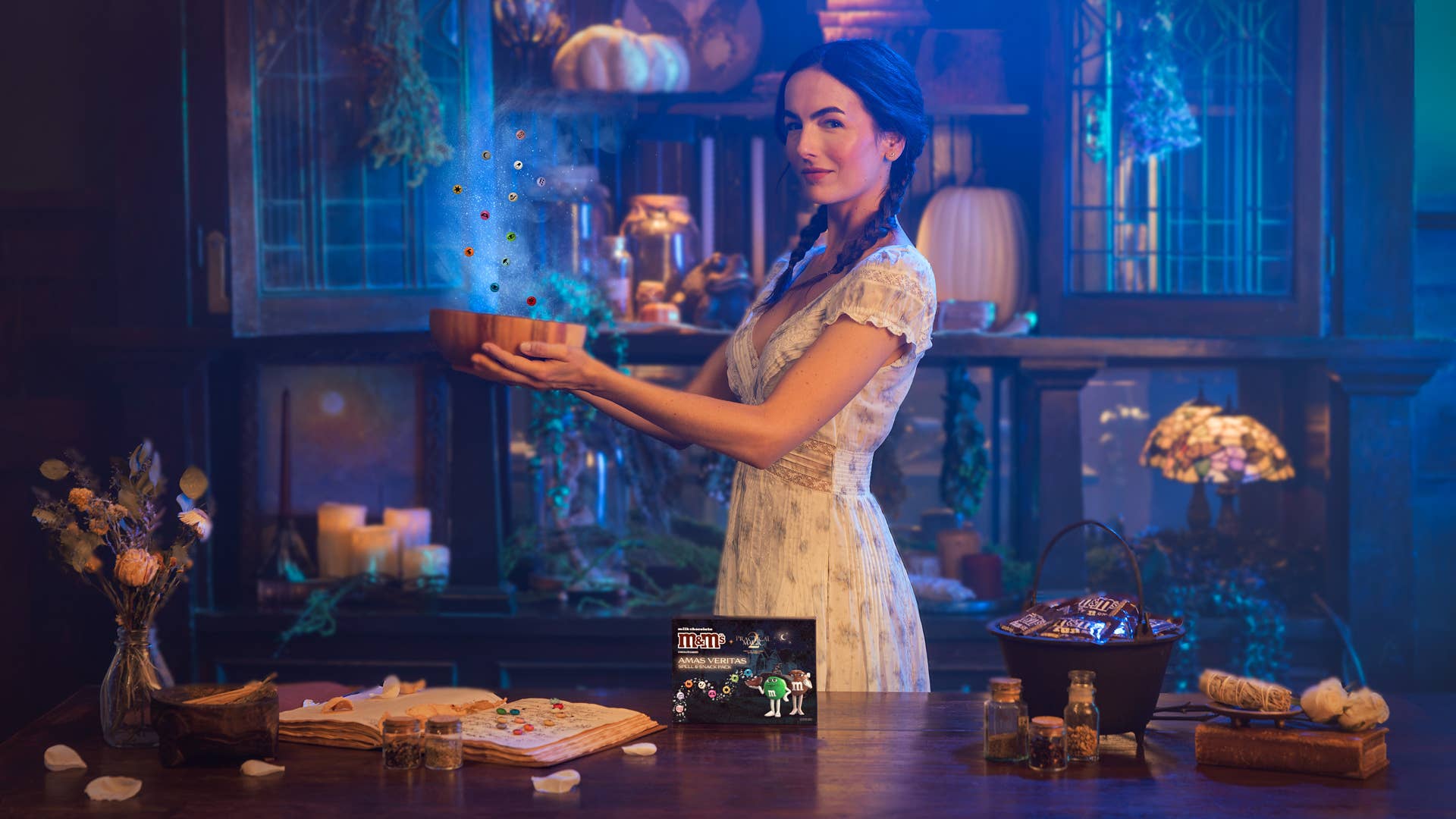
Photo: Courtesy of M&M's
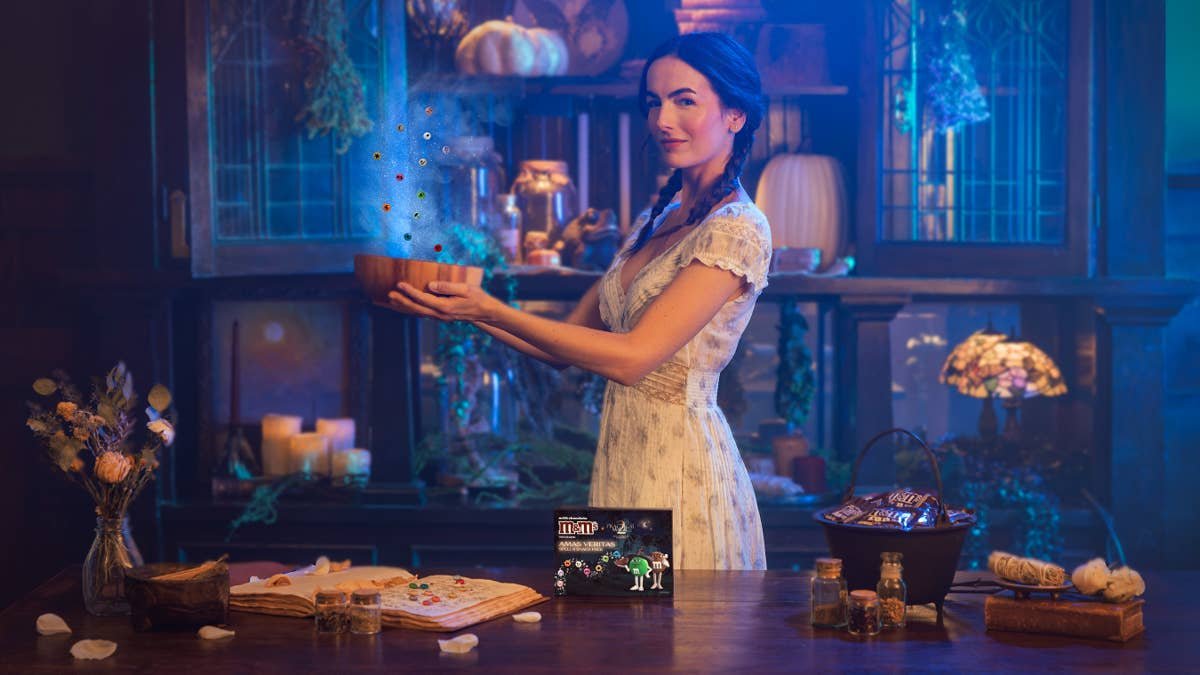
This week, on Sept. 11, the highly anticipated sequel will hit theaters, but it comes with enough brand partnerships to put “Barbie” Summer to shame. Target rolled out graphic tees and cropped hoodies, while Wayfair built its first-ever film partnership around Owens house-esque home decor. Flamingo Estate curated a beautifully thought-out “Everyday Alchemy” seasonal box, while Ninja rolled out a whole line of Slushi machines in “Practical Magic”-inspired hues. Blaze Pizza joined in with a”Mystic Margherita” pie, and even M&Ms got in on the fun with its very own limited-edition “Spell and Snack” pack. The only thing we’re missing is a McDonald’s Happy Meal (which we fans would still happily buy).
For Barbie, the MCU or any other kind of movie backed by a multi-billion-dollar franchise, that kind of marketing avalanche makes sense. But for a niche film about a family of witches who live under a centuries-old curse and make margaritas at midnight, it’s a little unexpected. So how could a 30-year-old “flop” become such a hot commodity that its merch rollout is this intense?

Photo: Courtesy of Flamingo Estate
Jannine D. Lasaleta, a professor at Yeshiva University whose research examines how nostalgia shapes spending, says that when we’re nostalgic, we care less about money. “The motivation to hold onto it, to make more of it, goes down… you’re more willing to spend it,” she says. (Which probably explains why millennials will pay top dollar to see the Backstreet Boys at the Sphere in Las Vegas.) Nostalgic memories are tied to feeling socially supported, she explains, and when you implicitly feel like your needs could be met by the people around you, money stops feeling as urgent to hold onto.
There’s a scarcity multiplier, too. Unlike Marvel or Barbie, “Practical Magic” IP isn’t everywhere, and that rarity, combined with the nostalgia, makes the moment feel more valuable when it does arrive. That’s also why she doesn’t expect the movie’s merch to trigger the kind of consumer fatigue that might hit other franchises. It simply was never everywhere to begin with. (Fans, like me, had to custom-make our own merch.)
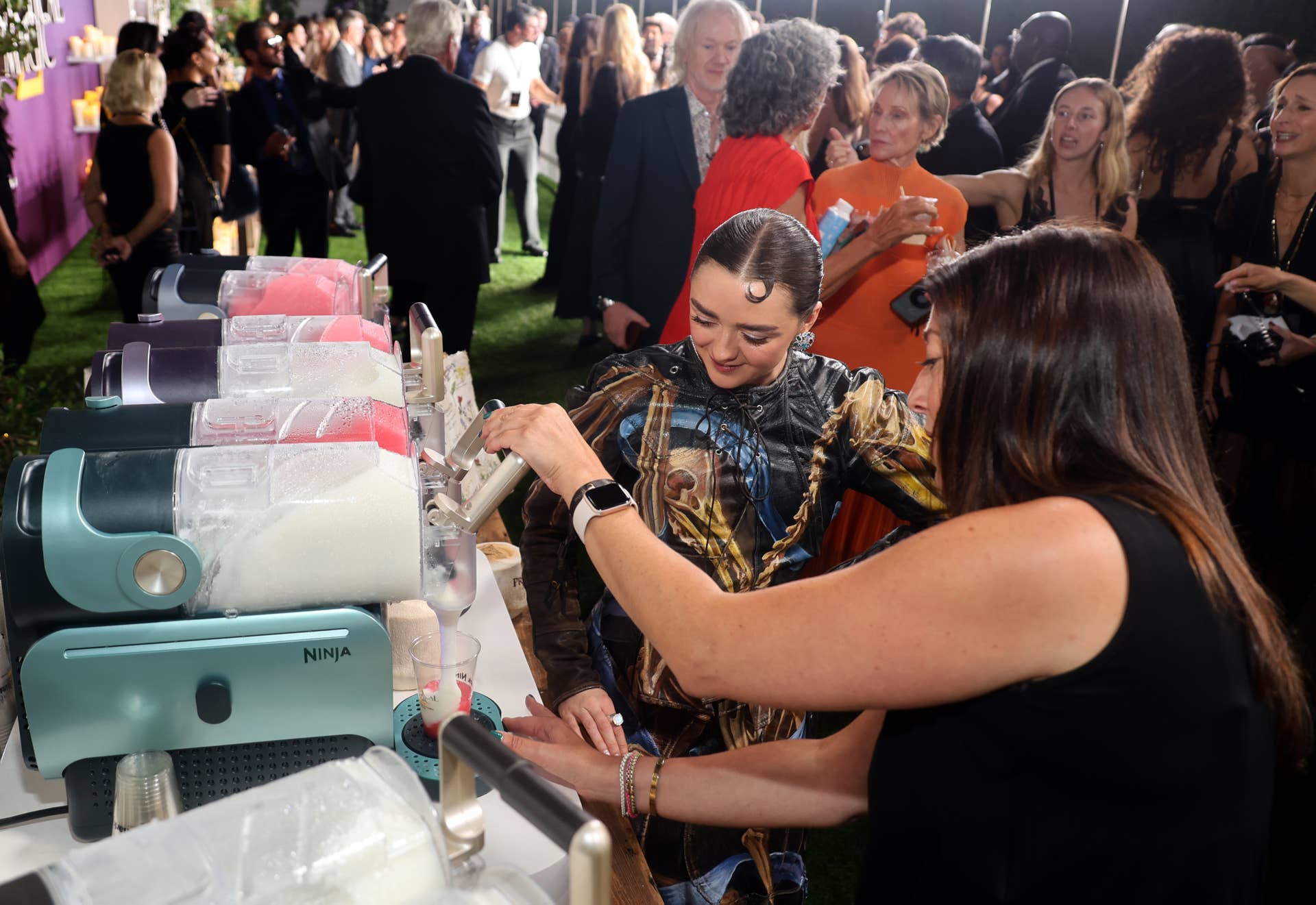
Photo: Kayla Oaddams/Getty Images for Warner Bros. Pictures
Nostalgia does something else, too: It gets folded into identity. “Nostalgic entities can facilitate a sense of self-continuity,” says Lasaleta — buying into something that shaped you as a teenager has a way of connecting who you were to who you are now. It’s also, she notes, tied to authenticity: Nostalgic objects feel more real to us than new ones, even when they’re objectively the same thing.
According to Stefany Lopes, the events and culture strategist at trend forecasting firm WGSN, the hype around “Practical Magic” goes beyond nostalgia. “It gives audiences a comforting world they can actively step into at a time when reality feels increasingly complex,” she says. “For millennials, the film offers emotional refuge and a return to something familiar. For Gen Z, it taps into a fascination with the perceived simplicity, intimacy, and analog charm of the 1990s, even if they did not experience the decade firsthand.”
Lopes also connected the moment to something WGSN has dubbed “the New-Age Mystics,” a youth subculture she flags as key for 2026. Young people rattled by climate anxiety and economic instability are building “personal belief systems shaped by Wicca, alchemy and folklore,” offering a sense of control outside organized religion. It makes sense — historically, in times of turmoil, people turn more to witchcraft and the occult.
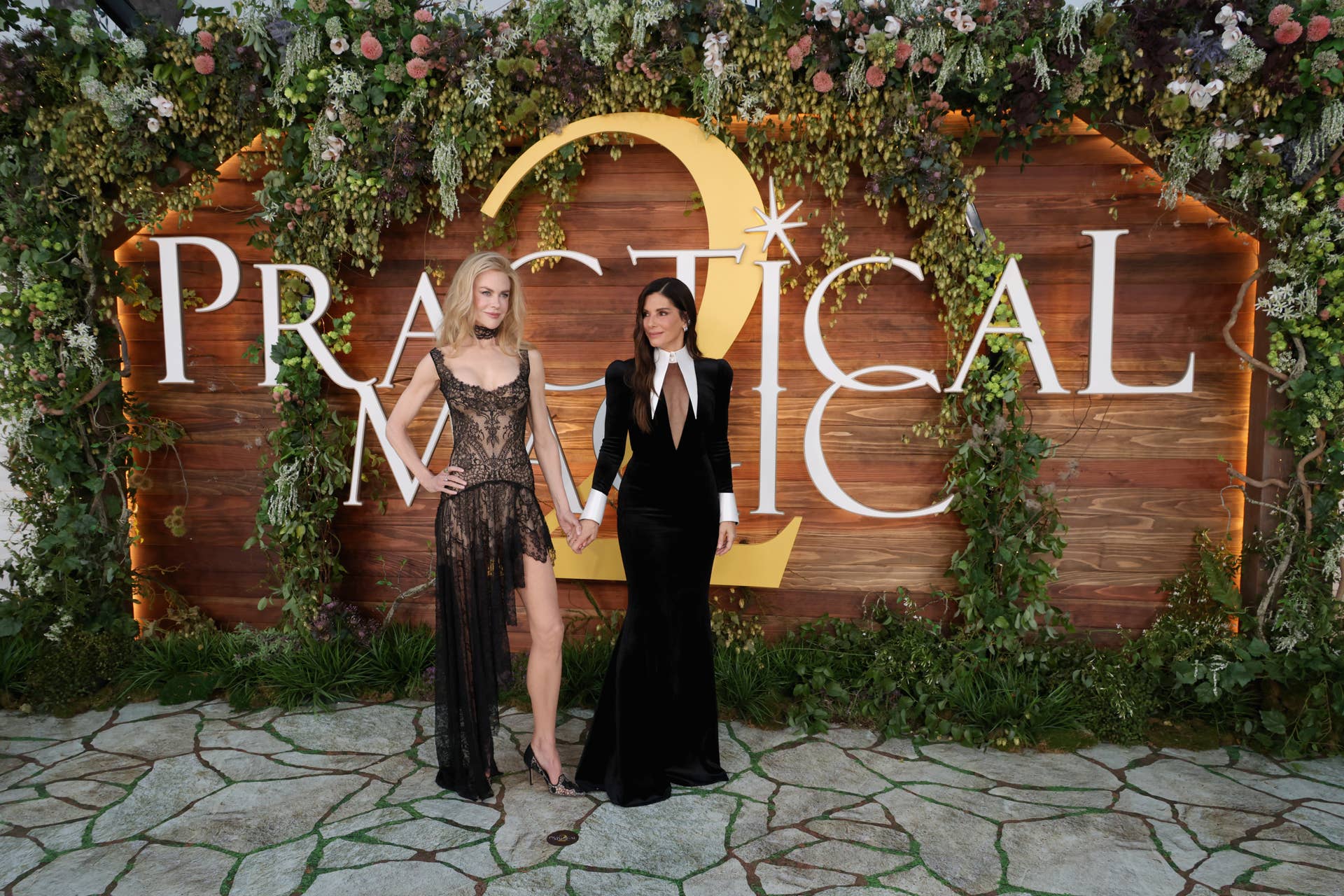
Photo: John Shearer/WireImage
“Practical Magic 2” might appeal to some for comfort, aesthetics and plain old trend contagion, but it’s also happening during a perfect storm — a broader cultural turn toward magic as a coping mechanism. Nicole Kidman and Sandra Bullock’s sisterly chemistry is just the cherry on top. Lopes doesn’t see it slowing down, either, but she’s clear about the actual risk. “Cultural credibility comes from contribution, not visual borrowing,” she says. “Without that substance, brands risk being dismissed as ‘culture vultures’ rather than welcomed as meaningful collaborators.”
One of these meaningful collaborators is Awe Inspired, a jewelry brand that has built its identity around goddess mythology and female empowerment. It spent about a year building the collection with Warner Bros., working from real script pages and prop references. (“Practical Magic 2” isn’t the brand’s first film collaboration, either; it also did a collection for “Forbidden Fruits,” another witchy, if far smaller, film.)
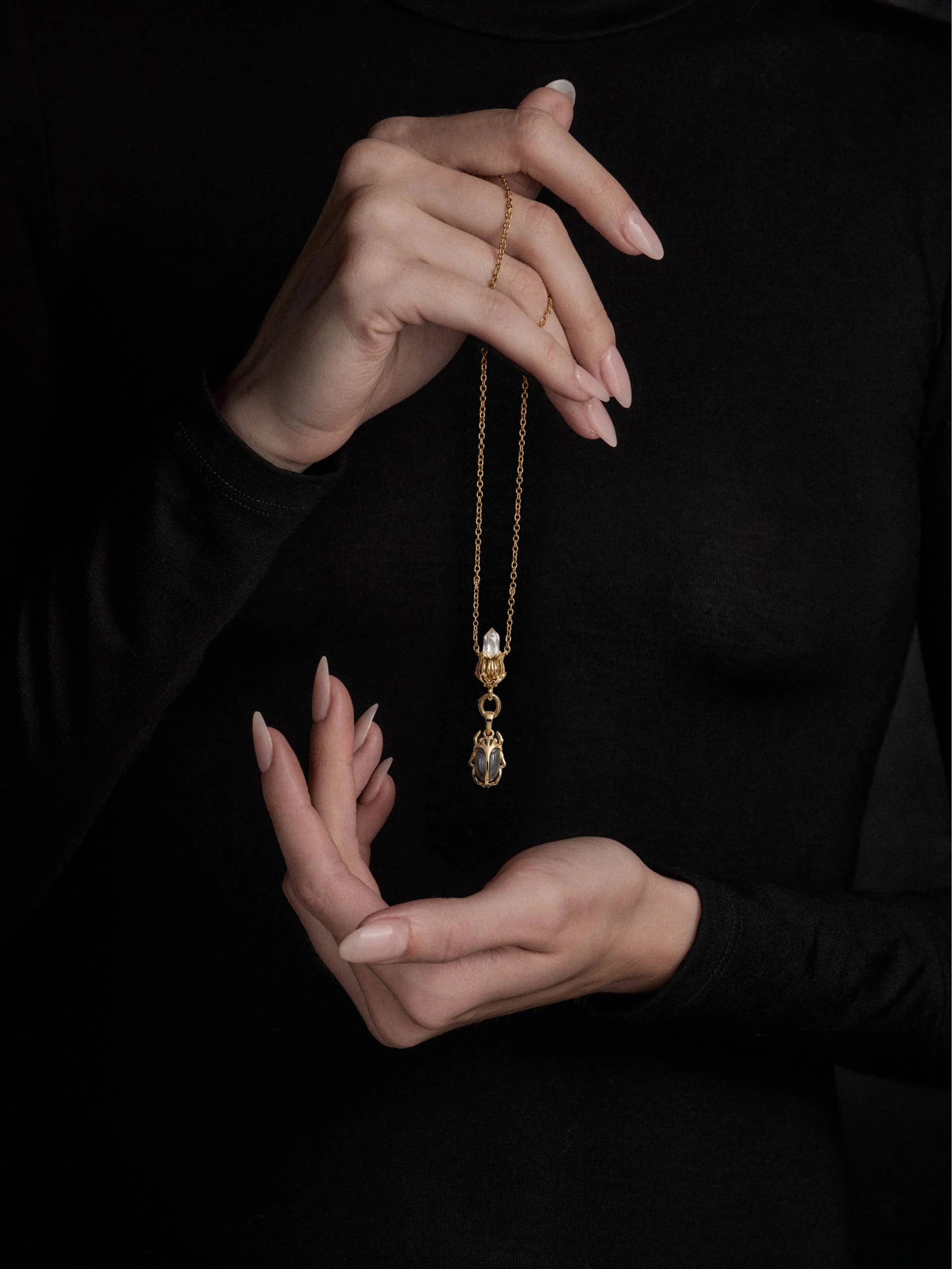
Photo: Courtesy of Awe Inspired
But Jill Johnson, Awe Inspired’s co-founder and artistic director, says the film’s themes make this collaboration feel different. “It told the truth about how power moves between us, mother to daughter, sister to sister,” she says. “Every family carries its own mythology, the objects and stories we hand down without ever explaining why. That’s what drew us to this collaboration, the chance to turn that inheritance into something a woman can hold and one day pass to someone she loves.” Her son and co-founder, Max Johnson, adds: “It’s one of the few films that made women’s intuition look like strength instead of something to be tamed. Almost 30 years later, that idea feels more relevant, not less.”
Poppy and Pout, a “sustainable” lip balm brand, got the same kind of call on a much smaller scale. “We knew we wanted it to feel witchy, but modern,” says co-owner and chief brand officer Krysta Morgan. Her team leaned into their existing junk-journal aesthetic, with its collage-style packaging, florals and botanicals to create two flavors: Garden Spell and Midnight Margarita.
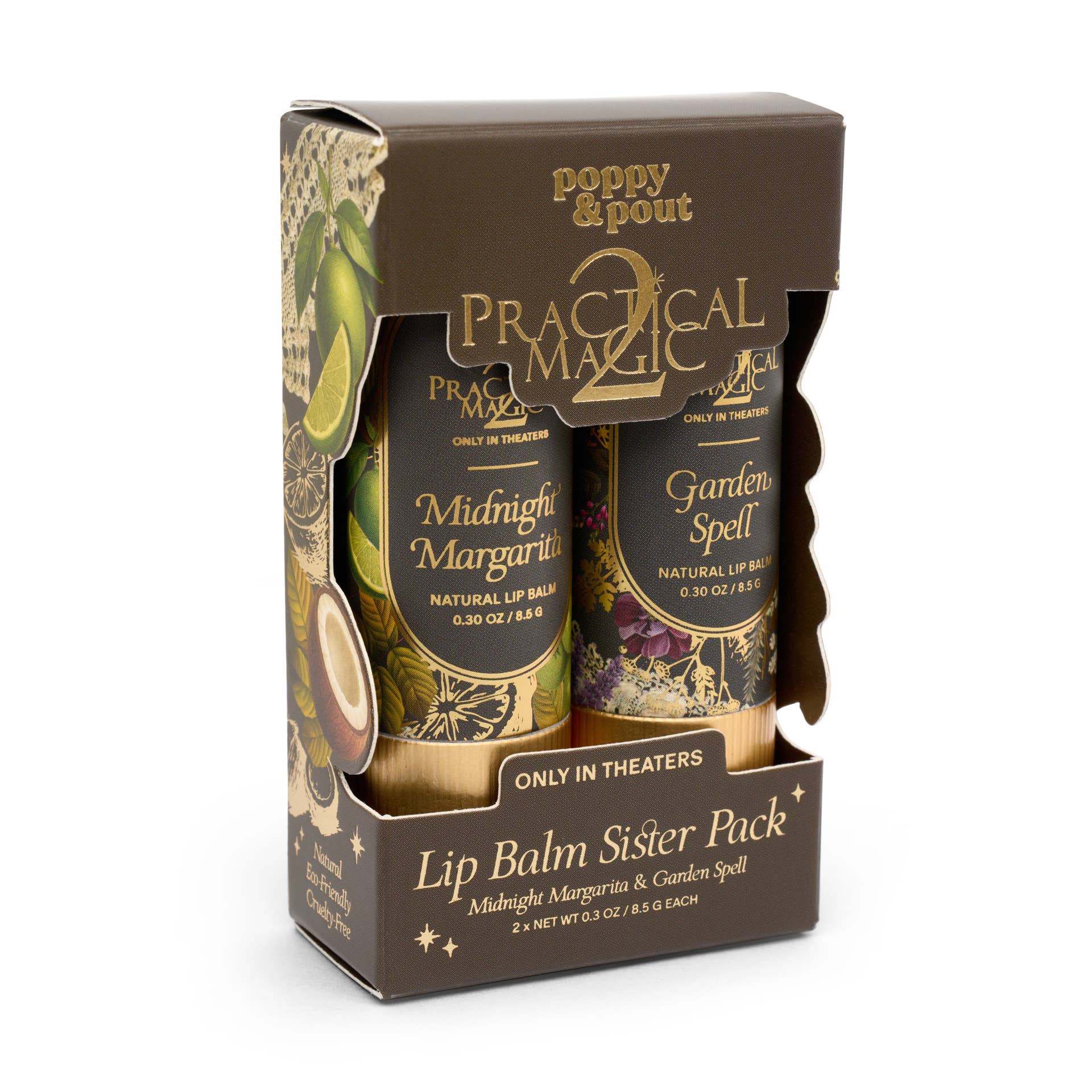
Photo: Courtesy of Poppy & Pout
But nobody has watched this shift more closely than the fans who were making their own “Practical Magic”-inspired merch years before the sequel was in motion. Ladymoon founder Lauretta Wong began designing items nearly a decade ago. Her Midnight Margarita Coven pin became a bestseller in what she calls a “niche little club” of fellow obsessives. “I think once the internet witch became a whole-ass situation, everything witchy became popular again, and more and more people started coming out for that specific fandom,” she says. Over the past year, she’s noticed her sales ramping up, so she’s had to order triple what she normally would.
Watching the official rollout, Wong was surprised and mostly delighted, but she noticed which brands did their homework and which didn’t. “It was really smart to include such a wide range of home, beauty and fashion products. Just like Sally and Gillian — it feels relatable.” She singled out Flamingo Estate for using sustainable mugwort instead of white sage in a smoke cleanser — a detail that shows the brand actually researched the tradition instead of borrowing its aesthetic. She questions others for either slapping an “inspired by ‘Practical Magic 2′” sticker on an already existing product or for what seemed like AI-generated work. “That doesn’t compel me to buy,” she says. Instead, she would have liked to see a cast iron cauldron collab with Smith & Clark, or an eye-shadow palette with a brand like Half Magic (though, given Half Magic’s ties to A24, a Warner Bros. crossover was probably never in the cards).
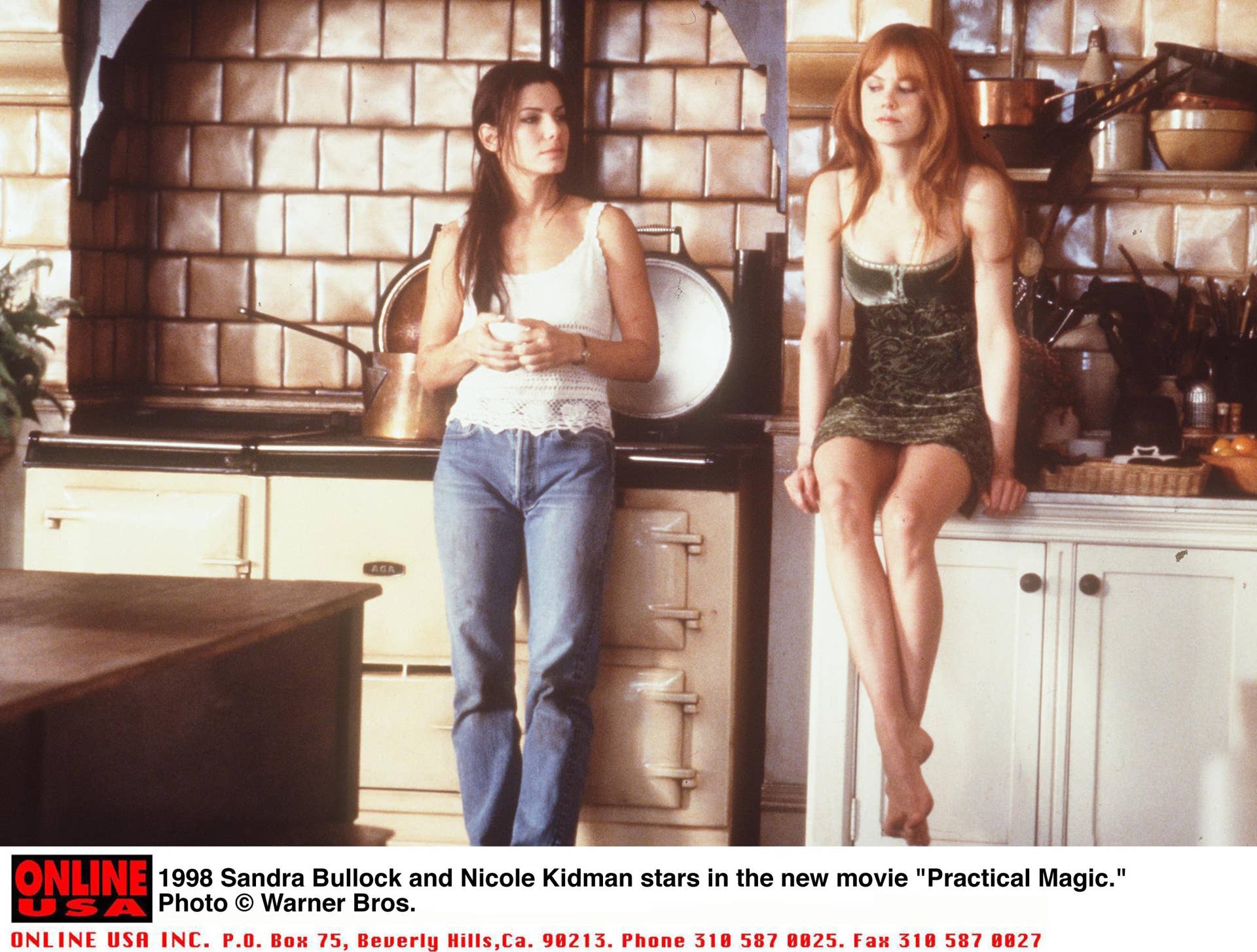
Photo: Getty Images
Kristina Babich and Justina Carubia have spent four years interviewing “Practical Magic” fan-artists on their podcast “Magnolia Street” (named after the street where the Owens sisters live), and they feel this tension firsthand. Babich had been waiting for this world to expand for years, watching earlier attempts, like the HBO prequel series “The Rules of Magic,” fall apart.
“For fans, there really wasn’t much of anything for such a long time,” says Babich, which is what makes her reaction to the current wave complicated. “The irony is that we went from having almost nothing to suddenly having so much that it can feel oversaturated,” she says. “I’m thrilled that the franchise is finally being celebrated on this scale. I just wish some of that celebration had been more intentionally rooted in the incredibly creative fan community that helped keep ‘Practical Magic’ alive in the first place.”
Carubia, for her part, describes herself as “somewhat of a purist” about the original film, and admits she’s approached this whole rollout with cautious excitement. Like Wong, her critique of the merch is more specific than “too much” — it’s about what’s missing. She wants more of what actually lived in the Owens house, such as apothecary jars, seed packets, herbs, beautiful glassware and kitchenware. “I’d much rather own something that makes another fan say, ‘Wait… is that a ‘Practical Magic’ reference?’ than something with the movie title printed across it,” she says.
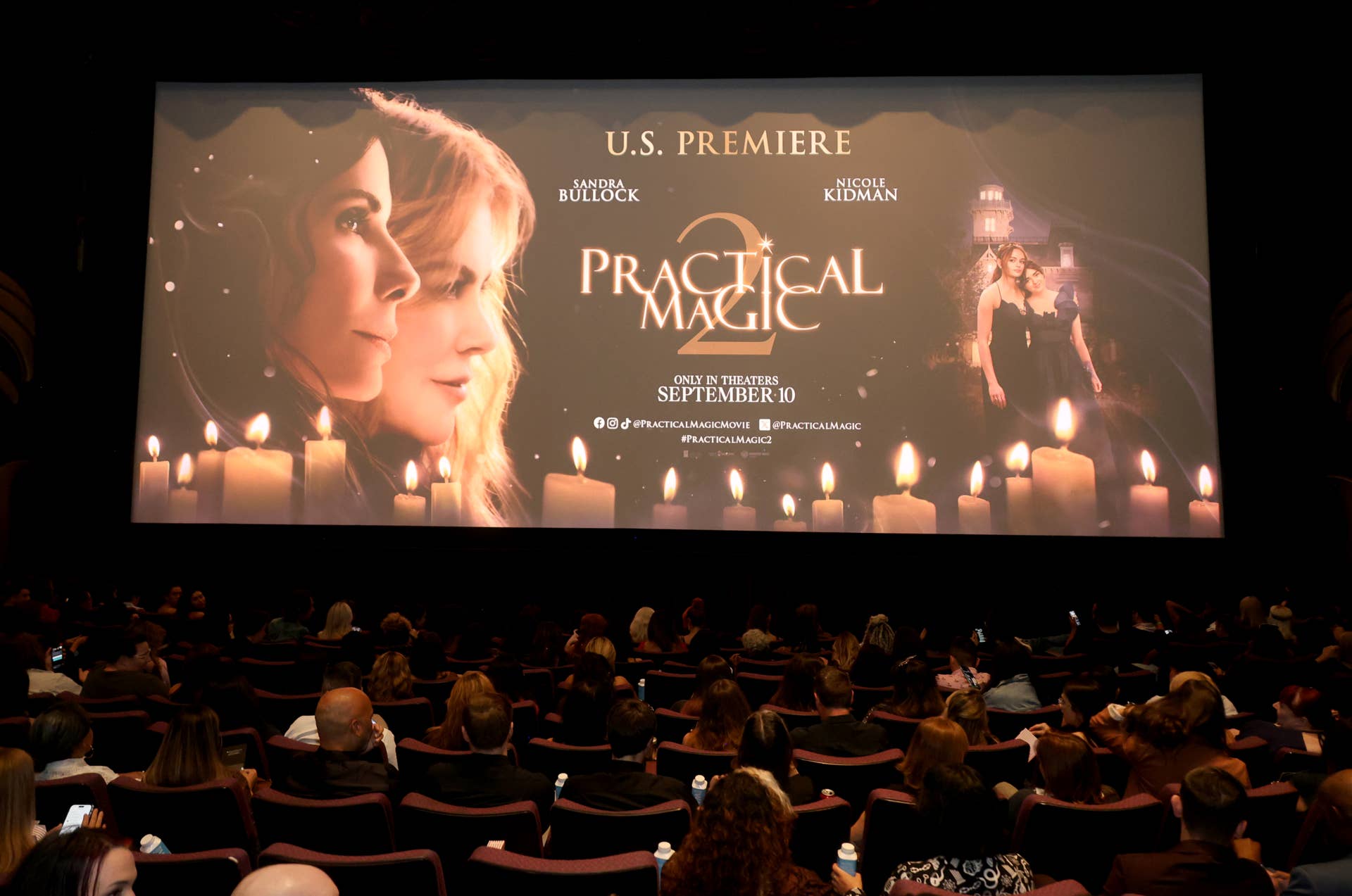
Photo by Kayla Oaddams/Getty Images for Warner Bros. Pictures
Some of what’s rolled out so far, she says, is “giving ‘department store'” — with more contemporary, conventional looks over the thrifted, inherited, decades-collected wardrobe that the original film’s costumes by Judianna Makovsky evoked. “I don’t expect Sally and Gillian to still be wearing their ’90s wrap skirts and lace camisoles, as they’re at different stages in their lives, but the original wardrobe felt collected, lived-in and timeless,” she says.
The best collaborations, Carubia says, are “the ones that understand what fans actually love about ‘Practical Magic’, rather than simply recognizing that it’s having a moment and putting the name on another product.” Again, Aunt Jet did warn us. We wished for the sequel, and we got it — margarita blenders, M&Ms and all.
