


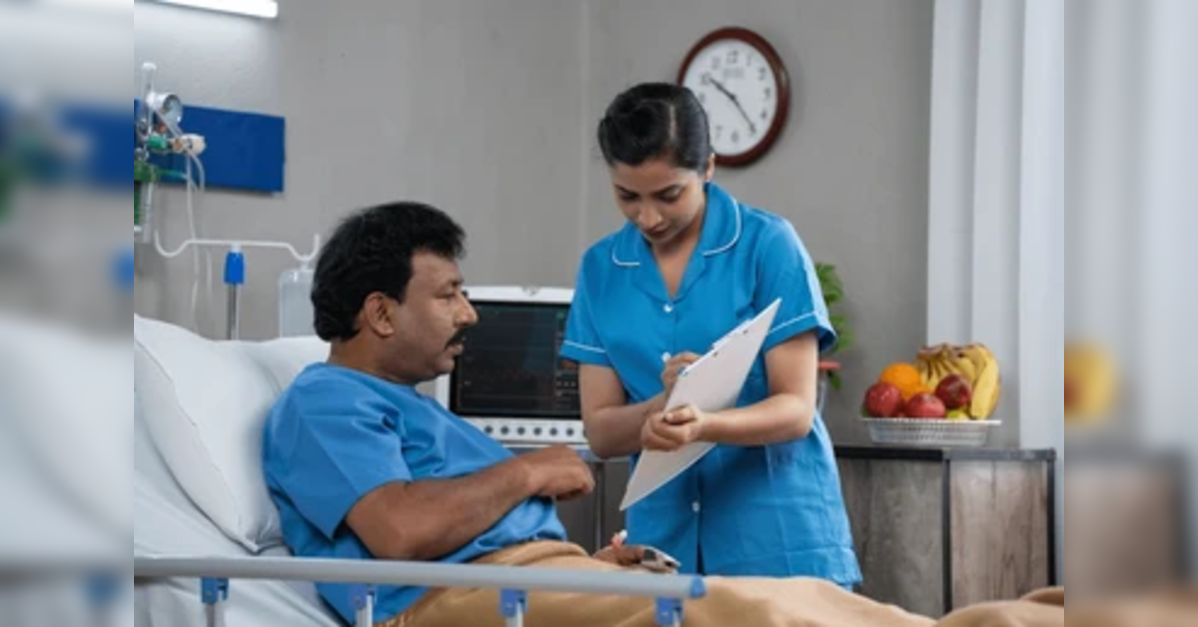
New Delhi: On the occasion of International Nurses Day, healthcare leaders underscored the indispensable role of nurses in strengthening healthcare systems, even as global and national data highlight a growing shortage of trained nursing professionals.
According to the World Health Organisation (WHO), nurses constitute nearly 59 per cent of the global health workforce, making them the largest group of healthcare professionals worldwide. However, the world continues to face a shortfall of around 5.9 million nurses, with the largest gaps in low- and middle-income countries.
In India, the nurse-to-population ratio has improved in recent years but still faces challenges in meeting rising healthcare demand, particularly as the country expands hospital infrastructure, critical care capacity and digital health systems. Experts say strengthening the nursing workforce will be essential to improving patient outcomes and healthcare delivery.
E.O. Mariamma, Group Nursing Superintendent, Kailash Healthcare, said,”Nurses remain the backbone of hospital care, performing complex clinical tasks while providing emotional support to patients and families. From administering life-saving medications and monitoring critically ill patients in the ICU to offering compassionate care that eases anxiety during long nights in the wards, nurses form the heartbeat of every hospital.”
She noted that nurses serve as key partners in multidisciplinary medical teams, bridging the gap between medical expertise and patient needs. “Their vigilance often catches subtle changes in patient conditions that can turn the tide in emergencies. At the same time, they are driving innovation by adopting digital health tools and championing infection control protocols that safeguard communities,” she added.
Echoing similar views, Deepak Sharma, Co-founder and CEO, MedLern, said,”Nurses today play a far broader role than traditional caregiving, contributing significantly to patient safety, clinical decision-making and specialised care.”
“As healthcare becomes more complex and technology-driven, the role of nurses is evolving rapidly. However, structured training and upskilling remain inconsistent across the sector,” Sharma said.
He added that investing in continuous learning ecosystems is essential to equip nurses with clinical, technical and leadership capabilities. “Empowered nurses improve patient outcomes, whether through the use of AI tools in hospital wards or by leading multidisciplinary care teams. Strengthening training will boost confidence, improve retention and ultimately enhance the quality of patient care,” he said.
Dr. Alka Kriplani, Chairperson, Obstetrics, Gynecology and ART at Paras Health, said nurses remain indispensable to healthcare delivery across all stages of patient care.
“Nurses are the foundation of every hospital system. From handling emergencies and supporting critically ill patients to providing emotional reassurance to families during difficult times, their contribution extends far beyond routine clinical responsibilities,” she said.
Kriplani noted that nurses today operate in a rapidly evolving healthcare environment that demands high levels of accuracy, resilience and empathy. “Their ability to respond swiftly during critical situations, coordinate seamlessly with medical teams and ensure round-the-clock monitoring is essential to the functioning of any healthcare institution. Beyond clinical expertise, the human connection they build with patients often becomes a source of strength and hope during recovery,” she added.
Experts stressed that empowering nurses with better training, resources and recognition will be critical to strengthening healthcare systems and improving patient outcomes.
