




The body-care category is enjoying its “skinification” moment, eschewing simple scented creams for “facial-grade” formulas packed with ceramides and actives. Gen Alpha consumers (or social media-savvy 8- to 15-year-olds who boast $95 billion in spending power, according to DKC) are increasingly tapping into all things body care, as seen in these so-called “Sephora kids” descending upon the skin-care aisles. But, in light of Gen Alpha skin-care enthusiasts flocking to anti-aging creams and retinols years before their first wrinkle even materializes, how can body-care brands formulate products that work with — rather than against — these tweens’ growing skin?
“Children’s skin is biologically different from adult skin,” Dr. Tiffany Libby, a Rhode Island-based double board-certified dermatologist and Mohs surgeon, tells Fashionista. “It has a more delicate barrier and can be more susceptible to irritation.”
Thanks to their still-developing skin barriers, children experience higher transepidermal water loss. Biology then hits the fan during puberty, with hormonal changes spiking sebaceous (a.k.a. oil gland) activity and altering hydration levels. Introducing retinoids, exfoliating acids or heavy fragrances found in adult skin-care products could damage Gen Alpha’s skin barriers, potentially leading to a whole host of complications: redness, burning, peeling, dryness, itching, rashes, irritant dermatitis, allergic contact dermatitis and increased skin sensitivity.
“The concern is not only irritation in the moment, but also that repeated exposure to unnecessary actives and fragrance may make the skin more reactive over time,” Dr. Martha Viera, a Florida-based board-certified dermatologist, explains.
Formulating body-care products for Gen Alpha — the youngest of which are weaning off diapers while the eldest of whom are preparing for their driving tests — doesn’t have to be complicated. In fact, the dermatologists we consulted agree: It’s best to keep formulas simple. Tween-centric brands can leave the AHAs and BHAs in the lab, and instead go all-in on protective body care.
“Aim for basic barrier support focused on hydration without fragrances,” New York City-based Board-Certified Dermatologist Dr. Teresa Song advises. “Common ones include pH-balanced soap-free cleansers and lipid-replenishing moisturizers, since their skin barrier is more permeable and susceptible to irritation.”
Dr. Libby concurs: “Simplicity, safety and education should be the focus.” There’s a laundry list of actives Gen Alpha body-care brands should steer clear from to avoid unnecessary irritation, but which ingredients break through as safe and effective? Glycerin, ceramides, squalane, colloidal oatmeal, panthenol, hyaluronic acid and ectoin are a few dermatologist favorites for growing skin, according to Dr. Libby.
Photo: Courtesy of Evereden

With an emphasis on age-appropriate ingredients, the beauty brands leading the Gen Alpha body-care boom are churning out gentle formulas housed in vibrant, eye-catching packaging. Evereden, an OG kid-centric beauty brand in the fast-growing Gen Alpha space (it launched in 2018 when the “Sephora kids” were “Sephora toddlers”), recently introduced its first-ever body-care product: Kids & Teen Multi-Vitamin Deodorant ($19). As the latest addition to Evereden’s multi-vitamin collection, the aluminum-free deodorant features vitamins B5 and E to lock in moisture, magnesium hydroxide to neutralize odor and coconut oil to hydrate the underarms.
“It’s not just preventing odor, which is what you should expect from any deodorant, but above and beyond that, it’s really protecting the skin, giving your underarms the same skin-care benefits as you would expect from any facial skin-care product,” Evereden Co-Founder and Co-CEO Kimberley Ho says. Plus, it’s the first deodorant to earn an official microbiome-friendly certification, according to Ho, meaning the gentle formula preserves and protects the skin’s natural microbiome.
Photo: Courtesy of Prereq Care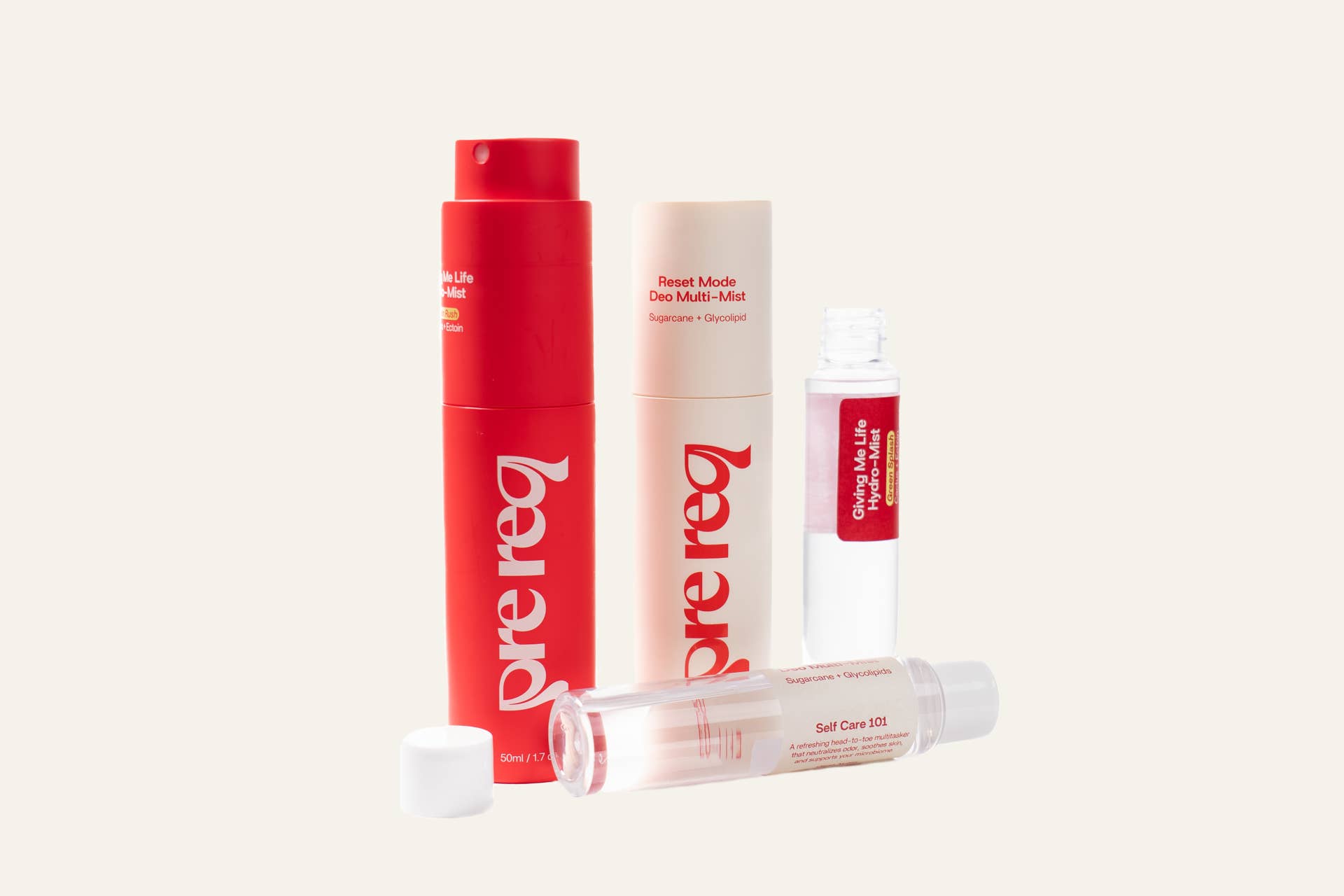

Prereq Care, a teen- and tween-focused skin-care brand that first launched in February 2026, also entered the body-care space with its own gentle deodorant. Co-Founders Lizna Kabani and Sana Mithani created Prereq Care to be “the first step in a young person’s skin-care journey”, Kabani says, as the duo noticed their kids were struggling to navigate products designed for adults and social media‘s torrent of skin-care advice. The burgeoning brand’s Reset Mode Deo Multi-Mist ($20) combines propanediol (to boost absorption), saccharomyces ferment filtrate (sugarcane odor neutralizer) and glycolipids (for microbiome support) within its dermatologist-approved and National Eczema Association-accepted formula.
Its second product, Giving Me Life Hydro-Mist ($20), is a face and body mist designed to hydrate, calm and refresh any skin type. Ectoin stars as the mist’s multi-tasking ingredient, as it helps skin retain moisture, reduces water loss and protects against environmental stressors. The mist is also formulated with cactus extract to boost hydration while calming redness and irritation. Both of the brand’s tween-centric formulas were vetted by Dr. Libby, who serves as Prereq Care’s strategic adviser.
“Our formulation philosophy is simple: Young skin doesn’t need more ingredients — it needs the right ones,” Kabani says. “We prioritize gentle, science-backed actives alongside microbiome-friendly ingredients to create formulas that are effective but barrier-supporting.”
Photo: Courtesy of Rini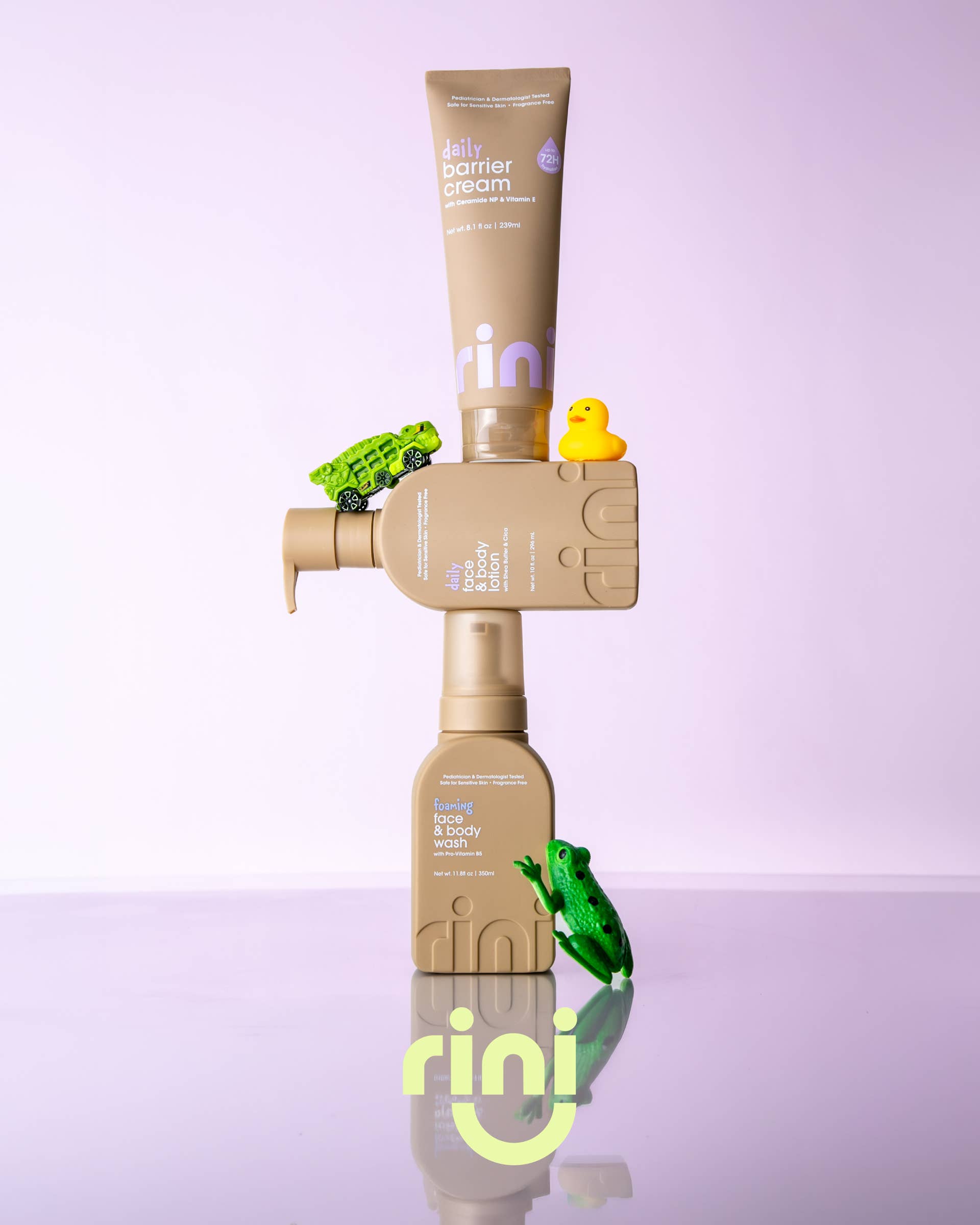

K-beauty is also getting in on the Gen Alpha body-care boom: Rini — a “kid-first” Korean brand co-founded by Shay Mitchell, Esther Song and Matte Babel — introduced its Daily Care Essentials line on Thursday. Rini, which means “children” in Korean, initially sparked discourse upon its 2025 launch for creating sheet masks for toddlers. Now, it’s expanding into body care with its Daily Barrier Cream ($25), Face & Body Lotion ($22) and Foaming Face & Body Wash ($20).
With help from pediatricians and dermatologists, Rini designed its formulas with Gen Alpha’s delicate skin in mind. Each Daily Care product has been accepted by the National Eczema Association, and its formulas tap ingredients like ceramide NP, cica, vitamin E, shea butter, squalane and panthenol. “Our Daily Care Essentials were the very first products we started developing over four years ago,” Mitchell said in a statement. “We took our time with every formula, testing and refining until we felt confident every product delivered on exactly what we set out to create.”
Photo: Courtesy of Daise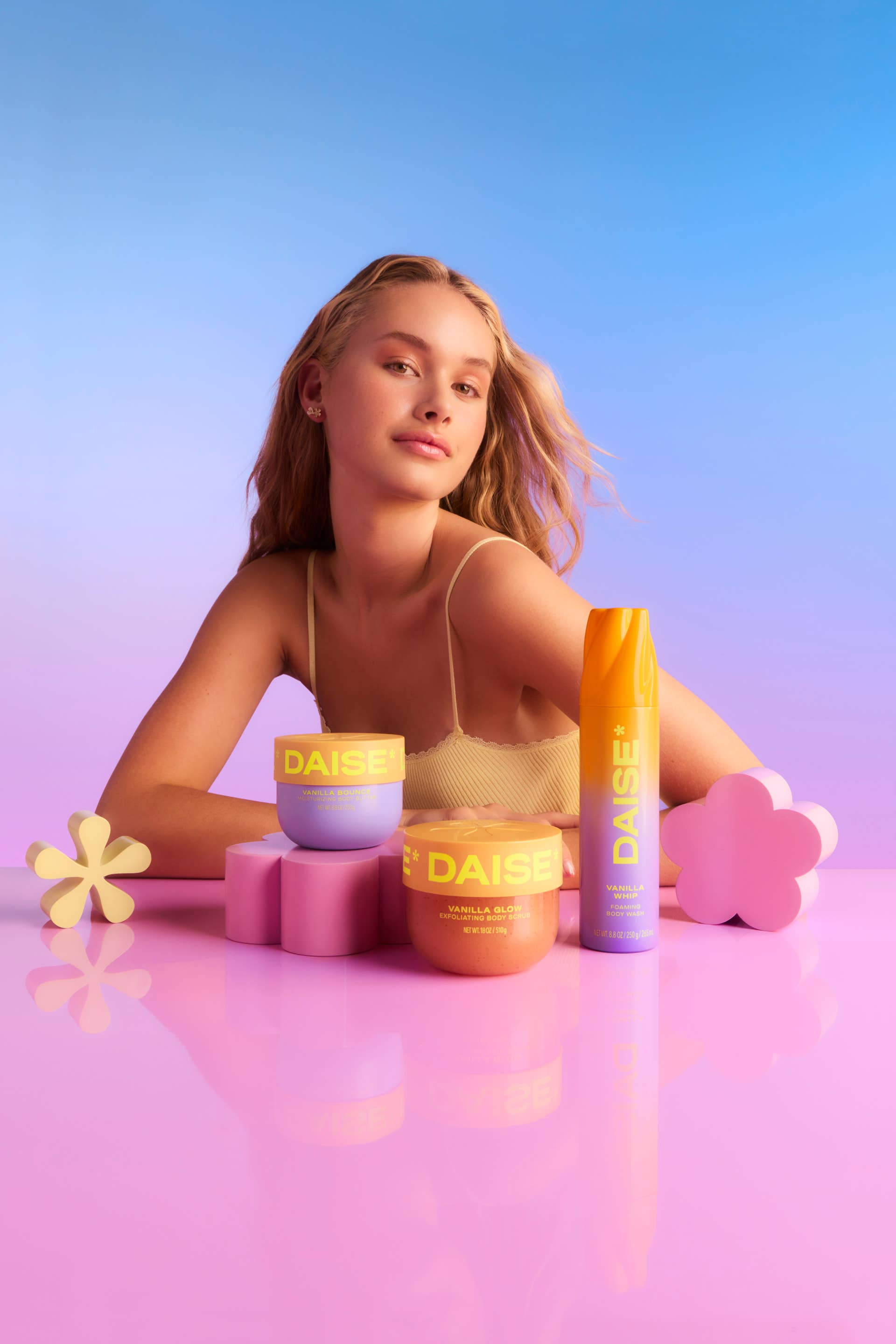

Daise, Jaimee Lupton’s breakout body-care brand bottled in floral-explosion packaging, is one of the leading brands carving out a dedicated space for Gen Alpha in the market. Resonating with Gen Alpha isn’t a coincidence, it’s intentional: Daise approaches every formulation with the age group in mind by asking: “‘Is this right for Gen Alpha skin?'” Its product assortment — spanning foaming body washes to flower-shaped mists — taps into “skin-loving” ingredients like shea butter, meadowfoam seed oil, coconut oil and avocado oil, while avoiding possible irritants like aluminum, talc, benzyl alcohol, microbeads and parabens.
“I think about what I’d put on my own daughter’s skin, and everything on that ‘no’ list scares me,” Lupton says. “I think most parents feel the same way — they’re reading labels and they’re definitely doing the research. Transparency isn’t a nice-to-have for this generation of consumers and their parents — it’s an imperative.”
Photo: Courtesy of Sunryz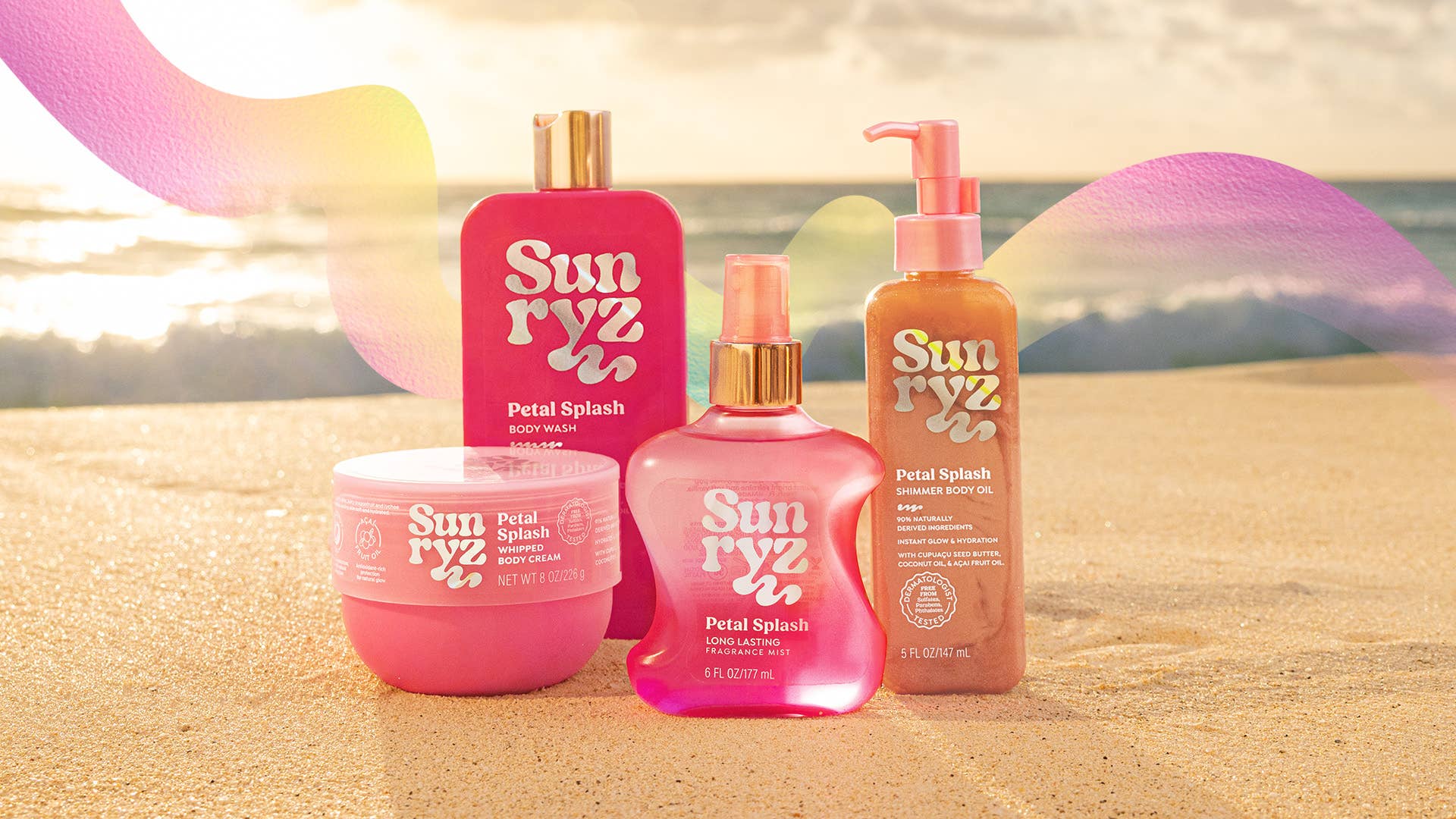

In March, Sunryz entered the body-care market with its sights set on Gen Alpha. Its debut, dermatologist-tested collection includes a body mist, a whipped body cream, a shimmer body oil and a body wash all available for under $10 exclusively at Walmart. “Beauty at this age should feel like permission to play, never pressure to grow up, and that’s the feeling we’re chasing in every bottle,” says Madie Starvel, director of strategic growth platforms at Sunryz’s parent company PDC Brands.
With three signature scents across its collection, Sunryz’s ingredient “yes list” includes cupuaçu butter for deep hydration, coconut oil to soften skin and açaí oil for a healthy glow. As for its “no list”? “Adult-focused actives that young skin simply doesn’t need,” Starvel adds.
Photo: Courtesy of Fipl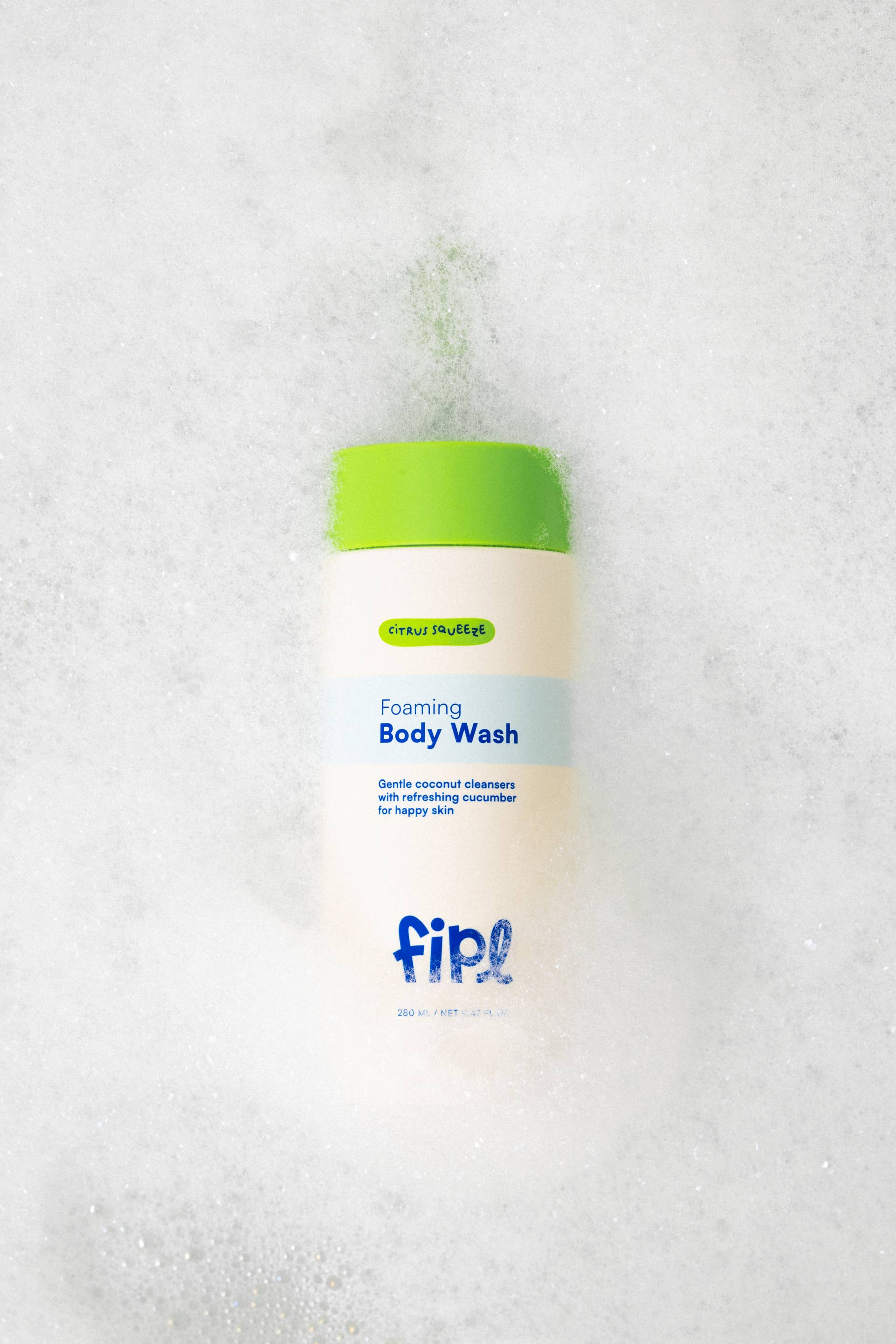
Culturally and commercially, Gen Alpha’s in-between age group is largely treated as “a waiting room,” according to Fipl’s Co-Founders Victoria Thain Gioia and Greg Gioia. Children’s personal-care brand Fipl is seeking to shift that narrative with “formulations that respect developing skin rather than treating it like a scaled-down adult body.” Designed specifically for the 4-to-12 age range, Fipl currently offers a Foaming Body Wash ($20) formulated with cucumber extract, glycerin and hyaluronic acid, alongside a shampoo and conditioner. Fipl also formulates to rigorous E.U. standards, and undergoes third-party testing for its pediatrician-approved products.
“Beyond the formulas, we invest heavily in education: helping parents understand why age-appropriate products matter, what’s actually going on with their child’s skin at different stages and how to build habits early that serve kids well for life,” the Gioias add.
While vibrant packaging and social media virality can snag younger consumers’ attention, body-care brands that are seeking to secure the Gen Alpha cohort should first lead with transparent (and gentle!) formulas. It’s a pivotal time to not only meet young shoppers’ need for barrier-boosting body care, but to also build trust among a budding beauty audience.
“One thing I always remind parents is that children are developing skin-care habits that may last a lifetime,” Dr. Libby says. “I love seeing young people become interested in taking care of their skin, but I’d rather that enthusiasm be directed toward healthy fundamentals like gentle cleansing, moisturizing and sun protection, than chasing products they simply don’t need.”
Please note: Occasionally, we use affiliate links on our site. This in no way affects our editorial decision-making.


