






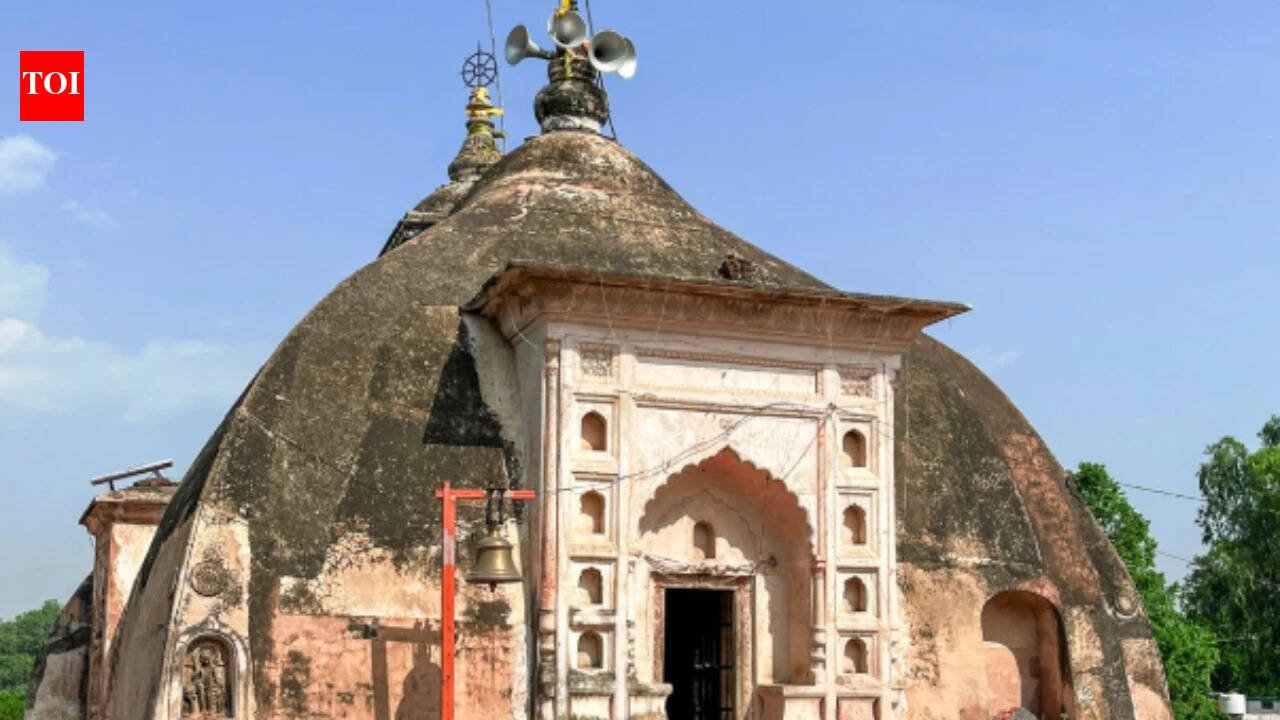
LUCKNOW: Dr APJ Abdul Kalam Technical University (AKTU)’s faculty of planning and architecture launched a scientific study of Kanpur’s centuries-old ‘Monsoon Temple’ to examine the architectural and environmental factors behind its reputation for predicting the monsoon’s arrival.The research will be carried out at the university’s recently established Indian Knowledge System (IKS) Centre, set up with Rs 50 lakh to promote the preservation, research and application of India’s traditional knowledge systems.The centre is also translating and studying ancient architectural texts written in different Indian languages to understand the evolution of India’s architectural traditions.Dean and principal of the faculty of planning and architecture, Vandana Sehgal, said: “An eight-member team of faculty and researchers is working on several projects aimed at preserving, promoting and reinterpreting India’s traditional knowledge through modern academic research.”“One of the projects focuses on the ancient Monsoon Temple in Kanpur, which is believed to forecast arrival of rainy season up to seven days in advance. According to local belief, water droplets automatically begin seeping from its ceiling before the onset of monsoon,” Sehgal said.Researchers will examine the temple’s architectural design, construction materials and environmental conditions to determine whether the phenomenon is linked to scientific factors such as humidity, atmospheric changes, capillary action or other natural processes.The study will combine traditional knowledge with scientific methods to assess whether the temple’s design offers insights into weather forecasting and climate-responsive architecture.The team will also document the shrine’s construction techniques, architectural features and historical significance.University officials said the initiative aligns with the objectives of the IKS Centre, which seeks to scientifically validate indigenous knowledge and traditional architectural practices.If the study establishes a scientific basis for the phenomenon, the findings could contribute to sustainable architecture research and offer fresh insights into how traditional Indian structures adapted to local climatic conditions.


