



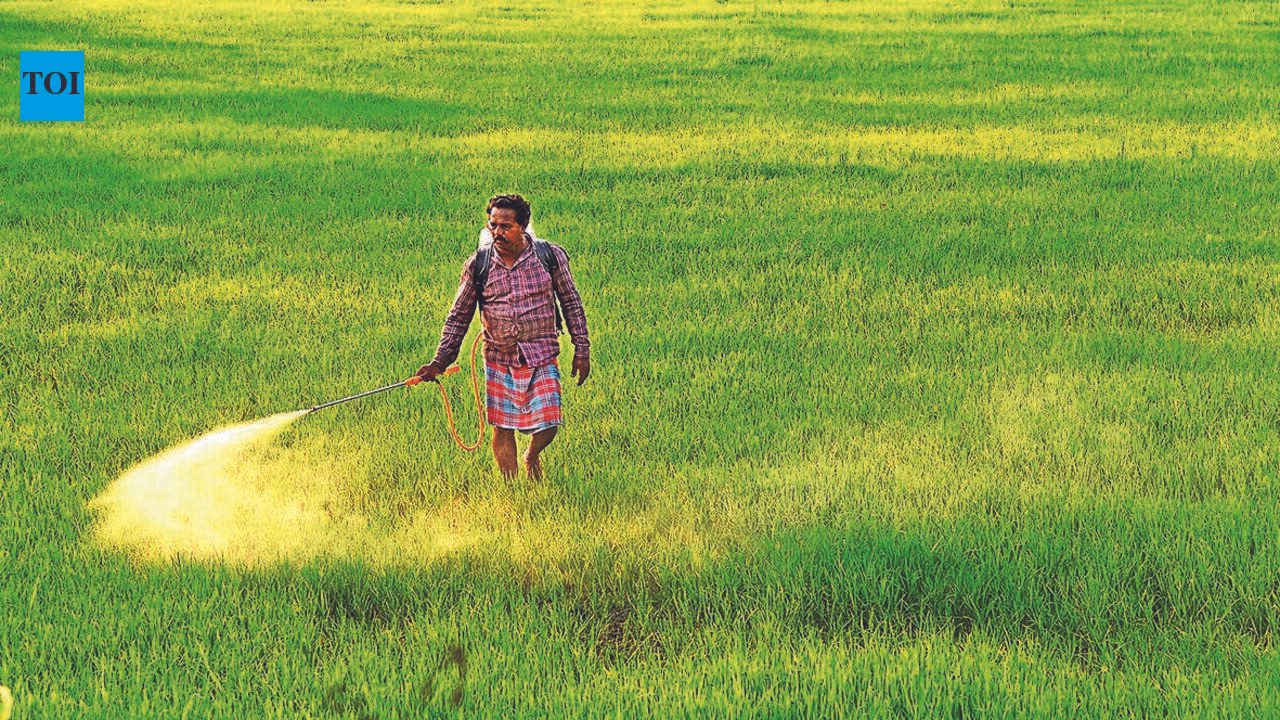
Hyderabad: Over the past three years – from 2023 to 2026 – Telangana has recorded the highest number of fruit and vegetable samples in the country with pesticide residues above the permissible limits.The state’s 486 of 8,198 samples, or 5.9%, found to be above the Maximum Residue Limits (MRLs) prescribed by the Food Safety and Standards Authority of India (FSSAI), according to recently tabled data in the Lok Sabha.These figures are based on samples tested between 2023 and 2026 under the Monitoring of Pesticide Residues at National Level (MPRNL) project. Telangana had recorded highest number of violations, followed by Karnataka with 334 of 9,176 samples (3.6%) and Maharashtra with 260 of 5,295 samples (4.9%).In comparison, the national average was 3.1%, with 2,223 of 70,652 samples exceeding the prescribed limits.An ICAR Agricultural Development 2024 report also showed that Telangana has relatively high pesticide use. In 2022-23, as many as 4,920 tonnes of technical-grade pesticides, or 0.530 kg per hectare were used, compared with the national average of 0.277 kg per hectare.States such as Odisha, Jharkhand and Chhattisgarh recorded the lowest violation rate at 0%, with none of the 1,362, 566 and 29 samples tested, respectively. They were followed by Andaman and Nicobar Islands with a rate at 0.09% (1 sample of 1,169), Assam at 0.17% (1 of 604) and West Bengal at 0.32% (5 of 1,585).Health express said that repeated exposure to pesticide residues, especially when they exceed permissible limits, could increase the risk of several health problems over time.“With growing concerns over cancer and other lifestyle and chronic diseases in Telangana, it is important to ensure that pesticides are manufactured, supplied and used strictly within prescribed limits. Long-term exposure to excessive pesticide residues can cause several health concerns, including neurological problems, hormonal and reproductive disorders, developmental problems in children, liver and kidney damage, and certain cancers, depending on the type of pesticide, dose and duration of exposure,” said Dr Mahesh Reddy, emergency and critical care specialist.Experts also highlighted that chlorpyrifos (an insect-killing pesticide) and 2,4-D (a weed-killing pesticide) are among the pesticides widely used in the two Telugu states – Telangana and Andhra Pradesh.“The ICAR advisories in the past have also reported the use of dimethoate (an insect-killing pesticide), chlorpyrifos and carbofuran (an insect-killing pesticide) in crops in the two Telugu states .Repeated exposure to pesticides, especially among farm workers who spray or handle them, can cause poisoning, nerve problems, and liver and kidney damage. This becomes a bigger concern when workers are also exposed to heat, dehydration and unsafe use of painkillers amid increasing AMR,” said Dr Kiran Madhala, professor, critical care, Gandhi Hospital.A 2022 study of PubMed Central Rangareddy study found dermal pesticide exposure among workers, with unsafe handling and limited use of protective equipment. Moreover, pesticide residues in the blood of women farmers and children, along with changes in AChE (acetylcholinesterase, an enzyme important for nerve function) levels.Another PubMed Cantral’s 2024 study of 341 pesticide-exposed people and 152 controls from 15 villages in Yadadri-Bhuvanagiri, Vikarabad and Sangareddy found 28 pesticides in blood, ranging from 0.42 to 45.77 ng/ml. It also found that AChE (acetylcholinesterase, an enzyme important for nerve function) levels were lower among those exposed for more than 10 years, indicating possible long-term health risks.Experts said that the govt’s focus should be on controlling excessive pesticide use at the source and strengthening testing from farms to markets, while consumers should continue eating fruits and vegetables but take basic precautions such as washing them properly. “There needs to be strict monitoring of pesticide manufacturing, sale and use was essential to prevent excessive exposure among the public. Moreover, as per WHO recommendations, people should put fruits and vegetables thoroughly under running water and peel them where appropriate to reduce surface residues,” said Dr Reddy.GFX – Top and bottom 5 states with samples exceeding FSSAI pesticide residue limits:Top 5Telangana — 486Karnataka — 334Maharashtra — 260Gujarat — 170Haryana — 152Bottom 5Chhattisgarh — 0Jharkhand — 0Odisha — 0Assam — 1Andaman & Nicobar Islands — 1Precautions


