






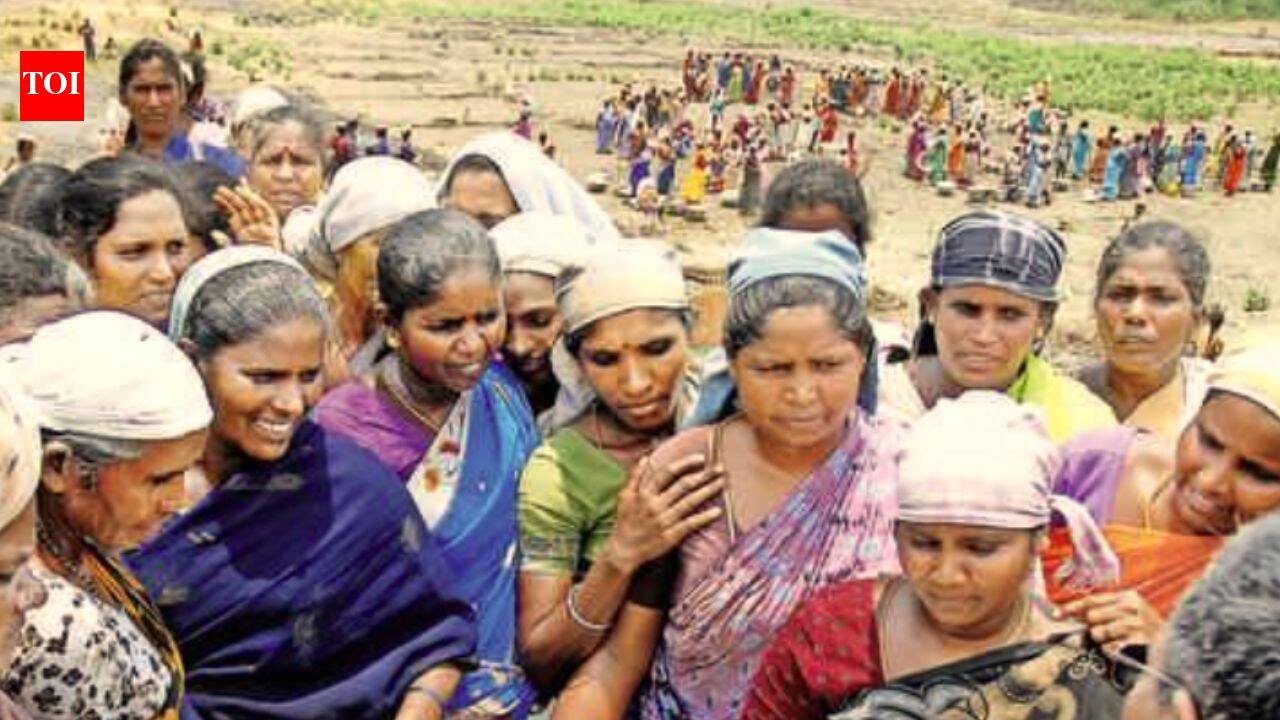
CHENNAI: Rural workers in Tamil Nadu have received an average of just 10 days of employment in the first 91 days of the VB-G RAM G scheme, falling well short of the TVK govt’s promise of 150 days of work under its Vetri 150 scheme.Since the scheme’s launch on July 1, people have been getting work only once every four or five weeks, with most receiving just five or six days of employment. Officials have reduced the number of workers at each worksite from 50 to 20, further limiting job opportunities for nearly 80 lakh active workers.
Since the launch of the scheme on July 1, people have been getting work only once every four or five weeks
“If the trend continues, workers may get fewer than 30 days of employment in a year, a fraction of the 150 days promised under Vetri 150,” said a source in the department of rural development and panchayat raj.“I have been waiting for work under the scheme for the last four weeks,” said Meena of Peruthur village in Prathamaramapuram panchayat in Nagapattinam district. CPI(ML) state-level functionary C Mathivanan said the party had announced a protest on Sept 30, demanding work under the scheme.“After we announced the protest, officials generated man-days for around 100 workers in Kachaikattu and Viralipatti panchayats in Vadipatti block of Madurai district. Before that, work was provided to only two or three people. Many depend on this scheme for their livelihood,” he said.This is the situation in almost all of TN’s 12,480-odd panchayats, except in Kallakurichi district, where the number of works generated is relatively high. No work was generated in 43 panchayats. Adding to their woes, workers in several panchayats have not been paid for three to four weeks. An official in the rural development and panchayat raj department said the wages would be paid soon.CPM state secretary P Shanmugam flagged the issue with a social media post last week, saying workers in Abiramapuram village near Madurantakam had been waiting for their wages for four weeks.A senior official said there are “some teething problems” in implementing the scheme, which was revamped with a new set of rules.“On Monday, we generated more than 12 lakh man-days across the state. The number will gradually increase and touch the state’s average of 50 man-days per household by the end of this fiscal year,” the official said.


