






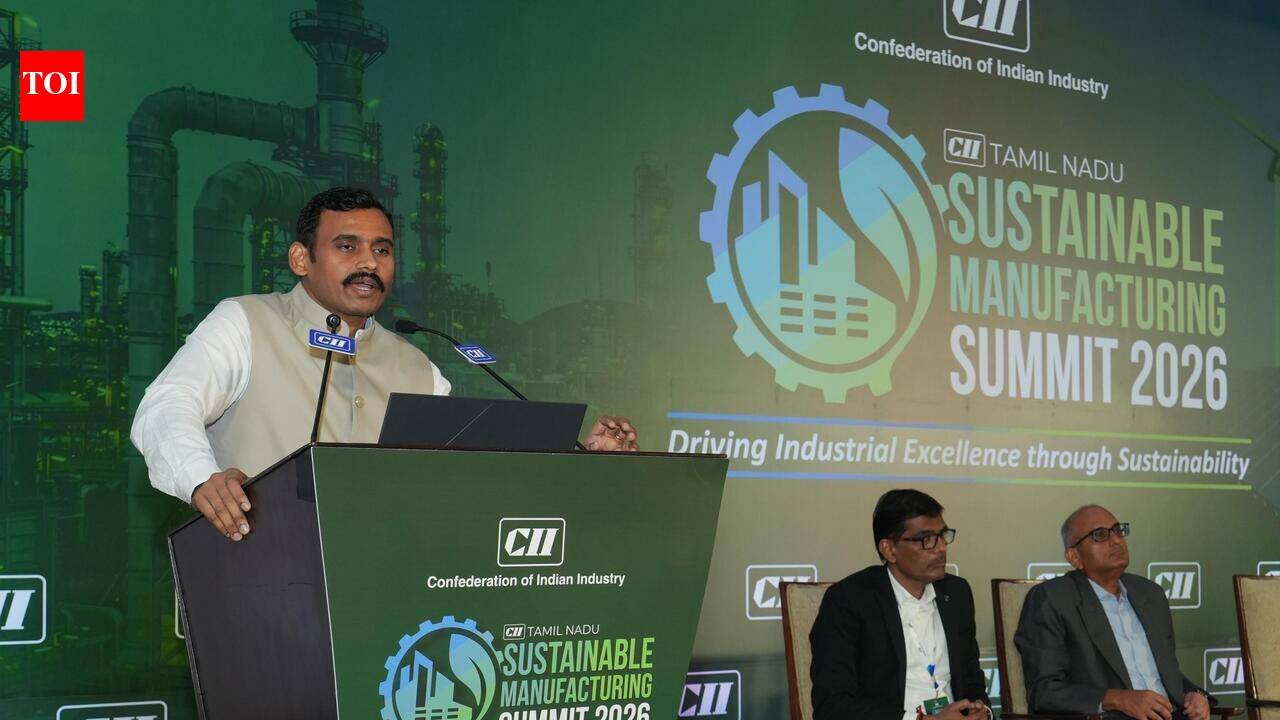
Chennai: Tamil Nadu was working on decarbonisation plans for four districts and had initiated a Rs 1,000-crore Green Climate Fund, with an initial Rs 100-crore commitment from the State government and the remaining corpus proposed to be raised from the market to support businesses in areas including energy transition, the circular economy and recycling, said Bakan Jagdish Sudhakar, CEO, Tamil Nadu Green Climate Company.Highlighting concrete decarbonisation measures at the CII Tamil Nadu Sustainable Manufacturing Summit 2026, he said the State’s recently launched passive-cooling guidelines for buildings could reduce energy demand by around 30% over a building’s lifetime. The guidelines would require an incremental investment of about Rs 300 per square metre during construction, with the investment expected to be recovered in less than three years.He also said Tamil Nadu was confident of achieving carbon neutrality well ahead of India’s 2070 net-zero target, with the State having established a 2019 greenhouse-gas emissions baseline in line with IPCC guidelines and now working on a transition pathway towards net zero.Ravichandran Purushothaman, chairman, CII Southern Region and president, Danfoss India, said CII’s Centres of Excellence had undertaken extensive work in areas including green buildings, energy efficiency, water management and sustainability. Businesses, he said, increasingly needed to measure both direct and indirect carbon emissions and use available technologies, skills and funding mechanisms to progressively reduce their carbon footprint.Muthu C, chairman, CII Tamil Nadu Sustainable Manufacturing Summit Taskforce and president and chief of operations, Daimler India Commercial Vehicles, said sustainability should no longer be treated as a separate ESG or compliance activity. Instead, manufacturers should embed it into their operations to identify waste across energy, water and materials while improving efficiency and reducing costs.


