



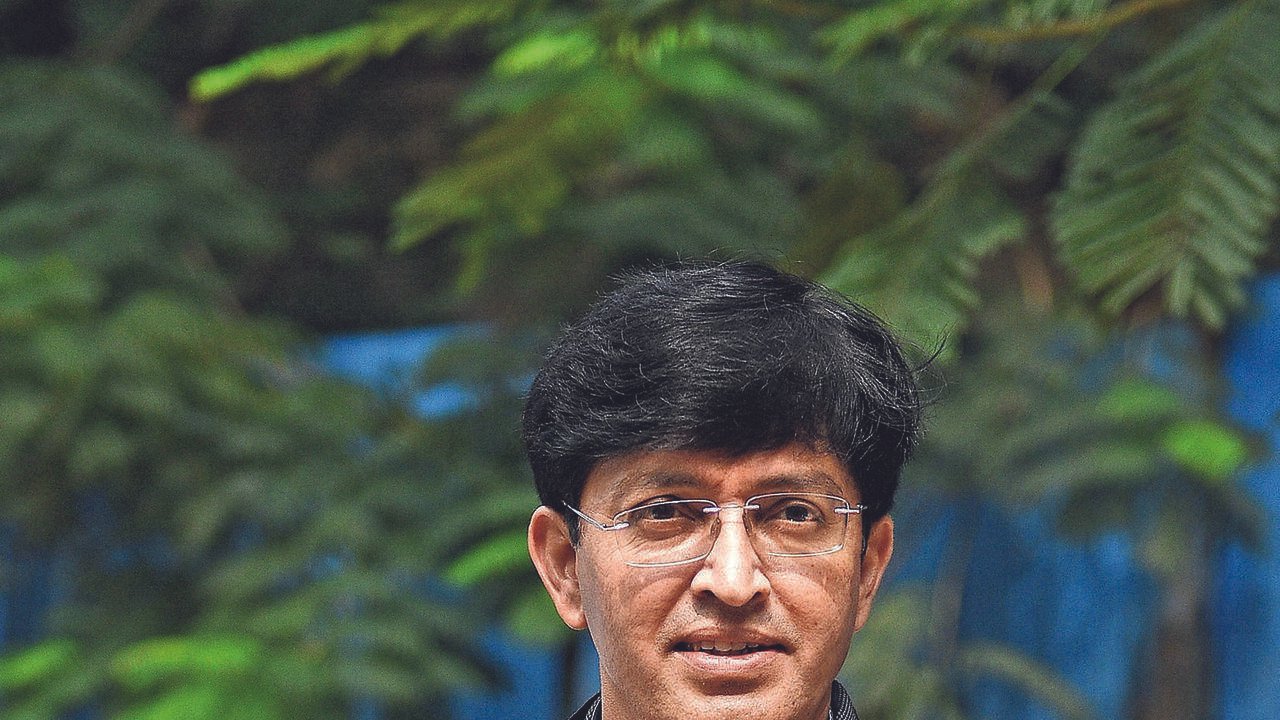
Following the release of the TVK govt’s White Paper on the power sector, the administration has identified key priorities and an investment programme to put the sector on a sustainable path. In an interview,J Radhakrishnan, CMD of TNPDCL and additional chief secretary to Tamil Nadu govt, discusses the reform agenda, power procurement strategy, post-unbundling priorities, renewables and energy storage. Excerpts.After the White Paper’s release, what are immediate priorities for the power sector?Our priority is to improve operational performance and financial sustainability. Focus areas include optimising power procurement, enhancing asset utilisation, strengthening revenue collection, reducing technical and commercial losses, accelerating project execution, and ensuring every investment results in measurable improvements in reliability and consumer service. The White Paper outlines immediate investments of around `15,312 crore to strengthen the transmission and distribution network. This includes completing 121 ongoing substations, establishing 231 new substations, augmenting transformers and transmission lines, reinforcing the distribution network, and procuring critical equipment. A `8,318-cr programme to modernise legacy assets will improve grid resilience and reliability. Another priority is the completion of ongoing generation and transmission projects to ensure committed investments deliver additional capacity, a stronger grid, and a more reliable power supply. The CM and the minister for energy resources and law emphasised this during their reviews. We want TN to remain India’s benchmark for reliable electricity, renewable energy leadership and innovatio.How important will battery storage and pumped storage projects be going forward?TN intends to remain at the forefront of India’s clean energy transition. Our focus is on accelerating battery energy storage systems (BESS), pumped storage projects (PSPs), renewable integration, flexible dispatchable generation, smart grids, and digital technologies. We are strengthening collaboration with academic institutions. The recently signed MoU with IIT Madras will promote translational research in priority areas, enabling faster adoption of innovative tech and practical engineering solutions for the power sector.Are there any changes to the power procurement strategy to optimise costs?Yes. Power procurement constitutes the largest component of the utility’s expenditure and offers the opportunity to improve efficiency. Our strategy is to reduce dependence on short-term, term-ahead, day-ahead, real-time, and power exchange purchases by increasing procurement through long-term and medium-term arrangements, renewable round-the-clock power, firm & dispatchable renewable energy (FDRE), storage-backed resources. Replacing equivalent market purchases costing around `8.91 per unit with planned long- and medium-term procurement averaging `6.63 per unit could generate savings of nearly `215 crore per month during the summer. The objective is to reduce costs and improve supply reliability during evening peaks, periods of high summer demand, low-wind conditions, and extreme weather events, while ensuring adequate reserves and operational flexibility.How would you assess the progress since the unbundling of the erstwhile TNEB?The 2010 restructuring separated generation and distribution from transmission, while the 2024 restructuring further created dedicated companies for distribution (TNPDCL), generation (TNPGCL), transmission (TANTRANSCO), and green energy (TNGECL). This has improved functional accountability, operational focus, and performance monitoring. Organisational restructuring cannot eliminate decades of accumulated challenges such as legacy debt, ageing infra, manpower shortage, and growing demand. The next phase is to fully realise the benefits of restructuring through better procurement, accelerated infrastructure development, digitalisation, stronger asset management, and improved operational efficiency.Is Green Power Company operating with financial flexibility to accelerate TN’s renewable energy goal?TNGECL will become the state’s principal platform for renewable energy development, BESS, PSPs, FDRE, renewable energy parks, green hydrogen, and other emerging clean technologies. It will also drive green energy zones, renewable evacuation infrastructure, innovative financing, investor facilitation, and strategic partnerships with industry and research institutions. Through collaborations with IIT Madras and other centres of excellence, TNGECL will accelerate the adoption of technologies for renewable integration, energy storage, and grid modernisation. Over the next five years, it will serve as TN’s strategic green energy platform.


