



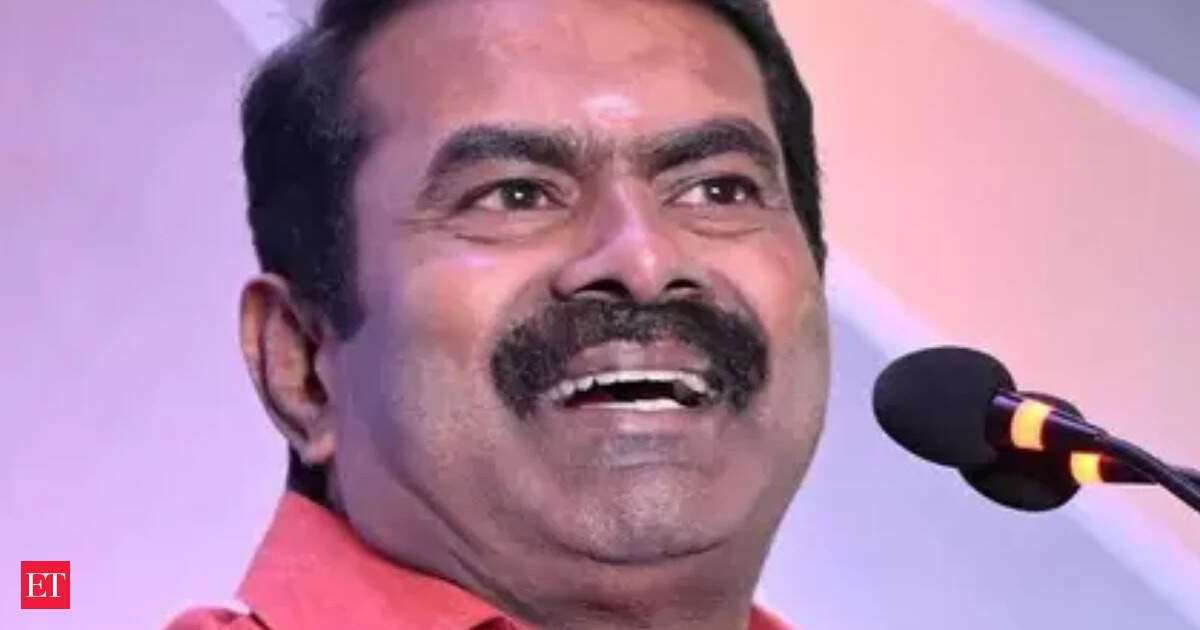
Seeman, chief coordinator of Naam Tamilar Katchi (NTK), has rejected the freebie-driven narrative, calling such measures an “insult” to people’s dignity. Positioning himself as a political outlier, the 59-year-old continues to campaign without alliances, arguing that partnerships would dilute both his ideology and intent. His core message remains stark: while anyone can live in Tamil Nadu, the right to govern, he says, should rest with Tamils.
Also Read: Tamil Nadu Polls: “Our goal is to form government again,” says EPS
Despite limited electoral success, Seeman has steadily expanded his party’s footprint. Since his electoral debut in 2016, he has not secured a seat in the Assembly or Parliament. However, NTK’s vote share has risen consistently — from 3.8% in the 2019 Lok Sabha elections to about 8% in 2024, when the party contested all 40 seats across Tamil Nadu and Puducherry independently. The Election Commission has since granted NTK recognised party status.
Seeman has remained firm on his refusal to enter alliances. Campaigning recently, he argued that smaller parties with marginal vote shares often negotiate for seats or financial gains, suggesting his own bargaining power would have been far greater had he chosen that route — a path he says he has consciously avoided. This election too, NTK has fielded candidates in all 234 Assembly constituencies.
Born in 1966 in Sivaganga district, Seeman began his career in Tamil cinema as a director and actor before transitioning fully into politics. He directed films such as Panchalankurichi (1996) before turning to activism, focusing on Tamil identity, language, farmers’ issues, environmental concerns and the plight of Sri Lankan Tamils.
His support for Sri Lankan Tamils became central to his political identity. In 2008, he met Velupillai Prabhakaran as the Sri Lankan civil war drew to a close. His outspoken stance led to his detention under the National Security Act in 2009 and 2010. In 2010, he formally launched NTK on the death anniversary of the LTTE chief — a move widely seen as symbolic of his ideological position.Also Read: DMK objects to ‘highly derogatory’ remarks against women, MP Kanimozhi by AIADMK’s Palaniswami
Over time, Seeman has sought to position NTK as a Tamil nationalist alternative to the state’s dominant Dravidian parties. His political journey, however, has not been without shifts. Once an admirer of Periyar E V Ramasamy, he now rejects the framing of Tamil Nadu as “Periyar land”. After backing the AIADMK under J Jayalalithaa in 2011 and 2014, he contested independently from 2016 onwards.
The party’s initial electoral outing was underwhelming, with candidates losing deposits in most constituencies. Yet, NTK’s vote share climbed to 6.6% in the 2021 Assembly polls, a rise Seeman cites as evidence of growing grassroots acceptance without the backing of major alliances.
Part of that appeal lies in his oratory. Known for his fiery speeches, Seeman continues to draw large crowds. At a recent rally, supporters stood for hours in inclement weather to hear him speak. He often contrasts his style with rivals, criticising their reliance on prepared scripts and teleprompters.
His campaign rhetoric centres on corruption, vote-buying and what he calls “dependency-creating freebies”. In contrast, he promises investments in education, infrastructure, employment, state-supported dairy initiatives and prohibition. Women’s representation is another key plank, with NTK allocating half its tickets to women and advocating equal participation in governance.
At the same time, Seeman’s politics has drawn criticism for controversial remarks, particularly targeting religious communities. While he has asserted that Tamils follow ‘Saivam’ and ‘Vaishnavam’ rather than Hinduism, he has also made outreach gestures — including fielding Brahmin candidates — highlighting the complex and sometimes contradictory nature of his political positioning.
In a state long dominated by two major Dravidian forces, Seeman may not yet have translated visibility into electoral victories, but his growing vote share and distinct ideological pitch have ensured he remains a political force that cannot be easily dismissed.
(With inputs from TOI)


