



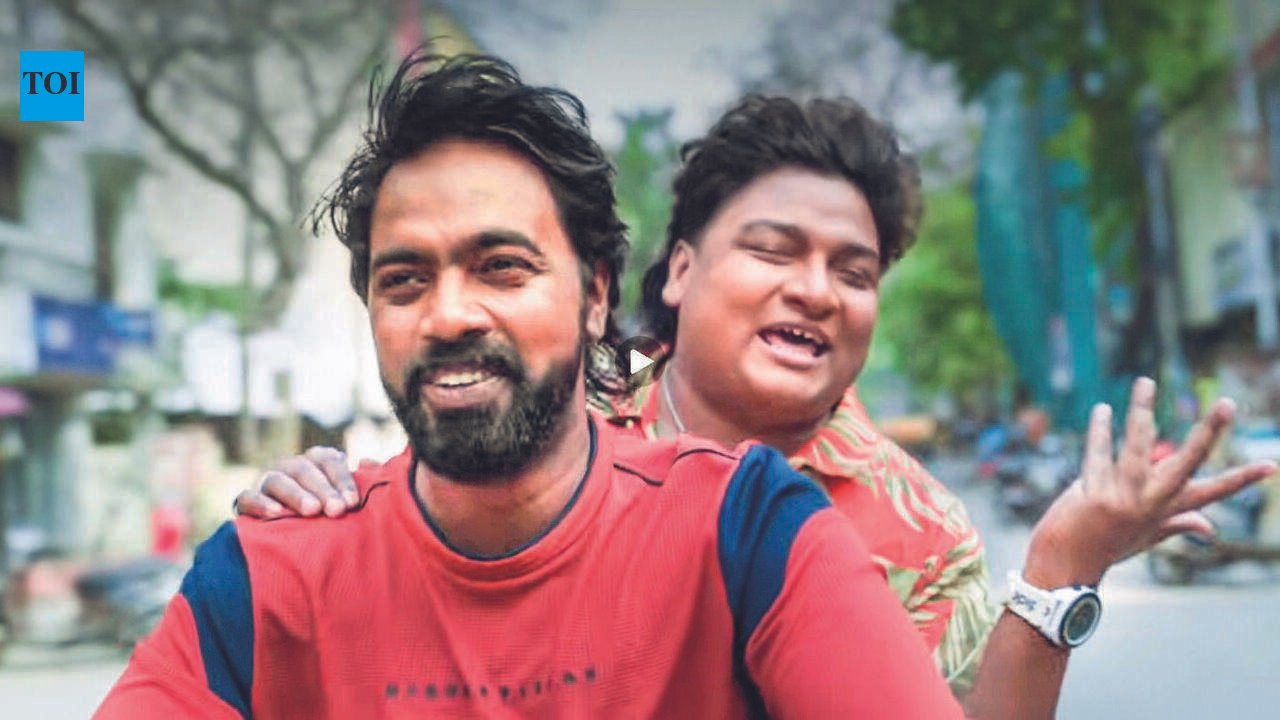
For decades, Tamil cinema relied on polished, literary Tamil or region-specific dialects to establish identity. Madurai had its earthy expressions, Chennai had its ‘Madras bashai,’ and Coimbatore had its Kongu flavour. Today, however, filmmakers are borrowing slang from across India — and social media — to make conversations sound contemporary. The latest entrant is Bengaluru slang, heard prominently in the recently released ‘Anbe Diana’, where characters slip into expressions commonly associated with the city’s multilingual youth culture.It marks an interesting shift in Tamil cinema, where slang is no longer restricted by geography. It has become a storytelling device that reflects migration, urban lifestyles and increasingly blurred linguistic boundaries of southern India. “After ‘Panchathanthiram’ released more than 20 years ago, I felt Tamil cinema had only scratched the surface of the linguistic richness that defines our cities,” says ‘Anbe Diana’ director Pari Elavazhagan. “Chennai is a living mosaic of languages, accents and cultures. People from different parts of the country have made this city their home, each bringing their own dialect, and living in harmony. Neighbourhoods such as Perambur are a celebration of this diversity. Politics may create divisions, but on the streets, people embrace each other’s cultures every single day.” To capture that authenticity, Elavazhagan turned to Bangalore Babu, a 43-year-old who migrated to Chennai more than two decades ago.“Babu didn’t just teach us slang; he introduced us to an entire way of life. We spent hours listening to conversations, understanding the wit, rhythm and cadence of Bengaluru Tamil. Every phrase carries a story, every expression has its own flavour. I wanted the audience to experience that world naturally, not as a gimmick but as a reflection of Chennai’s vibrant multicultural identity,” says Elavazhagan, who got actor Parithabangal Gopi to train with Bengaluru Babu. “My character is an admirer of actor Upendra and has strong Bengaluru roots, so getting the slang right was crucial. The learning process was surprisingly quick because I was being taught by people who spoke the slang naturally.”While ‘Anbe Diana’ brought in Bengaluru slang, the ‘Madras bashai’ (Madras slang) revolution came in the early 2000s. Once dismissed as street language, it gained mainstream acceptance through films such as ‘Chennai 600028’, ‘Soodhu Kavvum’, ‘Attakathi’, ‘Madras’ and ‘Vada Chennai’. Words such as ‘macha’, ‘scene’, ‘matter’, ‘local’, ‘mass’ and ‘set aagiduchu’ entered everyday vocabulary across Tamil Nadu. Directors like Pa Ranjith and Vetrimaaran ensured that north Chennai’s dialect wasn’t merely comic relief but an assertion of identity, culture and class.But even before Chennai slang became fashionable, director Bharathiraja had introduced the rustic flavour of southern Tamil Nadu. Between 2005 and 2015, films such as ‘Subramaniapuram’, ‘Paruthiveeran’, ‘Aadukalam’ and ‘Komban’ made Madurai Tamil aspirational. Words such as ‘mapla’, ‘dei maaple’, ‘sarakku’ and countless local idioms travelled beyond the region. The dialect became synonymous with authenticity.‘Anbe Diana’ takes this evolution a step further. Instead of relying solely on Tamil dialects, it reflects the language spoken by thousands of young Tamils living in Bengaluru.The city’s conversations naturally mix Tamil, Malayalam, Kannada, English and Hindi. Expressions such as ‘maga’, ‘guru’, ‘bro’, ‘adjust maadi’ and ‘correct agide’ and code-switched sentences have become commonplace among Bengaluru’s youth. By incorporating this speech pattern, the film captures the lived reality of a generation that effortlessly switches languages within a single conversation.The shift also acknowledges the growing movement of Tamil professionals and students to Bengaluru, making the city’s slang instantly relatable for younger audiences.Instagram reels, YouTube creators and meme pages have dramatically shortened the life cycle of slang. A phrase born online today could become a film dialogue tomorrow. Contemporary Tamil films increasingly feature internet-born expressions such as ‘cringe’, ‘bro’, ‘vibe’, ‘toxic’, ‘ghost pannitaan’, ‘simp’, ‘delulu’ and ‘flex’. ‘Adipoli’, a Malayalam slang, has found place in Tamil memes and everyday conversations. Writers are no longer creating slang; they are borrowing it from digital culture.Slang helps establish character within seconds. It instantly conveys a person’s age, background, education, city and social circle. Unlike conventional dialogue, slang also makes films feel current. Audiences often repeat these expressions outside theatres, extending a film’s cultural impact far beyond the screen.The challenge is longevity. Slang evolves rapidly, and what feels trendy today can sound outdated within a year. Excessive dependence on fashionable expressions also risks alienating audiences unfamiliar with those linguistic references.Filmmakers therefore walk a fine line between authenticity and accessibility. The use of Bengaluru slang in ‘Anbe Diana’ signals a larger cultural shift. Tamil cinema is no longer confined to the linguistic identity of Tamil Nadu, but mirrors the lives of Tamils spread across Bengaluru, Hyderabad, Dubai, Singapore, London and beyond.Today’s Tamil film dialogue is less about preserving linguistic purity and more about reflecting how people actually speak. In that sense, slang has become more than colourful vocabulary — it has become a marker of identity, mobility and the changing face of modern Tamil culture.The OG bashai boysJ P Chandrababu laid the foundation for Madras bashai in Tamil cinema, making the city’s vibrant street lingo fashionable on screen in the 1950s. With his effortless diction, expressive body language and memorable songs, he transformed what was once considered a working-class dialect into a celebrated cinematic language. Film historians widely credit him with giving Madras bashai its first mainstream identityLoose Mohan took that legacy a step further. His earthy humour, impeccable timing and authentic north Chennai accent made Madras bashai feel natural rather than theatrical. Through hundreds of films, he became synonymous with the dialect, ensuring it remained a staple of Tamil cinema across generations. Together, Chandrababu and Loose Mohan didn’t just speak Madras bashai — they turned it into an enduring cultural signature of Chennai on screenINDUSTRY SPEAKDirector Pandiraaj: Regional slang was accorded greater importance in the past. A decade ago, filmmakers were more conscious of variations in accents, even across district borders. They prioritised nuances, including the way people addressed their relatives, the tempo of speech, and local linguistic traits. The rise of OTT platforms helped films reach a wider audience across the diaspora. So, the focus has shifted toward making movies accessible and relatable to all Tamils. The intent is to connect with the youth, as they are unlikely to relate to more extreme expressions of regional dialects and slang that resonated with previous generations.In regions such as Coimbatore or Madurai, youngsters do not speak the way their parents did. They adopt a neutral accent and, in many cases, do not embrace their local dialects as strongly as generations before them. Colloquial expressions are not just about authenticity; they help the audience connect with characters and experience their emotions. Even in ‘Parimala and Co’, we had envisioned a family from Trichy. Since we cast Jayaram and Urvashi in the lead, both of whom naturally speak with a Palakkad Tamil accent, we adjusted the narrative to remain authentic to their dialect. It helped preserve realism and allowed audiences to relate to the story.Geevee Vignesh, showrunner, head of content, Kadhaishorts: Using a local dialect does more than make a story relatable. It introduces neighbouring communities to forms of Tamil they may rarely hear. Cities that become centres of power move towards a more standardised language, but regional dialects preserve layers of history and culture. For example, the Telugu influence on Chennai Tamil, the traces of Burmese in North Madras speech, the ‘nga’ suffix in Kovai slang. Every slang word carries its own story and plays a part in creating a unique ethnographic soundscape


