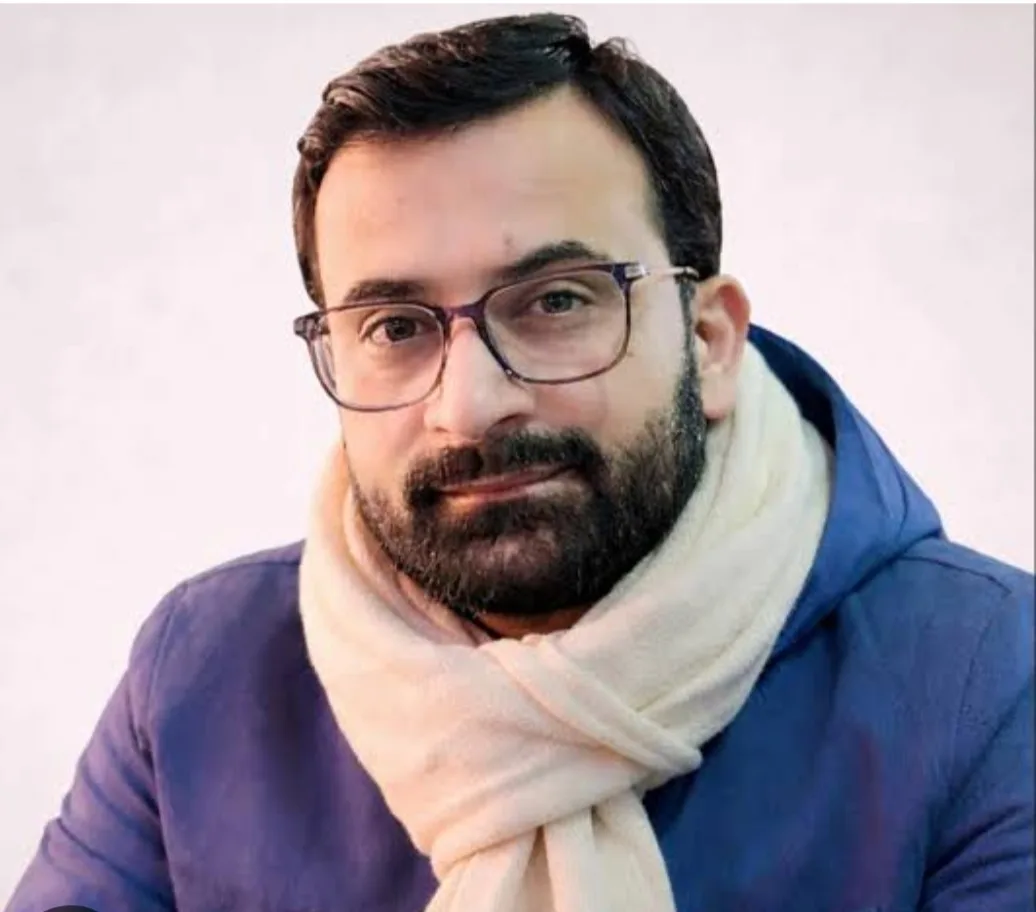
During an interview with Rising Kashmir’s Farzana Syed, National Conference spokesperson Tahir Syeed spoke about the political situation, unemployment, statehood, youth issues, and economic revival in Jammu and Kashmir.
RK: How do you assess the present political and security situation in Kashmir?
TS: The present political and security situation in Jammu and Kashmir is complex and evolving. On the security front, while incidents of large-scale violence have reduced, sporadic attacks and targeted incidents remain a concern. Peace cannot be measured merely by statistics; it must be reflected in people’s sense of dignity, freedom, and confidence in institutions.
Politically, the larger concern is the prolonged democratic vacuum. Jammu and Kashmir was downgraded from a full-fledged state to a Union Territory, which has deeply impacted the political psyche of the people. Restoration of statehood, protection of constitutional rights, and strengthening democratic institutions are essential for lasting stability.
RK: What are the key issues the NC believes are affecting the common people today?
TS: The biggest concerns are unemployment, uncertainty about land and job protections, lack of full democratic empowerment, and limited economic opportunities. People want dignity and stability.
There is also anxiety among youth regarding their future and the limited growth of the private sector.
RK: How does your party plan to address unemployment and rising concerns among the youth?
TS: Unemployment is the most pressing issue facing our youth today. We firmly believe that employment generation must be policy-driven, not event-driven.
In the recent budget, Chief Minister Omar Abdullah clearly reiterated the government’s commitment to filling vacant government posts. In the past one year, our government has already filled around 6,000 vacancies, reflecting our seriousness in addressing this issue.
At the same time, we are expanding tourism infrastructure to generate employment opportunities across sectors. Tourism has immense potential to create direct and indirect jobs for our youth.
We are also promoting entrepreneurship by providing soft loans and strengthening skill-development programs aligned with market needs. Additionally, special focus is being given to the horticulture sector to create more sustainable and long-term employment opportunities for young people.
RK: What is NC’s position on restoration of statehood to Jammu and Kashmir?
TS: Our stand is unequivocal: restoration of full statehood to Jammu and Kashmir is non-negotiable.
In the first meeting of the Council of Ministers, the Omar Abdullah-led government passed a resolution for the restoration of statehood, which was handed over to the Prime Minister and the Union Home Minister.
Statehood is not a symbolic demand; it is about democratic rights, legislative powers, and federal balance. A Union Territory arrangement cannot substitute the aspirations of millions. Restoration of statehood is essential for political stability.
RK: How do you view the functioning of grassroots democratic institutions at present?
TS: Grassroots institutions like Panchayats and local bodies are important pillars of democracy. Local governance must function with adequate financial and administrative autonomy.
RK: What measures does the NC propose for economic revival, particularly in tourism and horticulture sectors?
TS: Tourism and horticulture are the backbone sectors of Jammu and Kashmir’s economy. In the recent budget, the Omar Abdullah-led government has placed special focus on strengthening both sectors.
In tourism, our focus is on comprehensive infrastructure development, better road connectivity, upgraded tourist facilities, and promotion of unexplored destinations. We are promoting diversified tourism models including eco-tourism, winter tourism, adventure tourism, and heritage tourism so that economic activity continues throughout the year, not just during peak seasons.
In horticulture, we are committed to protecting the interests of our farmers and orchardists. The government is expanding cold storage capacity, building modern supply chains, and strengthening market linkages to minimize post-harvest losses. We are also upgrading export facilitation infrastructure for apples and dry fruits so that our produce competes effectively in markets.
RK: How is the party engaging with young voters and first-time voters in Kashmir?
TS: We are engaging youth through outreach programmes, digital platforms, public dialogues, and issue-based discussions. We actively encourage young people to participate in policymaking and the broader political process.
We firmly believe that democracy is strongest when youth are actively involved and when their voices are heard and respected.
RK: What is your response to criticism from opposition parties regarding NC’s policies?
TS: Criticism is part of democracy. However, much of the criticism is politically motivated rather than policy-based. The Jammu and Kashmir National Conference has a long history of institution-building and public welfare in Jammu and Kashmir. We welcome constructive debate but reject attempts to distort facts for short-term political gain.
RK: How does the NC plan to strengthen communal harmony and social cohesion in the region?
TS: Jammu and Kashmir has a rich tradition of pluralism and coexistence. We believe in inclusive governance that respects all regions and communities.
We will promote dialogue, cultural exchange, equal development, and zero tolerance for divisive politics. Social harmony is the foundation of peace.
RK: What are your expectations from the Central Government at this stage?
TS: We expect that the Government of India will respect the democratic mandate and restore full statehood. We also expect fair financial support and special development packages.
The relationship between Jammu and Kashmir and the Centre should be cooperative, constitutional, and respectful of federal principles. Unilateral decisions will widen the gap between the region and the Centre.
RK: What measures should be taken to curb drug abuse and social challenges among youth?
TS: Drug abuse is one of the most serious social challenges facing our youth today. It is not merely a law-and-order issue; it is a public health, social, and economic concern.
A multi-pronged strategy is essential to effectively curb this menace.
First, there must be a firm crackdown on drug traffickers and the dismantling of supply networks. Those who destroy young lives must face strict and exemplary action.
At the same time, we need to expand de-addiction and rehabilitation centres across all districts to ensure accessible treatment.
Equally important is prevention. Sustained awareness campaigns should be launched in schools, colleges, and communities to educate young people about the dangers of substance abuse.
Parents, teachers, religious leaders, and civil society must work together to guide and support our youth. Only through strong enforcement, rehabilitation, awareness, and community involvement can we effectively protect our young generation from this growing threat.