



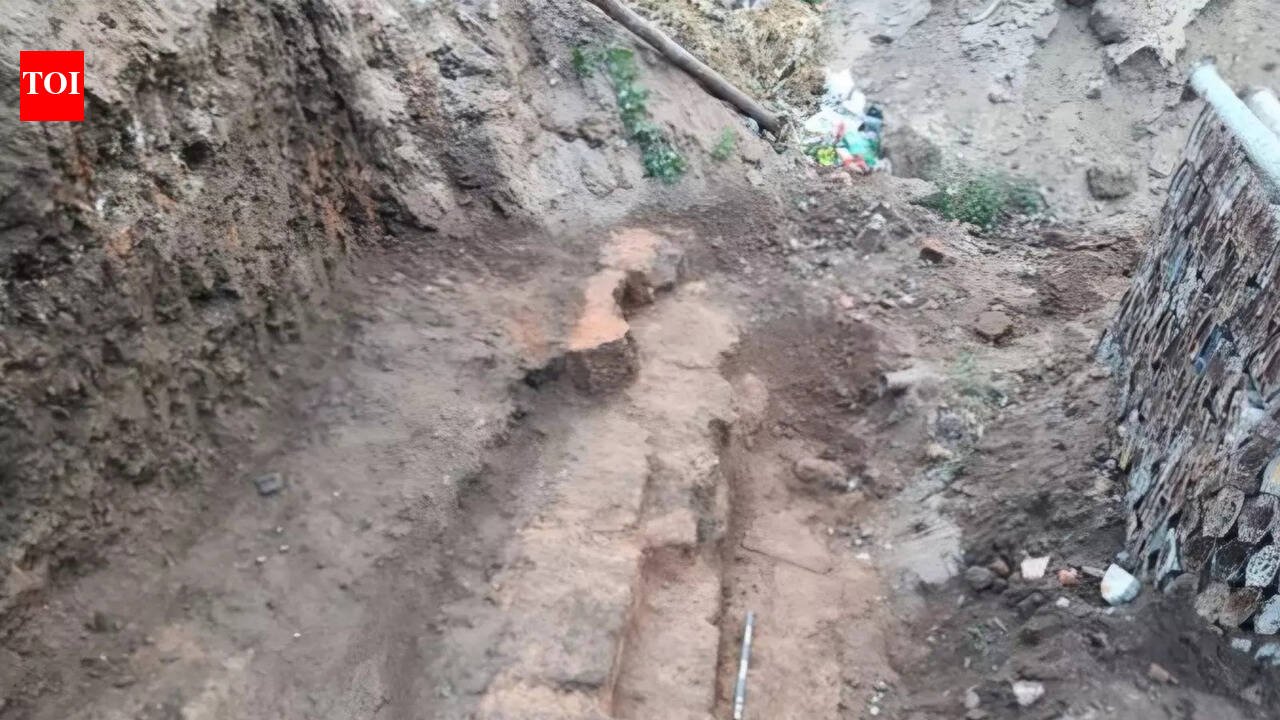
Bhubaneswar: A geophysical survey surrounding the Jagannath Temple in Puri has found compelling evidence of buried archaeological remains, including a tunnel-like structure, suggesting the presence of monuments either predating the construction of the main shrine and associated religious structures, or contemporary to it.According to a draft report of the ground penetrating radar (GPR) survey conducted by IIT Gandhinagar in 2022, subsurface anomalies indicative of structural remains, including a tunnel, have been detected in the area surrounding the temple.“In the south-east corner of the Jagannath Temple, alignment of a huge feature indicates some kind of tunnel or waterway infrastructure as it is originating/ending to/from the temple and sea beach,” the report stated. The south-east area consists of a part of the Emar mutt, Nurshingha temple, Budhi Maa temple and Jagannath Temple road.“The anomalies in the area indicate a colossal feature of width 6.0 m (maximum) and length of almost 90 m. It seems to be an underground network, either an ancient drainage system or a tunnel-like feature. This requires further probing to find out any connection with the temple complex,” the report stated.The findings, recently accessed by an RTI activist, point to the presence of buried architectural features within a 75m radius of the outer wall of the 12th century temple complex. Surveyors scanned up to a depth of 5m to detect variations in subsurface composition.The survey was commissioned by Odisha Bridge Construction Corporation (OBCC) as part of the Jagannath Heritage Corridor project. The survey was done after ASI found a broken lion sculpture from the spot where the entire structure of Emar mutt once stood, while work on the heritage corridor project was being carried out in April 2022.An archaeologist, requesting anonymity, said such tunnels in ancient times were either used as secret passages or as drainage channels. “There are more tunnels in the area around the temple, the remains of which could be seen during the corridor work,” the archaeologist said.


