



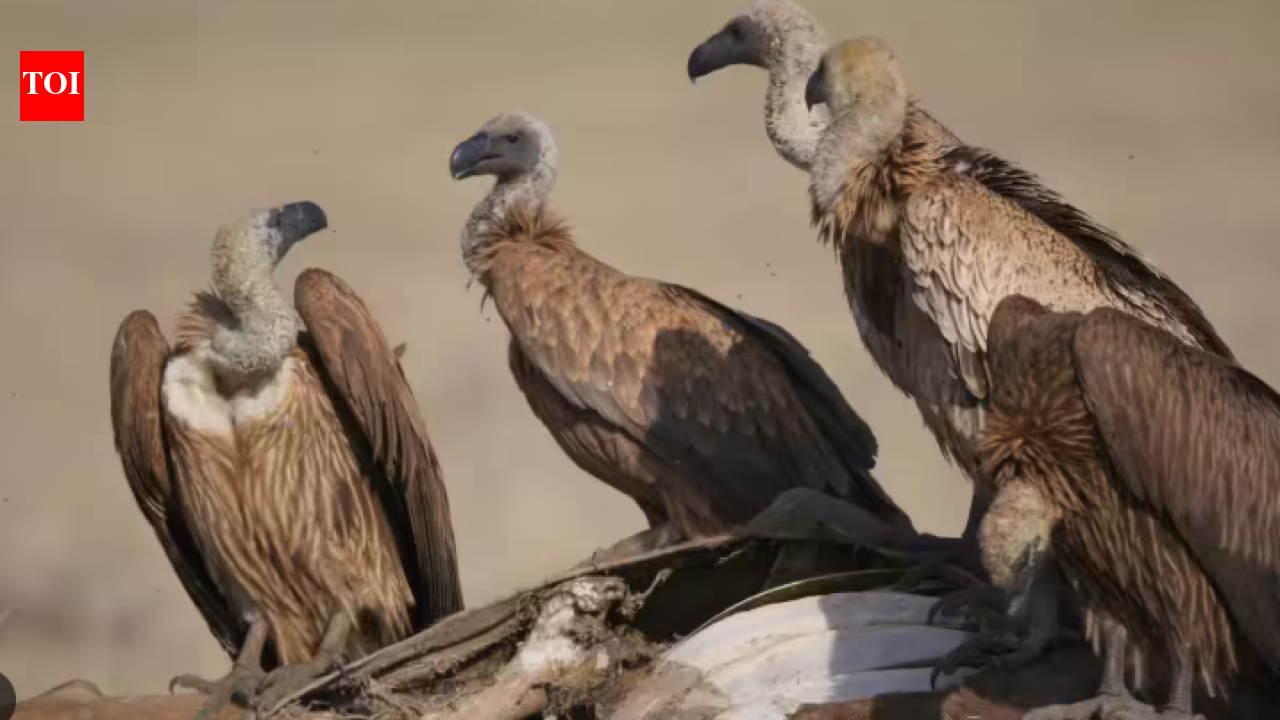
COIMBATORE: A two-day synchronised vulture census began in the Nilgiris Biosphere Reserve, which is spread across the forests of Tamil Nadu, Kerala and Karnataka, on Saturday to assess the population status and distribution of the endangered species within the key landscapes in the biosphere reserve.According to an official source, the census, which is being conducted for the fourth consecutive year, would cover Mudumalai Tiger Reserve, Sathyamangalam Tiger Reserve and Tirunelveli Wildlife Sanctuary in Tamil Nadu; Bandipur Tiger Reserve, Nagarhole Tiger Reserve and Biligiri Ranganatha Temple Tiger Reserve in Karnataka; and Wayanad Wildlife Sanctuary in Kerala.The source said more than 120 teams are involved in the census across the three states. Each team consists of at least four members, including a trained vulture expert, and is equipped with binoculars, cameras and GPS units to ensure accuracy of coordinates of vantage points and nestings. “All teams are carrying a standardised data sheet for uniform data collection across all landscapes.”Rakesh Kumar Dogra, principal chief conservator of forests & chief wildlife warden, Tamil Nadu, said the neighbouring states have extended their complete cooperation for the synchronised vulture census.The previous synchronised census conducted in Feb 2025 across 106 vantage points recorded an increase in the vulture population from 320 to 390. Tamil Nadu reported the highest count at 157, followed by Kerala (125) and Karnataka (106). This time, vantage points have been increased to 117.R Vidyadhar, deputy director, Mudumalai Tiger Reserve, said a new vantage point was introduced in the Masinagudi division. “Also, Erode and Coimbatore forest divisions are included for the census this time.”Out of the nine vulture species found in India, seven are recorded in Tamil Nadu. Among them are white-rumped vultures, long-billed vultures, red-headed vultures and migratory species like Egyptian vultures, Himalayan griffon, and Cinereous vultures.In the first synchronised census conducted in 2023, only 246 vultures were recorded. The numbers rose to 320 and 390 in the second and third synchronised census conducted in 2024 and 2025, respectively. In 2023, Tamil Nadu recorded just 100 vultures, and the population rose to 157 in 2025.Vidyadhar said improvements were made to the wild animal carcass management guidelines, especially for the Mudumalai Tiger Reserve, based on the previous survey results. “Generally, after postmortem, carcass of an animal is buried or burnt. But to ensure feed for vultures, the carcass is now being left in the open for them to feed on, if there’s no suspicion of disease in the animal.”


