


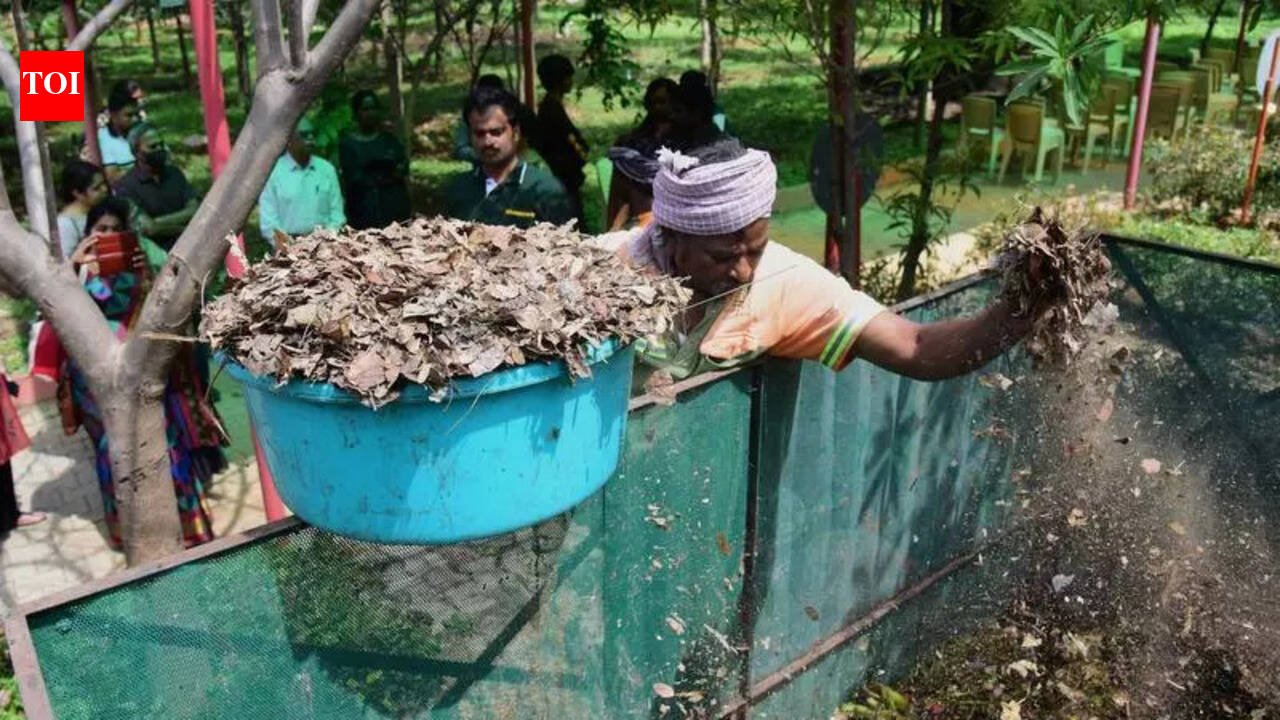
Bengaluru: As apartment complexes across Bengaluru struggle with mounting piles of surplus compost due to mandatory in-situ waste processing, the Karnataka Compost Development Corporation Limited (KCDCL) is exploring a plan to aggregate and market the manure collectively, offering a potential solution to the growing civic challenge.Under the SWM Rules–2026, bulk generators producing more than 100kg of waste daily must process wet waste on their premises. While the policy aims to reduce landfill burden, apartment associations say it has instead created a new issue — managing the compost generated. Most RWAs report that less than 10% of the manure is used for in-house gardening, while nearly half remains uncleared due to the absence of a structured marketplace.The scale mismatch has worsened the situation. Farmers usually require compost in tonnes for transport to be viable, whereas individual apartment complexes produce smaller quantities, making direct sales difficult.“The challenge is not producing compost, but managing what happens after that. There are not enough reliable buyers, and the ecosystem is not well-knit. Sometimes compost piles up due to delayed pickups, and we even pay transporters to clear it,” said Shiva Prakash, former president of a 650-flat association.A management committee member of a 600-plus flat complex on Mysuru Road echoed similar concerns, noting that nearly 600–700 kg of wet waste is processed daily, but close to 50% of the compost remains unsold.“Bulk waste generators are mandated to compost, but there is no system to support the exit pathway. Without a govt-backed platform linking demand and supply, the model becomes financially and logistically unsustainable,” the member said.Amid these concerns, KCDCL has initiated discussions with the Bengaluru Apartment Federation to explore a coordinated solution. KCDCL chairman AN Nataraj Gowda said the corporation is working with the agriculture department to develop a system to collect surplus compost from clusters of apartments and market it through a centralised channel.“We heard about the excess compost available with apartments. We are working out a plan with the agriculture department to see if we can target a chain of apartments, collectively collect the compost from them, and sell it through us,” he said.Gowda acknowledged that the surplus compost problem has begun to discourage some apartment complexes from continuing strict segregation.“We want apartments to continue composting so that wet waste does not go to landfills. To encourage them, we will not charge for collection. We are working on a structured solution and will soon come up with one,” he added.


