


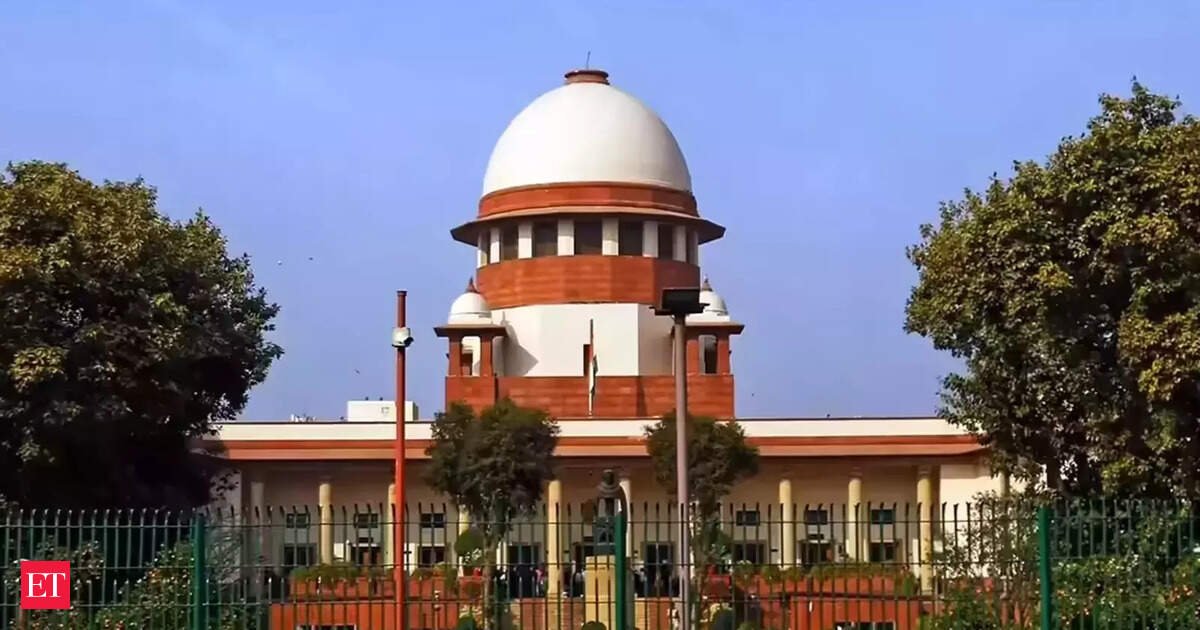
A bench comprising Chief Justice Surya Kant and Justices B V Nagarathna and Joymalya Bagchi, however, declined to entertain a PIL seeking guidelines for politicians and the media when reporting or amplifying speeches by leaders that allegedly affect the fraternity and constitutional values.
The petition, argued by senior advocate Kapil Sibal, was moved in the backdrop of alleged hate speeches by Assam Chief Minister Himanta Biswa Sarma
.Also Read: Supreme Court issues notice to Centre on plea challenging 2023 data protection law
On Monday, a CJI-led bench refused to entertain petitions seeking action against the Assam chief minister over a viral video purportedly showing him taking aim and firing with a rifle at members of the Muslim community.
On Tuesday, at the outset, Sibal said that the atmosphere had become “toxic” and urged the bench to frame guidelines to ensure accountability when political speeches vitiate fraternity.
“It’s becoming toxic. I am not on any individual,” Sibal said, stressing that the relief sought was not directed against a particular leader.However, the bench was not in agreement, with the CJI saying the petition appeared to single out select individuals of a particular political party.
“Of course it is against an individual, especially at this time. Withdraw this. File a simple plea on what conditional guardrails have been laid down and how political parties are violating them,” the CJI said.
He added that a petition targeting “selectively chosen few” would not be acceptable and that any such challenge must be objective and even-handed.
“We are inclined to entertain such a petition. We are eagerly waiting for someone with objectivity to come and file one,” the CJI said.
“Political leaders must foster fraternity in the country,” Justice Nagarathna observed and underscored the need for restraint on all sides.
“Suppose we lay down guidelines… Who will follow them?” she asked, adding, “Origin of speech is thought. How do you control thought? We must raise thoughts in line with constitutional values.”
The plea was filed by former Lucknow University professor Roop Rekha Verma and 11 others, including ex-IAS officers and activists.
Sibal said while the Election Commission’s Model Code of Conduct (MCC) operates during elections, speeches made before the MCC period circulate on social media even after it comes into force.
“In the digital world, when the MCC comes into force, these speeches are repeated. What is the responsibility of the media in such cases so that the democratic atmosphere is not vitiated?” he asked, seeking judicially framed guidelines to caution public figures.
The CJI, however, emphasised that public servants are already bound by service rules, including the All India Services Rules, and cautioned against casually drafted pleas.
Justice Bagchi said the court can only pass orders, while implementation remains a challenge.
Referring to the prior verdict, he said the Supreme Court has already laid down several principles concerning hate speech and free expression.
“Responsibility lies with the political parties as well. He is a member of the party, a leader,” Justice Bagchi said.


