



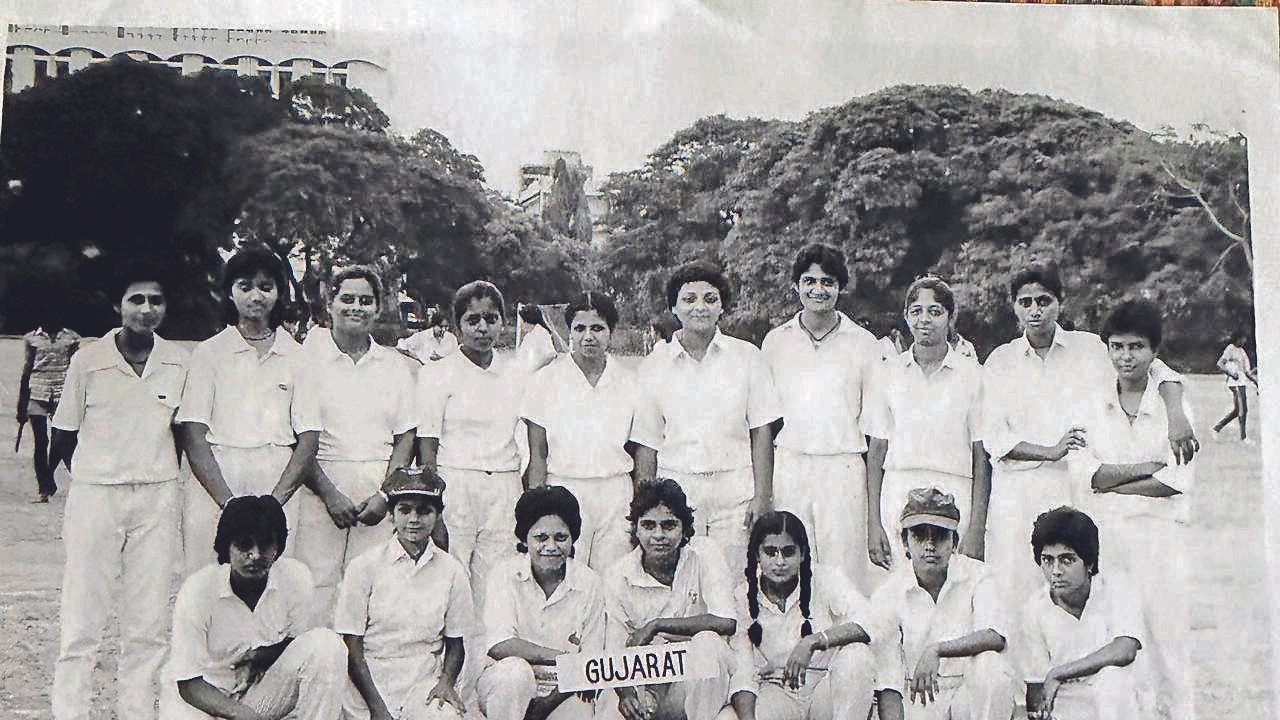
When Yastika Bhatia lifted her bat at Lord’s last Sunday, she did more than celebrate a century. She became the first woman in the venue’s 142-year history to score a Test hundred, drawing applause that travelled far beyond London. Yastika’s name on the Lord’s honours board does not mark the beginning of Baroda’s women’s cricket story; it marks the moment when a journey nearly five decades in the making finally received its standing ovation.Long before the World Cup triumph, the Women’s Premier League, and packed stadiums transformed the way India saw women’s cricket, this city was quietly scripting one of Indian cricket’s earliest success stories. Vadodara was producing quality women cricketers at a time when few believed girls belonged on a cricket field. It had dedicated practice wickets, former men’s cricketers who volunteered as coaches, and a bold philosophy: train girls alongside boys so they learned to compete without hesitation.The result was a generation of cricketers who represented Baroda, West Zone and India years before women’s cricket became fashionable. In the 1970s and 1980s, there were no lucrative contracts, no celebrity status, no television cameras. For Vadodara’s women, there was only passion.
Geeta (Rajkuvardevi) Gaekwad played for India in the 1980s
“Women in Vadodara had taken to cricket as early as the 1970s and were committed to the game despite there being hardly any financial rewards. We eventually came together and decided to form Baroda District Cricket Association to promote women’s cricket,” recalled Geeta (Rajkuvardevi) Gaekwad, who represented India in the 1980s.The players then approached a member of the royal family, Mrunalinidevi Puar, herself an admirer of the sport, to head the association. She readily agreed, and the Baroda District Cricket Association (BDCA) for women took shape in the early 1980s. “I had captained the Gujarat team and the West Zone team a few times in the 1990s and won championship trophies too,” added Gaekwad, now the selection committee chairperson of the Baroda senior women’s cricket team.
Mangala Babar was a member of India’s squad for the 1982 Women’s World Cup
“We aimed to organise more tournaments and create opportunities for girls. Having our own association meant better facilities, structured competitions, and greater visibility for women cricketers,” said Mangala Babar, 66, a member of India’s squad for the 1982 Women’s World Cup. Even before the association was formed, Vadodara’s cricket clubs had begun investing in women players. Youth Service Centre, run by former athlete Sudhir Parab, and Baroda Sports Club, led by former cricketer Mehndi Sheikh, were among the first to run coaching camps for girls.“We had separate practice wickets at Polo Ground while several of us trained at the Baroda Sports Club ground in Bhutdizampa,” said former university cricketer Sandhya Gajjar.
Yastika Bhatia is the first woman to score a Test century at Lord’s
What truly set Vadodara apart, however, was the quality of coaching. Veterans such as D K Gaekwad and Mamasaheb Ghorpade devoted their time to training women cricketers. Even the legendary Vijay Hazare often turned up to watch their matches and encourage them. “The encouragement we received from senior men’s cricketers gave us a competitive edge over other teams from the country,” said former national player Kusum Joshirao.Former coach Mehndi Sheikh remembers those years with pride. “There was no glamour attached to women’s cricket then. The girls came because they loved the sport. They would report for practice on time every day and train for hours. I coached about 30 girls without charging fee and even arranged cricket kits for those who couldn’t afford them. Baroda had become a hub for women’s cricket nearly four decades ago,” he said.
Indian women’s team celebrate after defeating England at Lord’s
That culture produced a roll call of accomplished players, including Razia Sheikh, Kusum Joshirao, Sandhya Gajjar, Shyama More, Seema Patel and Rashmika Patel, many of whom went on to represent Baroda, West Zone and India. Today, as the Indian women’s team inspires a new generation, and a 25-year-old wicketkeeper-batter from Vadodara walks off Lord’s with her name etched in history, the city’s women’s cricket story has come full circle.It took Lord’s 142 years to add a woman’s name to its honours board. But Vadodara, it turns out, had been ready for that moment all along.


