



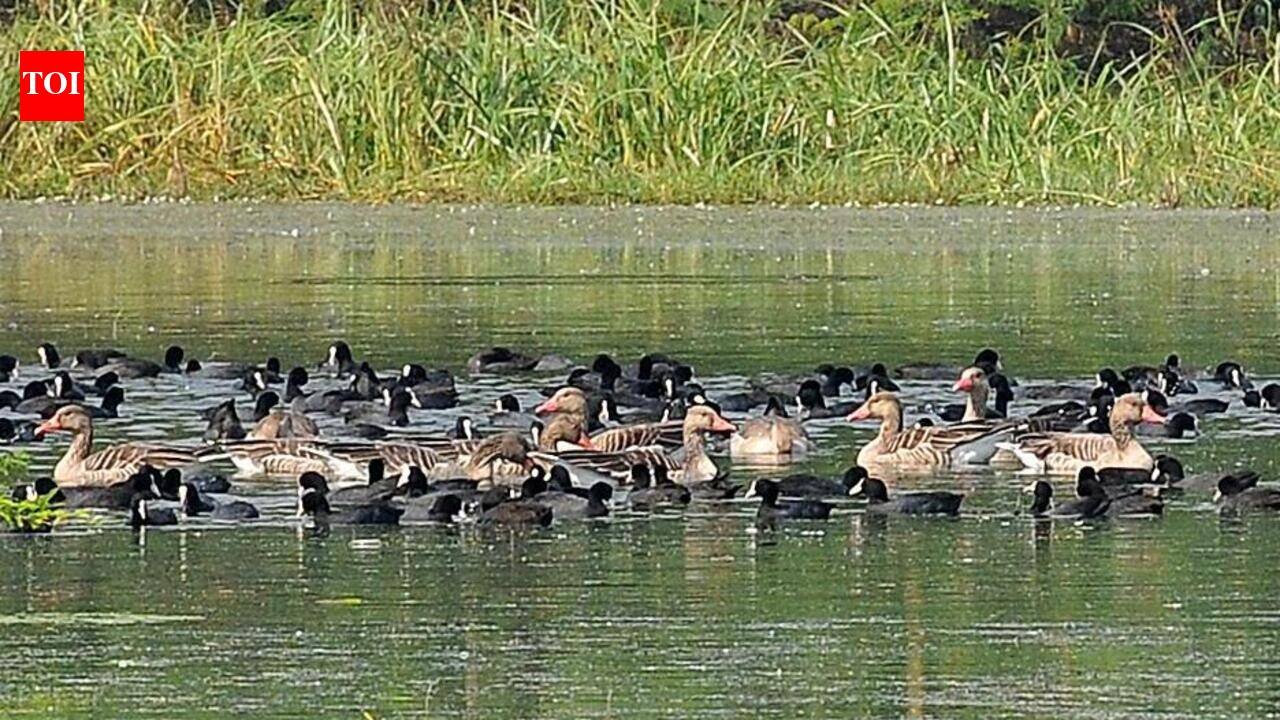
Gurgaon: Sultanpur National Park will reopen for visitors on Oct 1 after its annual three-month closure. The wildlife department has announced free entry for visitors for seven days.Spread over 142 hectares, Sultanpur is an internationally recognised wetland under Ramsar Convention. Home to hundreds of resident and migratory bird species, the park — located about 15 km from the city — remains shut every year from June 1 to Sept 30 to give its ecosystem a breather during the peak summer and monsoon.The park attracts birdwatchers from across the country, especially between Oct and March when species like bar-headed geese, northern pintails and Eurasian wigeons arrive from Central Asia. Park officials said maintenance work, including desilting of water bodies, habitat improvement and repair of visitor facilities, were carried out during the closure period.AI cameras are capturing elusive flocks, detecting rare species, tracking arrivals and departures in near real time and spotting habitat stress or environmental threats early. Divisional forest officer (Wildlife) RK Jangra said, “The park already has around 30 AI-enabled cameras. We have set up new signages and the two waterbodies, which we had created for flamingoes, are being dug an additional 1.5 feet to give it more depth. Currently, it is getting water from tubewell but we are also connecting it to the main waterbody.”According to the wildlife department, the park is home to nearly 6,000 birds, including 30 species of water birds. “Visitors will be greeted by common coot, northern pintail, tufted pochard, northern shoveler, glossy ibis, demoiselle crane, woolly-necked stork, spoonbill and Sindh sparrow, among others. As the park has an ideal habitat for birds, a large number of birds fly millions of miles every year to the wetlands for resting and feeding,” said a staffer.According to experts, the wetland supports more than 220 species of resident, winter migratory and local migratory waterbirds at critical stages of their life cycles. More than 10 of these are globally threatened, including the critically endangered sociable lapwing. In June 2021, an area of up to 5km from the boundary of the national park was declared an eco-sensitive zone by the state forest and wildlife department. A zonal master plan for the area was notified on June 18, and according to that, no construction will be allowed within 300m of the park.
