



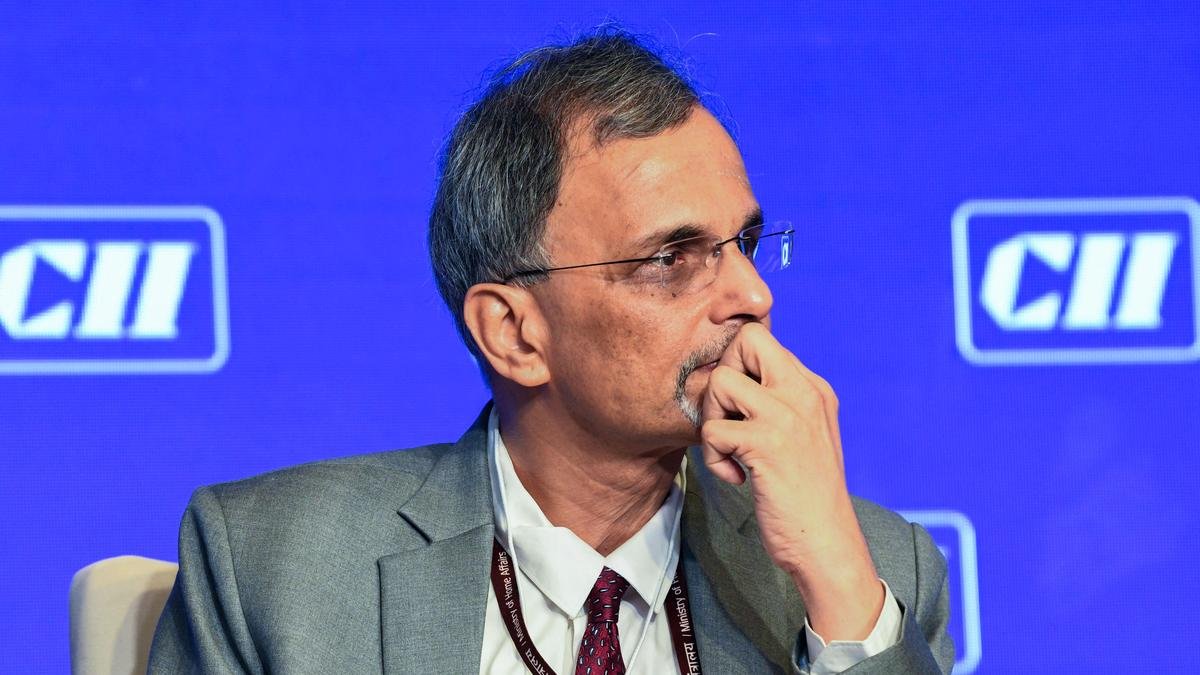
Chief Economic Advisor V. Anantha Nageswaran during the Confederation of Indian Industry (CII) Annual Business Summit 2026, in New Delhi on May 12, 2026.
| Photo Credit: ANI
Free Trade Agreements (FTAs) create value only once they are implemented not when they are signed, Chief Economic Advisor V. Anantha Nageswaran asserted on Tuesday, warning that there is a “substantial” gap between what the trade deals promise and what the regulatory frameworks actually allow.
Mr. Nageswaran’s comments come days after the European Union’s Ambassador to India too warned that compliance issues could still derail the benefits of the India-EU FTA.
During his speech at the Confederation of Indian Industry’s Annual Business Summit 2026, Mr. Nageswaran said that the nine trade agreements and comprehensive economic partnerships that India has entered into in the last five years “represent the most concentrated burst of trade diplomacy in independent India’s history”.
Also Read | Government working on FTA utilisation plan to maximise benefits for businesses
Statements of intent
He added that the frameworks with the United Kingdom, European Union, EFTA, U.S., Oman, New Zealand and Australia are not merely commercial arrangements.
“They represent a diversification of economic relationships that is simultaneously a statement of strategic intent that India will expand its economic footprint across multiple geographies, reducing dependence on any single market or corridor,” he said.
However, he also noted that such agreements create value only at implementation, not at signing.
In Focus podcast | India-U.K. FTA: Does it pack enough to increase bilateral trade?
Procedural barriers
“The gap between the frameworks we have concluded and the depth of integration they would actually permit if the regulatory standards and procedural barriers on both sides were seriously addressed remains substantial,” Mr. Nageswaran noted.
“The imperative is to close that gap with the same urgency that was brought to the conclusion of the agreement themselves,” he added.
Speaking at a separate industry event last week, the EU’s Ambassador to India Hervé Delphin made similar points about the India-EU FTA. He pointed out that customs procedures or conformity requirements should serve their purpose and not be used as trade barriers.
“If administrative procedures are too burdensome, businesses may consider that cost of compliance outweighs the benefits of preferential tariffs, in which case the FTA potential would be lost,” Mr. Delphin had warned.
Published – May 12, 2026 07:31 pm IST


