


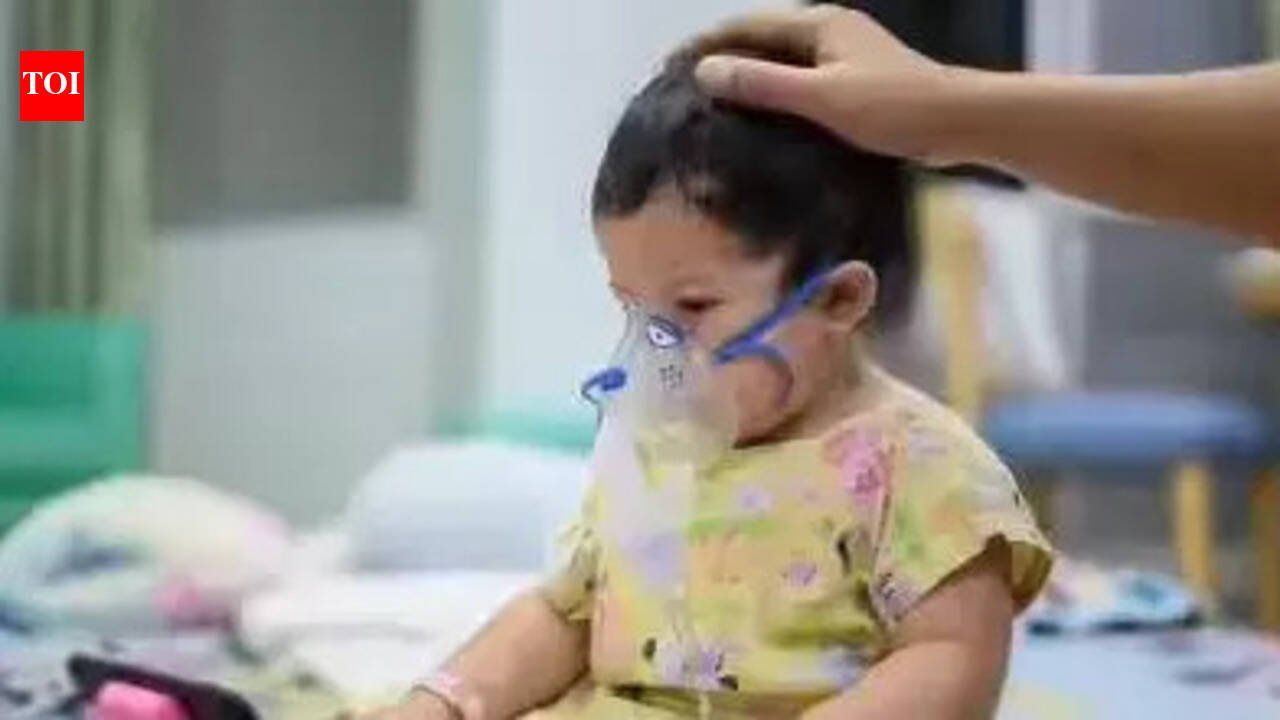
Lucknow: A Lancet study published in Dec last year has revealed serious gaps in child healthcare in rural Uttar Pradesh, showing that less than one in three children with low oxygen levels were referred to higher health centres, despite national guidelines mandating immediate referral. Even among those with dangerously low oxygen levels (below 90%), only half were referred to higher hospitals.The study was led by Prof Shally Awasthi, former head of paediatrics at King George’s Medical University (KGMU).
It highlights that hypoxemia, or low oxygen in children, is commonly caused by pneumonia, severe chest infections, sepsis, asthma, and other breathing problems. In young children, oxygen levels can fall rapidly, often without clear warning signs, and delays in treatment greatly increase the risk of death. “Against this background, we examined hypoxemia—low blood oxygen levels (around 94% or less)—among sick children under five visiting rural health centres in UP,” Prof Awasthi said. The research was conducted at primary and community health centres in Sitapur, Unnao, and Deoria districts between June 2022 and April 2023. During this period, oxygen levels of 23,560 sick children were checked. Of these, 308 children (1.3%) were found to have low oxygen levels, including 90 children with dangerously low levels below 90% who required urgent hospital care. Despite clear medical guidelines, referrals remained poor due to lack of training and awareness at rural health centres, Prof Awasthi said. Only 86 of the 308 children with low oxygen (27.9%) were referred to higher hospitals. Among children with severe hypoxemia, just 42 out of 90 (46.7%) were referred. The situation worsened after referral advice. Only 16 of 79 children with low oxygen (20.3%) and 10 of 40 children with severe hypoxemia (23.8%) actually reached higher hospitals. “This shows that not only healthcare workers, but many parents and caregivers did not realise how serious the child’s condition was,” Prof Awasthi said. The impact was reflected in death figures. Eleven out of 279 children with low oxygen (3.9%) died, compared to 11 deaths among 20,292 children (0.05%) whose oxygen levels were normal. The study stresses the urgent need to strengthen referral systems, improve transport support, and train frontline health workers to ensure timely, life-saving treatment for children with low oxygen levels. Apart from Prof Awasthi, the study team included Dr Divas Kumar, Dr Anuj Pandey, and Dr Anmol Jacob from KGMU, and Girdhar Gopal Agarwal from Lucknow University.


