






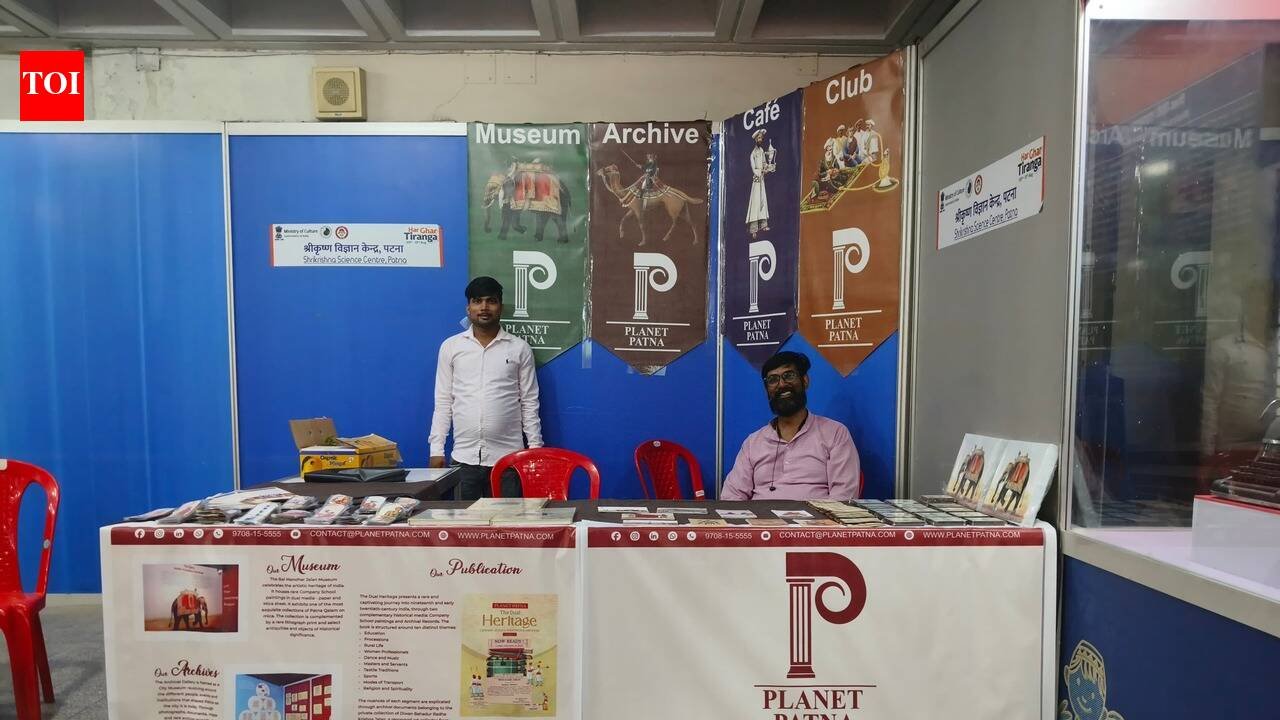
Patna: Giving young learners an opportunity to engage directly with scientists, the ‘Young scientists conclave-2026’ on Tuesday brought together discussions on science, sustainability and innovation at Shrikrishna Science Centre.Organised jointly by the Kainat Foundation, Jehanabad, and Shrikrishna Science Centre with the support of National Council for Promotion of Urdu Language (NCPUL), Bihar State Madrassa Education Board and National Council of Science Museums (NCSM) to mark Unesco International Literacy Day, the conclave centred on the theme ‘Innovate for a sustainable tomorrow’.Kainat Foundation founder chairperson Shakil Ahmed Kakvi said such initiatives provide young people with valuable exposure to science and encourage them to explore ideas and opportunities beyond the confines of the classroom.The panel featured Dolly Sinha, former pro vice-chancellor of Patna University; Kumari Nimisha, assistant professor of chemistry at Government Women’s College, Gulzarbagh, and Sreenu Appikonda, centre head of Shrikrishna Science Centre.Appikonda said the conclave aimed to encourage students to look at scientific research as a means of addressing challenges faced by society. “Such interactions give students an opportunity to think beyond the conventional classroom and understand how science can be applied to real-life problems,” he said.Planet Patna director Azfar Ahmad moderated the discussion, while Kriti Sen hosted the session.A key feature of the programme was ‘meet the scientists’, organised by Planet Patna. The session encouraged students to raise questions and engage in an informal exchange with scientists on research, discovery, scientific thinking and career opportunities.The programme also offered students a glimpse into Patna’s scientific heritage. Through archival material, Planet Patna highlighted individuals, institutions and milestones that have contributed to the city’s intellectual and scientific development.“Old documents, photographs, institutional records and museums can also tell us how scientific thought and institutions evolved in a city,” Azfar Ahmad said.


