






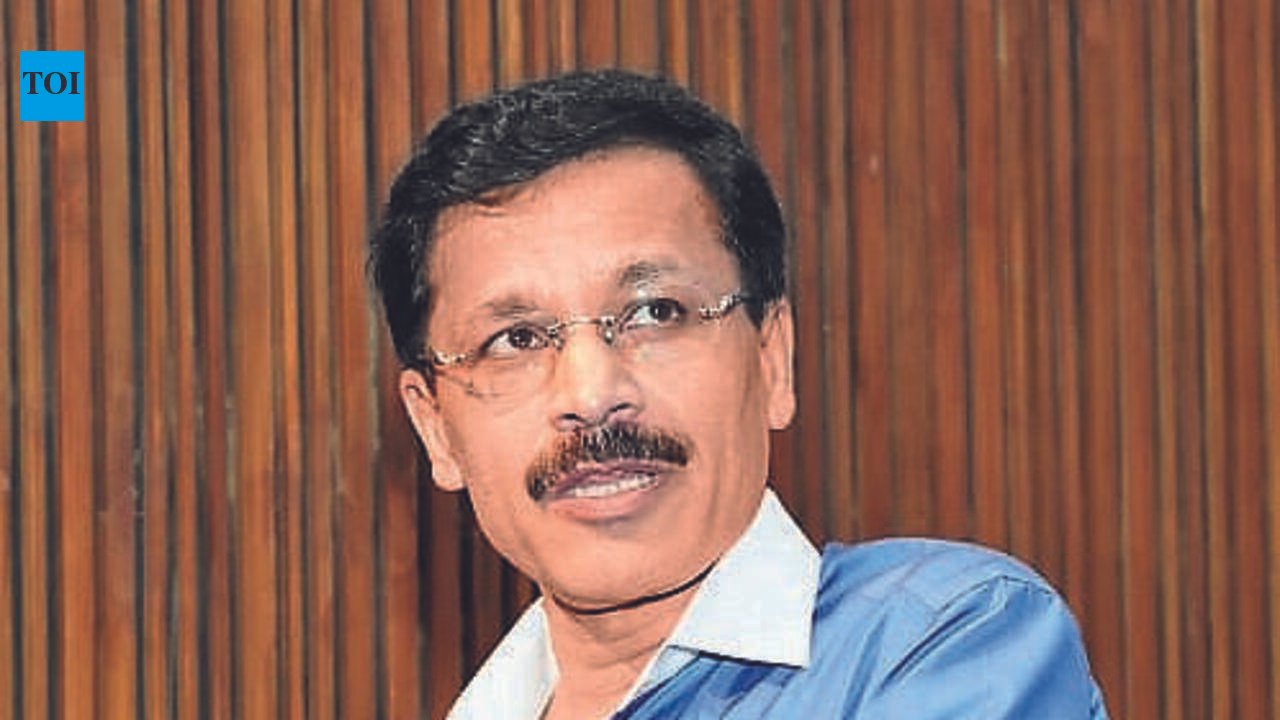
Ahmedabad: Consumer trust in food and drug safety can be built only when compliance becomes easier and non-compliance becomes far more costly, Maharashtra Food and Drug Administration commissioner Tukaram Mundhe said. He delivered the keynote address at the 48th Foundation Day ceremony of Consumer Education and Research Centre (CERC) organised at Ahmedabad University on Saturday.Speaking on ‘Regulatory Enforcement and Consumer Trust’, Mundhe said, “Regulators need to create an ecosystem wherein compliance should be easier, but non-compliance needs to be difficult. Non-compliance should cost far more. Food and drug regulation was different from other forms of regulation because there was no corrective mechanism when unsafe products resulted in loss of life.”Mundhe said the biggest issue concerning food safety was its impact on public health, which people were yet to fully recognise. “The largest or the biggest issue in India regarding food safety is that it is causing public health havoc. We are not realising it. The sooner we understand and appreciate it, the better it will be for us,” he said.Mundhe said people would have to build food habits based on safety and standards. He also said regulators needed to address businesses that emerged after the Food Safety Act was framed. “The Act was passed in 2006. The businesses which did not exist then, namely e-commerce, dark godowns, and cloud kitchens, need to be factored in. Technology and resources needed to be used to bring food business operators, licensees and regulators onto the same platform.”
Maharashtra Food and Drug Administration commissioner Tukaram Mundhe released two books — What’s Really in Your Food? CERC Testing Reveals and Advertisements Claims Questioned by CERC — at Ahmedabad University on September 26, Saturday
He also questioned whether existing penalties were sufficient to deter food safety-related violations. “Penalties needed to be proportionate, and the regulatory system needs to make compliance easier and violations costlier. For instance, adulteration has a penalty of Rs 3 lakh to Rs 10 lakh. But if one earns crores (by selling/ endorsing the product), the non-compliance penalty is not enough to deter someone from repeating it,” said Mundhe, citing the cost of celebrity endorsements of products as an example.He also cautioned against compromising public health in the name of ease of doing business. “We cannot lose sight of the humans and public health. We cannot compromise on that,” he said.Speaking on consumer trust, he said, “Consumers trusted regulators to ensure that food and medicines available in the market met safety and quality standards. That is the trust which a regulator has to earn by its actions and enforcement. Laws do exist. But are they enforced? There is a big question.”Mundhe also identified three broad challenges: inadequate enforcement machinery, weak deterrence and regulatory gaps created by newer business models.According to him, in the modern day, the volume of businesses ranged from street vendors to large companies and required adequate administrative machinery for enforcement. Citing Joint Parliamentary Committee data, he said Maharashtra needed around 850 food safety officers but had a sanctioned strength of 350. In the drug sector, he cited the Mashelkar Committee report and said Maharashtra should have 800 inspectors against a sanctioned strength of 200, of whom only 41 were working.CERC also released two books at the event: What’s Really in Your Food? CERC Testing Reveals, documenting food-product testing conducted by the organisation, and Advertisements Claims Questioned by CERC, a compilation of advertisements questioned by CERC.“Over the past year, CERC has expanded its consumer empowerment work through technology, advocacy and outreach. We are also developing India’s first Consumer Responsibility Index to assess how responsibly companies treat consumers. Going ahead, our focus will be on emerging challenges in the digital age, including dark patterns, dark stores, agentic AI and e-commerce,” said Sunil Parekh, chairman, CERC.


