



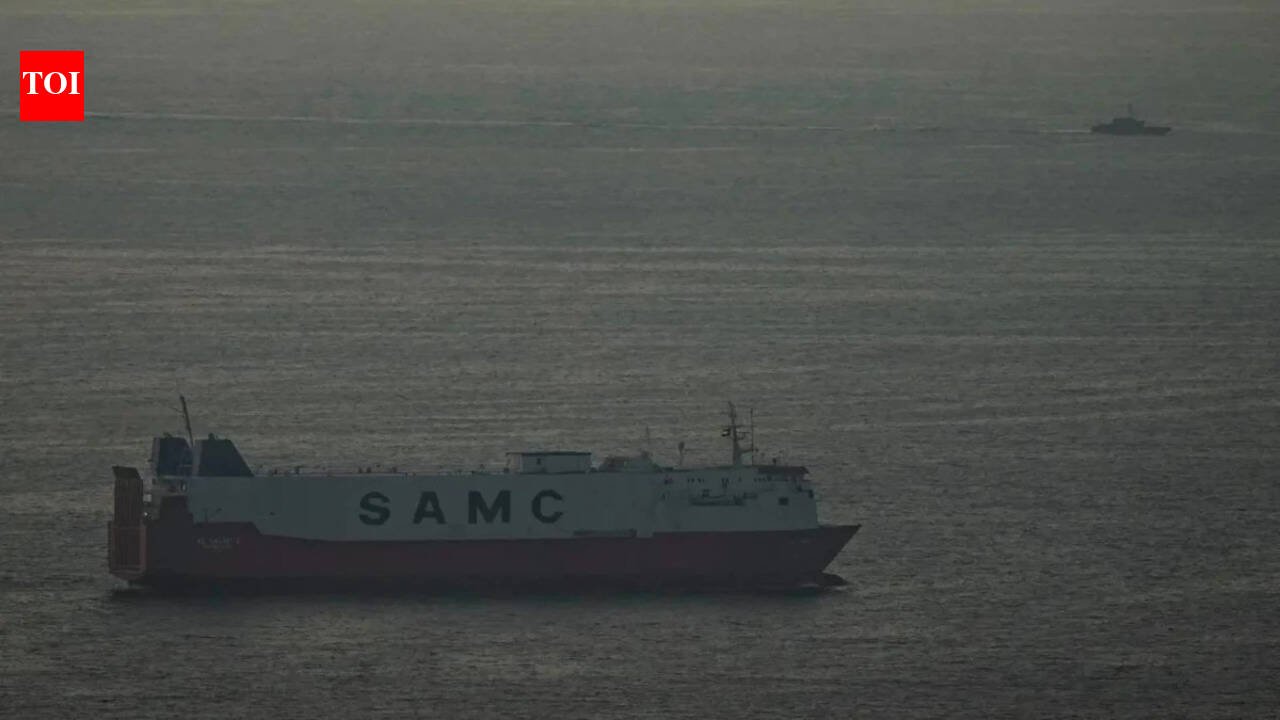
A vessel appearing to pose as a scrapped oil tanker has signalled that it successfully crossed the Strait of Hormuz, in what appears to be the second “zombie ship” case in just days as shipowners look for ways to move cargo through the war-hit chokepoint.As per Bloomberg, a ship identifying itself as the Nabiin was tracked in the Persian Gulf on Sunday evening and then in the Gulf of Oman by Monday morning, suggesting it had transited Hormuz.But records compiled by Bloomberg show the Aframax tanker, built in 2002, was actually sent to shipbreaking yards in Bangladesh five years ago, strongly indicating that the vessel now using that identity is a so-called “zombie tanker”, or a ship sailing under the name of a scrapped legitimate vessel.
Second suspected ‘zombie ship’ in days
The apparent Nabiin case comes just days after another vessel using the identity of Jamal, a liquefied natural gas carrier, was seen crossing the strait on Friday.That ship was also listed as having been beached at an Indian demolition yard last year, meaning the vessel that passed through Hormuz was likely another doppelganger operating under the identity of a scrapped ship, Bloomberg reported.Together, the Nabiin and Jamal cases show the extraordinary lengths shipowners or operators may now be going to in order to move cargo through Hormuz, where commercial traffic has slowed to a near standstill since the Middle East war escalated at the end of February.The true identity of the ship posing as Nabiin could not be immediately confirmed, including whether it is in fact an oil tanker.
Hormuz remains effectively closed
The suspected use of “zombie ships” comes amid an effective blockade of the strait.The Strait of Hormuz has been effectively closed since the Middle East war began, with only a handful of ships getting through.So far, the vessels that have managed to transit appear to be either Iran-linked or to have received Tehran’s approval. Others have switched off their tracking systems to avoid being monitored.US President Donald Trump late on Saturday in the US gave Iran a two-day deadline to reopen the strait or face the threat of US strikes on Iranian power plants.Tehran responded by warning it would close Hormuz completely if such attacks took place.The broader threat to global energy flows remains severe. Traffic through the strait is now at a virtual standstill because Iranian attacks and threats have turned it into a high-risk zone.
Nabiin’s signals raise more questions than answers
The ship posing as Nabiin entered the Persian Gulf hours before the war broke out, initially listing Iraq’s Khor Al Zubair as its destination.It remained inside the Gulf until it exited, though the vessel’s precise movements are difficult to establish because of heavy electronic interference affecting ship transmission signals in the region.After leaving the Gulf on Sunday, the ship indicated it was fully laden, based on its draft readings, but did not show any clear destination, Bloomberg reported.That has fuelled speculation that the vessel may have been carrying cargo through the strait under a false identity to avoid scrutiny or to reduce the risk of interception.
Dubai-linked firms listed, but contact failed
International shipping database Equasis lists Muhit Maritime FZE and Sagitta Maritime Co Ltd, both based in Dubai, as Nabiin’s manager and owner, respectively.The two companies reportedly share the same contact details.However, Telephone calls to the companies did not go through, while emails bounced back, leaving no immediate explanation from the listed firms.In the earlier Jamal case, the vessel’s manager was listed as Resurgence Ship Management Pvt. in Mumbai, but the company did not respond to an email seeking comment outside regular business hours, as per Bloomberg.
A new layer in the dark shipping trade
“Zombie ships” are not entirely new to the shadow shipping world. Such vessels have previously been used in the sanctioned oil trade, where ships mask their true identity to move restricted cargo.But using one specifically to pass through Hormuz during an active maritime crisis adds a new dimension to that playbook.It was especially unusual that the earlier Jamal case involved a vessel presenting itself as an LNG carrier, since LNG ships are far more specialised and fewer in number than crude tankers.Heavy electronic interference in the region is also complicating vessel tracking, with some ships either going dark voluntarily for security or having their location data distorted by signal disruption.
Wider crisis deepens risk to global shipping
The suspected “zombie tanker” crossings are unfolding against a broader regional escalation that continues to endanger maritime trade.Iran’s defence council said it would mine “all access routes and communications lines in the Persian Gulf and coastal areas” if its coastlines or islands were attacked, including by deploying “drifting mines”.That threat adds to the risk for commercial shipping already navigating missile attacks, drones, electronic disruption and the possibility of naval mines in and around the Gulf.International Energy Agency chief Fatih Birol warned that “the global economy is facing a major, major threat,” comparing the current shock to the oil crises of the 1970s and the fallout from Russia’s 2022 invasion of Ukraine.


