






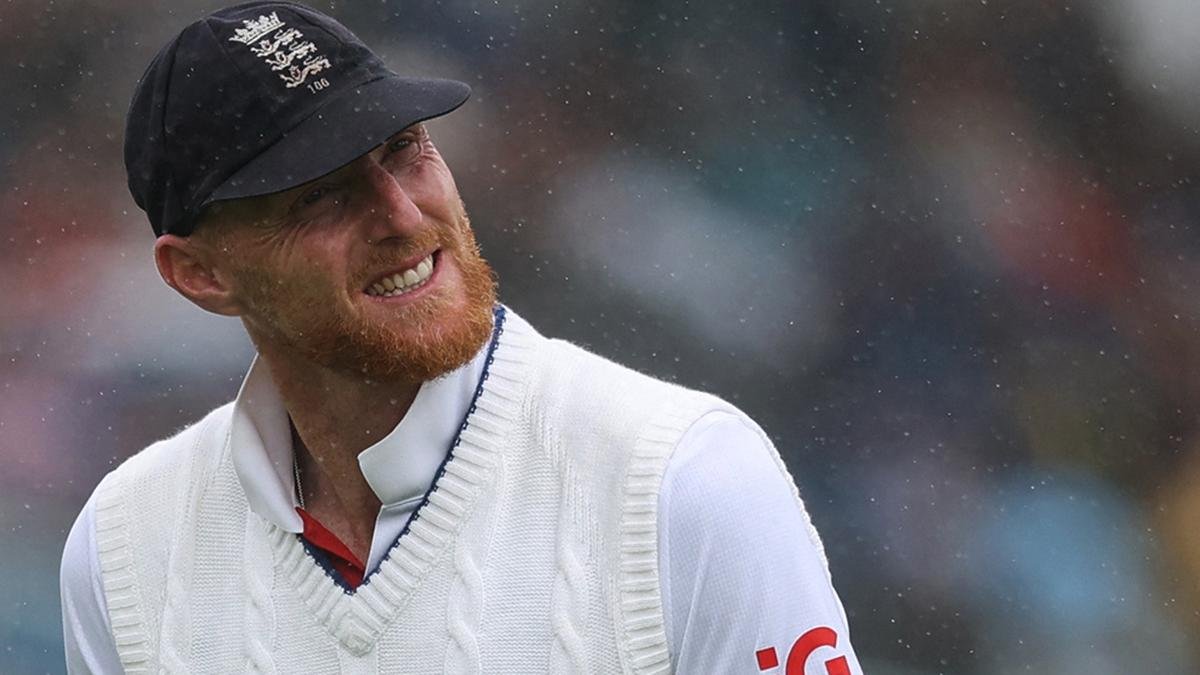
Ben Stokes is an extraordinary cricketer who has done extraordinary things on the cricket field. Superhuman. Out of the world. Impossibly compelling. These are some of the adjectives that have accompanied his stirring deeds, driven as much by his supreme skills and his never-say-die attitude as the bull-headed unwillingness to surrender even when the odds are stacked heavily against him.
Born in Christchurch in the Antipodes but having made the historic city of Durham in the North-East of England his home several moons back, the 35-year-old has scaled dizzying heights through sheer weight of character. With the bat, he can switch from watchful defence to a blitz of epic proportions in the blink of an eye. He is a most accomplished operator with the ball, but it’s for his ability, indeed willingness, to do the dirty job that he truly stands out.
When England seek control, Stokes takes it upon himself to dry up the runs. When they try to bounce batters out, Stokes thinks little of going round the stumps and bashing the ball into the most docile of pitches ball after ball, over after over, going even eight or nine overs in a spell without losing pace, intensity, energy or direction. He is a fabulous fielder, sure of hands and athletic beyond compare. And he is a grand leader of men, always in the thick of battle. He is the quintessential all-round package, the premier all-rounder of his generation bar none, one of those players that, as they say, ‘put bums on the seats’.
There has to be a streak of madness, however, in the round-the-wicket mode of operation that has become a Stokes calling card, and sometimes (maybe more than sometimes), that streak manifests itself off the field, often with a little nudge from Bacchus. Stokes’ latest dalliance, in cahoots with Gus Atkinson, has heaped further misery on a system that is seen as being subservient to players, who appear to have perfected the art of bossing over their bosses.
Stunning twist
In a stunning turn of events, Stokes (and Atkinson) have been stood down from the second Test against New Zealand, starting at the Oval on Wednesday, following their run-in with a Saracens rugby player last Sunday, hours after England pulled off a comfortable win over the Kiwis at the home of English cricket. Lord’s threw up a diabolical 22-yard strip that made batting a lottery, and made heroes out of workmen-like bowlers. So heavily skewed in favour of the bowlers was the pitch that match referee Andy Pycroft was compelled to rate it ‘unsatisfactory’ (perhaps he was a touch generous), a massive blow to the reputation of a venue that prides itself on being the very definition of prim and proper. If Lord’s can be perceived as having failed to live up to the lofty standards that have come to be associated with it, surely, we shouldn’t be surprised at Stokes playing true to character, right?
Stokes has a long and disturbing history with nightclubs and other watering holes. The most visible of misadventures came in 2017 in Bristol when, after an ODI against West Indies, he was involved in a late-night altercation outside a nightclub. After a flurry of punches that might not have been out of place in a boxing ring, Stokes was arrested and charged with affray, lost his vice-captaincy, was suspended by the England and Wales Cricket Board and missed the 2017-18 Ashes tour of Australia.
After an understandably high-profile trial, he was clear of affray charges in August 2018. Stokes celebrated in style, playing a lead role in England’s maiden tryst with the 50-over World Cup the following July and playing one of the most unforgettable fourth-innings knocks in Leeds to single-handedly pilot his side to a one-wicket victory against the old foe.
Long before this, he had been cautioned officially by the cops during a night out in Newcastle (2012) early in his career, which meant that he wasn’t considered for international selection for a year thereafter even though he had debuted in both white-ball formats by the time. A year on, he was sent home from an England Lions tour of Australia (alongside Matt Coles) for breaching drinking and curfew rules while in 2014, he completed a hat-trick of ignominy when he fractured his hand after smashing a dressing room locker in frustration on being run out in the Caribbean, an injury severe enough to rule him out of the T20 World Cup in Bangladesh.
Each time he was in the dock, Stokes dug deep to come back stronger, endearing himself to England’s historically unforgiving cricketing populace through sheer bloody-mindedness and the propensity to leave nothing behind in the dressing-room. One couldn’t help but admire his resolve (so much so, that his remarkable skills were almost taken for granted) and he became larger than life in the country which he had made his home very early, eventually ascending the captaincy in 2022 after a terrible run under Joe Root that produced just a solitary Test win in the Yorkshireman’s last 17 outings as captain.
In a sequence of developments that can so easily find a special mention in Ripley’s Believe It or Not, Root, also 35 and arguably the greatest English batter of all time, is now back as Test skipper, albeit in an interim capacity, for the Oval skirmish against Tom Latham’s beleaguered troops. By and in itself, that’s an interesting development because Harry Brook, the white-ball captain, was Stokes’ designated deputy. The fact that Brook has been overlooked and the captaincy returned to Root, if only on a temporary basis, reiterates how shaken the mandarins at the ECB are at the latest turn of events where, we are repeatedly being told, the only transgression Stokes and Atkinson were guilty of was breaking team curfew rules.
The curfew was imposed this January after a litany of bad behaviour with the high-profile Brook and opener Ben Duckett in the crosshairs, the former in New Zealand on the eve of an ODI in his first series as captain and the latter during the ill-fated Ashes tour down under in the last Australian summer. England had sought to sweep the Brook episode under the carpet after he was ‘clocked’ by a bouncer outside a nightclub in Wellington the night before the final ODI. He was fined more than ₹36 lakh and almost lost his captaincy. A few months later, a video surfaced of Duckett purportedly drunk and unable to find his way to the team hotel in Noosa when England embarked on a pre-arranged mid-series break between the second and the third Ashes Tests despite being 0-2 down in the most furiously followed cricketing faceoff.
Ironically, alongside head coach Brendon McCullum with whom he once enjoyed a fabulous relationship rumoured to have gone pear-shaped during the disastrous Ashes campaign, Stokes was among the prime movers of the curfew imposed ahead of a white-ball tour of Sri Lanka that was to culminate in the T20 World Cup in India and Sri Lanka in February-March. For the skipper therefore to breach the rules he himself had helped put in place is poor optics, never mind if he and Atkinson, like we are being told, were not the agent provocateurs in the London incident of Sunday at Chelsea’s Rex Rooms nightclub which left an ECB security personnel needing stitches after reportedly being struck by the Saracens’ Samoan rugby player, Totoa Auvaa.
There have been mixed messages from England in the days since the incident came to light. It is been rumoured that Stokes might not just step down from the captaincy but retire entirely from the sport, which might seem like an overreaction until one is informed that there is no guarantee that he will be selected in the Test squad if he quits the leadership role because he has scored only 31 runs in his last six Test innings. Anyone who has followed the Stokes graph with only cursory interest knows well the perils of ruling him out prematurely. But clearly, England’s bosses with McCullum — himself under scrutiny for his backfiring Bazball tactics — at the helm might feel Stokes’ best days are behind him and that the responsibility of taking the team forward across formats must be entrusted to the exciting, unconventional and aggressive Brook.
The problem is that all these Brook traits, so arresting on the cricket field, have spilled over beyond the boundary. Root’s temporary elevation as skipper is the ultimate acknowledgement from the decision-making group at this troubled time, England are looking for stability and maturity and poise and measured leadership in the short term, all of which Root provides in abundance and which aren’t necessarily Brook’s visible USPs. It can also be construed as a message, however belated, that there will be no more tolerance of unacceptable behaviour from young men tasked with not just acquitting themselves with credit on the cricket field but who are also installed as global ambassadors of their country.
Nasser Hussain and Mike Atherton, respected former captains with respected voices, are unequivocal in stating that the Rex Rooms standoff isn’t a ‘sackable offence’. Per se, they are absolutely right. After all, one can argue, they were out celebrating a Test victory – unlike Brook in Wellington – and that shouldn’t be a crime in itself. But when the captain breaks the same rules that he had helped implement, surely, it must come with repercussions far greater than if only a ‘mere’ member of the side was guilty of curfew-breaking. Which is exactly why there is a more lenient view of paceman Atkinson’s misdemeanour.
Stokes, it would seem, has chosen not to make decisions from a place of emotion, which is just as well because any immediate emotional call will inevitably come with regrets for a lifetime. He has a few days to consider where he stands, where is at mentally, how much gas he has left in the mental tank, confabulate with his bosses, read the room and then decide how he wants to play it. If he is seen to be sincerely remorseful, he could be back, at least as a player. If he has played his last international game, it will be a shame but then again, actions do have consequences, don’t they?


