





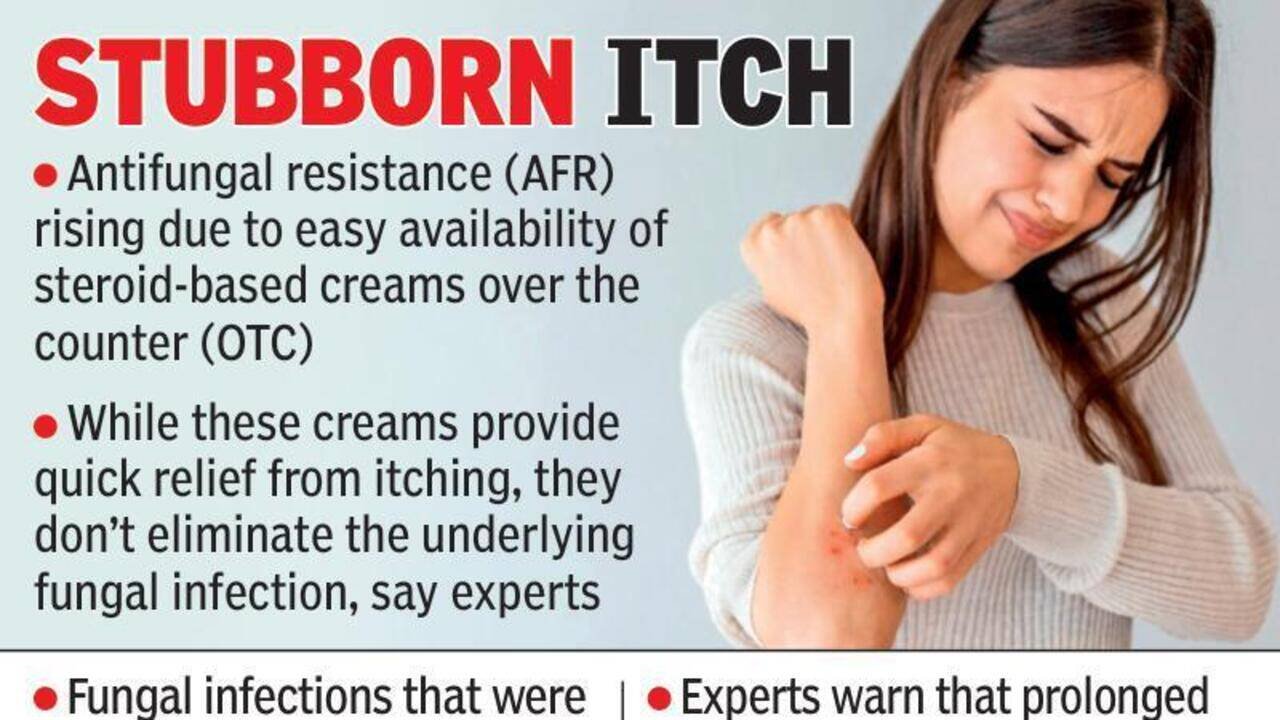
Hyderabad: The indiscriminate use of steroid-based creams for fungal infections, itching and skin rashes is contributing to a growing burden of antifungal resistance (AFR), skin specialists in Hyderabad have warned.Experts said the trend is a part of the antimicrobial resistance (AMR), where microorganisms become less responsive to treatment for itching and rashes, but in this case, it specifically affects fungal infections, making them harder and more time-consuming to cure.
Steroid-containing creams were recently brought under schedule H of the drugs rules following a public interest litigation (PIL) filed by the Indian Association of Dermatologists, Venereologists and Leprologists (IADVL).This means these creams are legally classified as prescription-only medicines and should be sold only on the advice and prescription of a registered medical practitioner. However, doctors said that the problem is being fuelled by the easy availability of steroid-containing creams over the counter (OTC).While these creams provide quick relief from itching and redness, they said that it often suppresses symptoms without eliminating the underlying fungal infection, allowing it to spread and become resistant to treatment.According to skin specialists, while independent skin clinics in the city are seeing around 40-50 such cases every week, the numbers are believed to be even higher in govt hospitals, around 100 a week or more.“Many patients come after using OTC creams for weeks or months. By then, the infection has spread extensively and requires prolonged treatment,” said Dr Rajetha Damisetty, senior dermatologist and chairperson of the anti-quackery committee for the IADVL.In one such recent case, a 32-year-old software professional reportedly used a steroid-based cream for nearly four months to treat a fungal infection in the groin area. While the itching reduced initially, the infection later spread to the abdomen and thighs, requiring prolonged antifungal therapy.Another case involved a college student repeatedly applying an OTC cream for treating ringworm infection, only to develop recurring lesions that persisted for months despite treatment. Furthermore, it got transferred to his mother who suffered from it for years and sought help from multiple doctors, including ayurveda and homeopathy practitioners before getting cured after consulting a dermatologist.Experts also highlighted that fungal infections that were once easily treatable within a month are now taking more than three months to resolve. “In some cases, we are forced to use dual antifungal medications and prescribe oral medications along with topical treatment. Most patients who come to me have already used one or another OTC cream, which worsens the condition before they seek proper medical care,” said Dr Jalagam Vijay, a dermatologist and former co-opted member of the legal and anti-quackery committee of the Telangana Medical Council (TGMC).Moreover, self-medication remains a major concern. “People frequently seek advice from friends, relatives or pharmacists instead of consulting a qualified doctor. The temporary relief provided by these creams gives a false sense of recovery, while the fungus continues to grow underneath,” said Dr Karishni Chittarvu, a dermatologist and former general secretary, Telangana senior residents doctors association (T-SRDA).She added that increasing fungal resistance is observed, necessitating longer duration of oral antifungal therapy.Moreover, the misuse extends beyond steroid creams alone. “Topical steroids and steroid combinations containing antifungals and antibiotics are commonly used without prescription. In addition, medical shops are dispensing oral antifungal drugs, which further contributes to antifungal resistance,” said Dr Vijay.Dermatologists warned that prolonged use can not only worsen fungal infections but also cause skin thinning, pigmentation changes and recurrent disease. “There needs to be stricter regulation of steroid-containing creams at pharmacies and greater public awareness to curb the growing threat of antifungal resistance,” said Dr Rajetha.


