



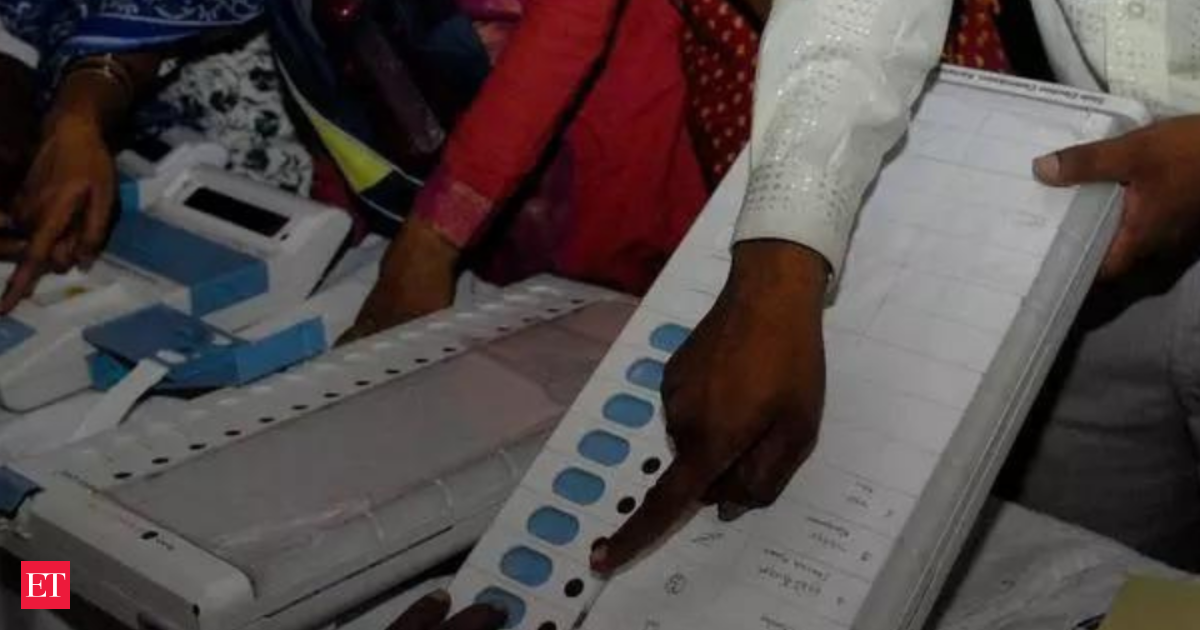
The voter base includes around 2.7 crore in Kerala, 2.5 crore in Assam and 9.4 lakh in Puducherry, following Phase II of the special intensive revision of electoral rolls, reflecting an updated and expanded electorate for the polls.
Catch live updates from assembly elections here
The elections come at a time when India faces an uncertain growth outlook after a surge in oil prices following US and Israeli strikes on Iran. A tentative ceasefire was announced this week, but the effective closure of the Strait of Hormuz, a key route for India’s oil imports, for over a month left Indian households and industries grappling with acute shortages of cooking gas.
“There is a great deal of anxiety among people regarding shortage of fuel and we will have to see how it plays out when they are casting their votes,” said Rasheed Kidwai, a visiting fellow at the New Delhi-based Observer Research Foundation.
Assam
In Assam, the electoral landscape has shifted sharply over the past three elections, with the BJP emerging as the dominant force. From just 5 seats in 2011, the party surged to 60 seats in both 2016 and 2021. The Congress, which once led with 78 seats in 2011, saw a steep decline to 26 in 2016 before a modest recovery to 29 in 2021.
ALSO READ | Key constituencies and important faces to watch in Assam and more
Regional players have seen mixed fortunes—AGP dropped from 14 seats in 2016 to 9 in 2021, while BOPF declined from 12 to 4 over the same period. The UPPL entered the fray in 2021 with 6 seats, and AIUDF has maintained a steady presence with 13–18 seats across elections.
Vote share trends reflect a more competitive and fragmented contest. The BJP’s vote share has remained strong, while the Congress saw a significant drop after 2011 but stabilised later. Regional parties and smaller players continue to hold crucial vote pockets, with shifting alliances influencing outcomes. Overall, Assam’s politics has moved from a Congress-dominated era to a more divided and BJP-led contest, with regional parties still playing a key balancing role.
Kerala
Kerala’s electoral landscape is defined by a massive voter base of 2.7 crore eligible voters, where female voters (1.39 crore) slightly outnumber male voters (1.32 crore). The state is divided into 140 seats, with 14 reserved for Scheduled Castes (SC) and 2 for Scheduled Tribes (ST). To facilitate the voting process, 30,495 polling stations were established, the vast majority of which (24,341) are located in rural areas. The electorate also includes a significant youth presence with 4.24 lakh first-time voters (18-19 years) and 45 lakh voters in the 20-29 age bracket. Additionally, the state accounts for over 2 lakh voters aged 85+ and 54,110 service electors.
ALSO READ | List of constituencies voting today, important faces, five factors to watch in Kerala
The elections saw a high level of political engagement, with 40 different parties fielding a total of 601 candidates. A massive portion of the candidate pool consisted of 282 independents, making up nearly half of the total contestants. Among the major parties, the Bharatiya Janata Party (BJP) fielded the highest number of candidates at 98, followed closely by the Congress with 92, and the Communist Party of India (Marxist) [CPI(M)] with 77. Other notable participants included the Bahujan Samaj Party (BSP) with 55 candidates and the Aam Aadmi Party (AAP) with 53.
Several “battleground” constituencies highlight the intensity of the race, often featuring three-way contests between the LDF, UDF, and BJP. In Dharmadam, Chief Minister Pinarayi Vijayan (CPM) faced off against the Congress and BJP. In Nemom, a high-profile clash featured Rajeev Chandrasekhar (BJP) against V. Sivankutty (CPM) and K.S. Sabarinadhan (Cong). Other critical seats included Puthuppally, a traditional Congress bastion where Chandy Oommen contested, and Palakkad, which saw a heated race between Congress’s Ramesh Pisharody and BJP’s Sobha Surendran.
Tracking performance from 2011 to 2021 shows a steady rise for the CPM, which grew from 45 seats in 2011 to 62 seats in 2021. Conversely, the INC saw a decline, dropping from 38 seats in 2011 to 21 seats in 2021. The BJP, while struggling to gain significant seat counts (holding only 1 seat in 2016 and 0 in 2021), has seen its vote share grow significantly from 6.0% in 2011 to 11.3% in 2021. The CPI has remained relatively stable in the mid-teens, while the IUML saw a slight dip from 20 seats to 15 over the same decade.
Puducherry
Puducherry’s legislative assembly consists of 30 seats, with 5 reserved for SCs. The electorate comprises 9.5 lakh eligible voters, featuring a higher female presence (5 lakh) compared to males (4.43 lakh). To support this population, 1,099 polling stations were set up, with 489 located in rural areas. The voter base includes a strong youth segment of nearly 2.12 lakh voters under 30 and a small but significant group of 54 centenarians.
A total of 24 parties fielded 177 candidates, though the field was dominated by 117 independents, who made up the majority of the contestants. Among the organized political parties, Congress fielded the most candidates at 22, followed by Naam Tamilar Katchi and Tamilaga Vettri Kazhagam with 28 each (likely across various regional categories). The All India N.R. Congress (AINRC) and DMK fielded 16 and 13 candidates respectively, while the BJP contested 10 seats.
Political power in Puducherry has shifted significantly over the last decade. The AINRC, which peaked at 15 seats in 2011, held 10 seats in 2021. Notably, the BJP and DMK both saw a surge to 6 seats each in 2021, while the INC suffered a major decline from 15 seats in 2016 to just 2 seats in 2021.


