






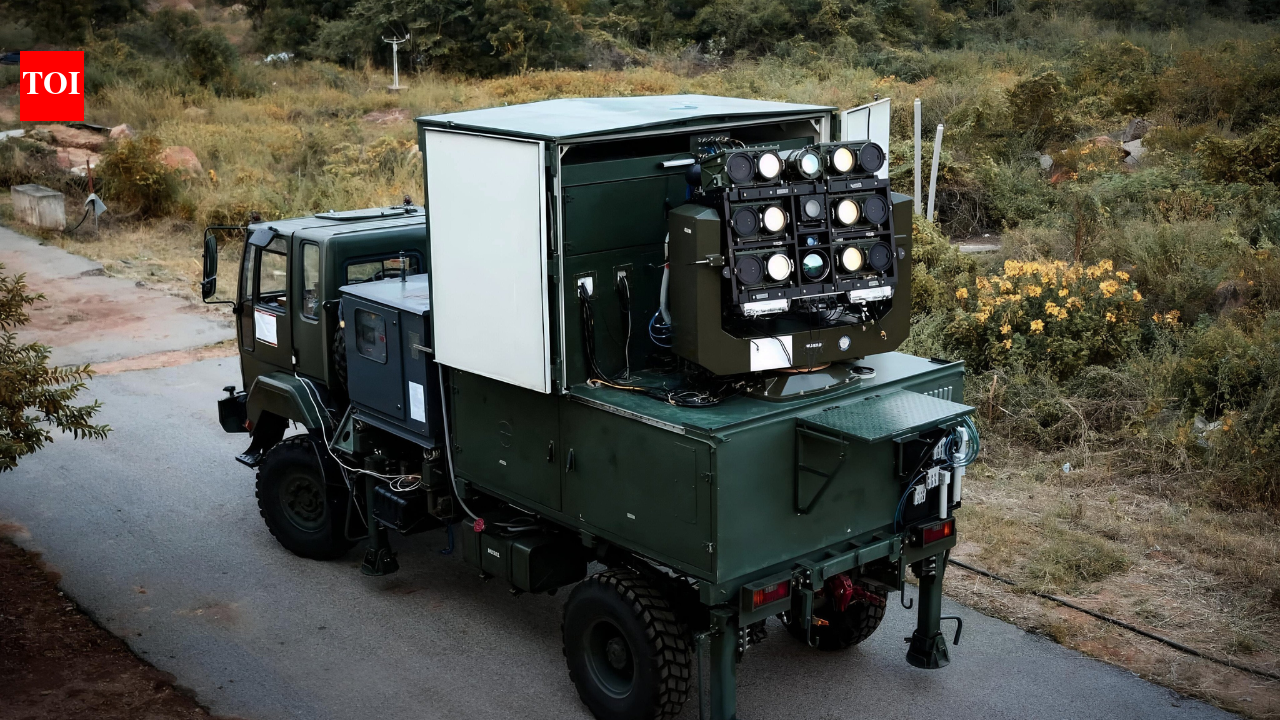
India is moving to take its indigenous directed-energy weapon capability from trials to production, with the Defence Research and Development Organisation (DRDO) set to seek an industry partner within the next six months for its 30kW-class counter-drone laser weapon. The move comes as militaries increasingly look at directed-energy weapons as a way to deal with the growing threat posed by large numbers of low-cost drones and unmanned aerial vehicles.The truck-mounted 30kW laser system is designed primarily to counter drone swarms, fixed-wing UAVs and surveillance sensors at ranges of up to 5 km. According to DRDO, final trials of the system were completed in August 2025 and the technology has now been demonstrated. The requirement for such systems has become more pressing after recent conflicts, including Operation Sindoor in May 2025, when drones were extensively used by both sides. Pakistan used relatively cheap drones for probing and surveillance missions, including attempts to locate Indian air-defence positions and force the expenditure of expensive interceptors. This has highlighted a basic problem in modern air defence: using a costly missile to destroy a relatively inexpensive drone can quickly become unsustainable when attacks involve large numbers of targets.Lasers offer a different approach. Travelling at the speed of light, a high-energy laser beam can engage a target instantly, without the flight time associated with missiles and at a much cheaper cost per shot. As long as sufficient electrical power is available, the system does not face the traditional ammunition constraints of kinetic weapons. This makes Directed Energy Weapons (DEW) particularly relevant against drone swarms and other relatively slow aerial targets.India is also developing smaller laser systems. The 2kW DEW is already in production through Adani, Astra and Bharat Electronics Limited, while the 10kW version has cleared the key acceptance of necessity stage and 10-12 systems have been ordered. Larsen & Toubro and BEL have been selected as development-cum-production partners for the 10kW system, which is intended to engage targets up to 2 km.The 30kW system represents a significant step up in capability and is part of India’s wider effort to develop a layered air-defence architecture under Project Sudarshan Chakra. DRDO has also been working towards higher-power 50kW and 100kW-class systems. The global race in directed-energy weapons is already underway. The US has tested and deployed laser-based counter-drone systems, Israel is developing its 100kW-class Iron Beam, while China has showcased systems such as Silent Hunter and LY-1. Russia is also among the countries pursuing DEW technologies.DRDO is increasingly looking to industry for production and routine engineering work while concentrating on core technologies. The 30kW programme will therefore be an important test of India’s ability to move advanced defence research from the laboratory and trials range into the hands of the armed forces. The larger objective is to add another layer to India’s air-defence network, combining missiles, guns and electronic warfare along with directed-energy weapons. In a battlespace where drones can arrive in large numbers and at relatively low cost, the ability to defeat them without continually expending expensive interceptors could become an important part of future air defence.


