


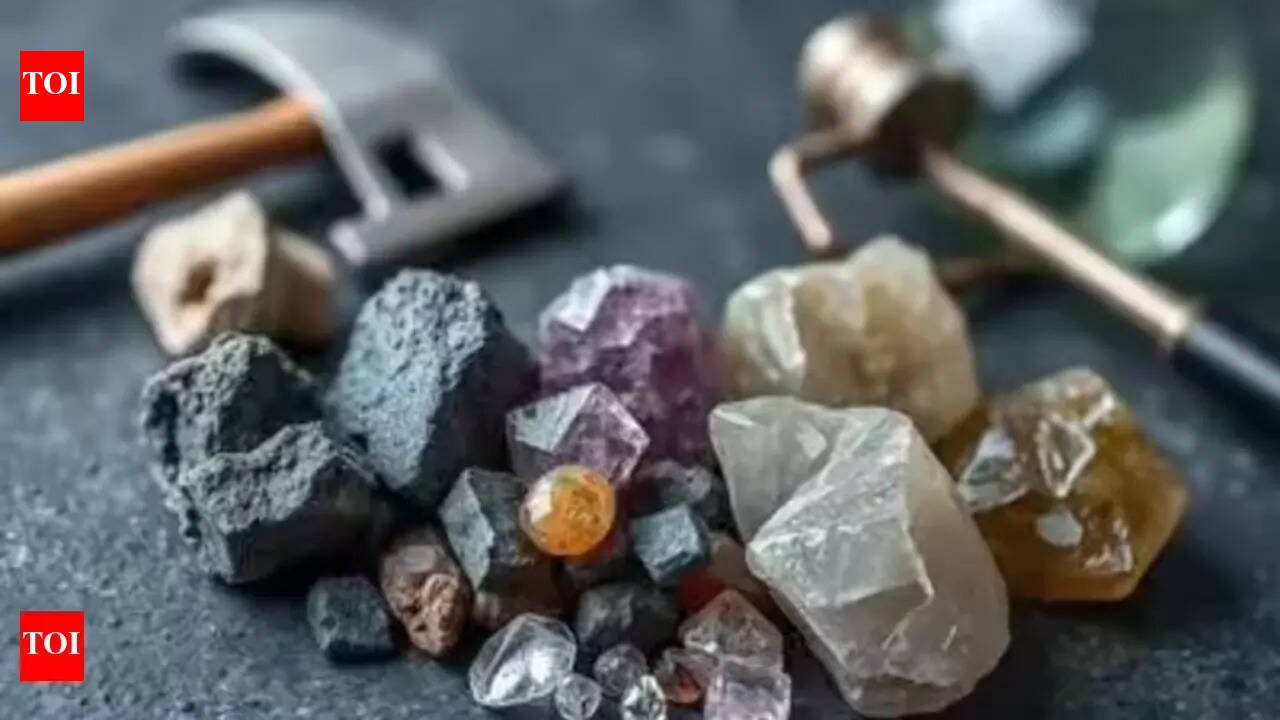
Stressing on the importance of self-reliance, Union Minister of Mines and Coal G Kishan Reddy on Thursday said that India aims to begin domestic production of rare earth permanent magnets by year-end through collaboration with private industry.Reddy stressed on the strategic significance of critical minerals for India’s economic progress and geopolitical standing, urging coordinated efforts to safeguard supply chains.Reddy said the ministry, along with a state-owned enterprise, has developed the required technology to manufacture the magnets. Plans are underway to establish four processing facilities for critical minerals across four different states.According to data from the US Geological Survey, India holds the world’s third-largest rare earth reserves, estimated at 6.9 million tonnes. However, extraction remains limited, largely due to modest private-sector participation and investment.
Importance of critical minerals
Emphasising the broad spectrum of industries reliant on these resources, he pointed out that sectors such as solar power, electric mobility, defence, healthcare, agriculture, aerospace, electronics, medical imaging and nuclear energy all depend fundamentally on minerals like lithium, cobalt, nickel and rare earth elements. He added that ensuring sufficient supplies of materials such as copper presents a significant challenge, not just for India but worldwide, as nations increasingly depend on these inputs.Reddy further observed that India currently imports about 95% of its critical mineral requirements. He acknowledged that addressing this vulnerability is essential for the country’s development, noting that the global value chain for these minerals remains heavily concentrated in a limited number of countries.Some countries have taken over them. Some countries have monopolized them. We will have to work together on such critical minerals, on such critical topics, at such critical times,” he said.Describing the issue as a matter of geopolitical significance, he said critical minerals now feature prominently on the global strategic agenda. According to him, this is a period when the country can emerge as a compelling destination in the global critical minerals ecosystem.He emphasised that achieving this will require collective effort to position India as an attractive hub. The Union Budget 2026-27 proposed the creation of dedicated rare earth corridors in Odisha, Kerala, Andhra Pradesh and Tamil Nadu to support mining, processing, research and the manufacturing of Rare Earth Permanent Magnets (REPMs).In November 2025, the government approved a Rs 7,280 crore scheme for REPM manufacturing, aiming to establish an integrated capacity of 6,000 metric tonnes per annum. The programme includes Rs 6,450 crore in sales-linked incentives over five years and Rs 750 crore as capital support for advanced production facilities.Demand for rare earth permanent magnets in India is projected to double by 2030, yet the country currently relies predominantly on imports to meet its requirements.China dominates nearly 90% of global processing capacity for these magnets and curtailed exports last year, creating supply challenges for automobile manufacturers.


