



CJP Jantar Mantar Protest Updates
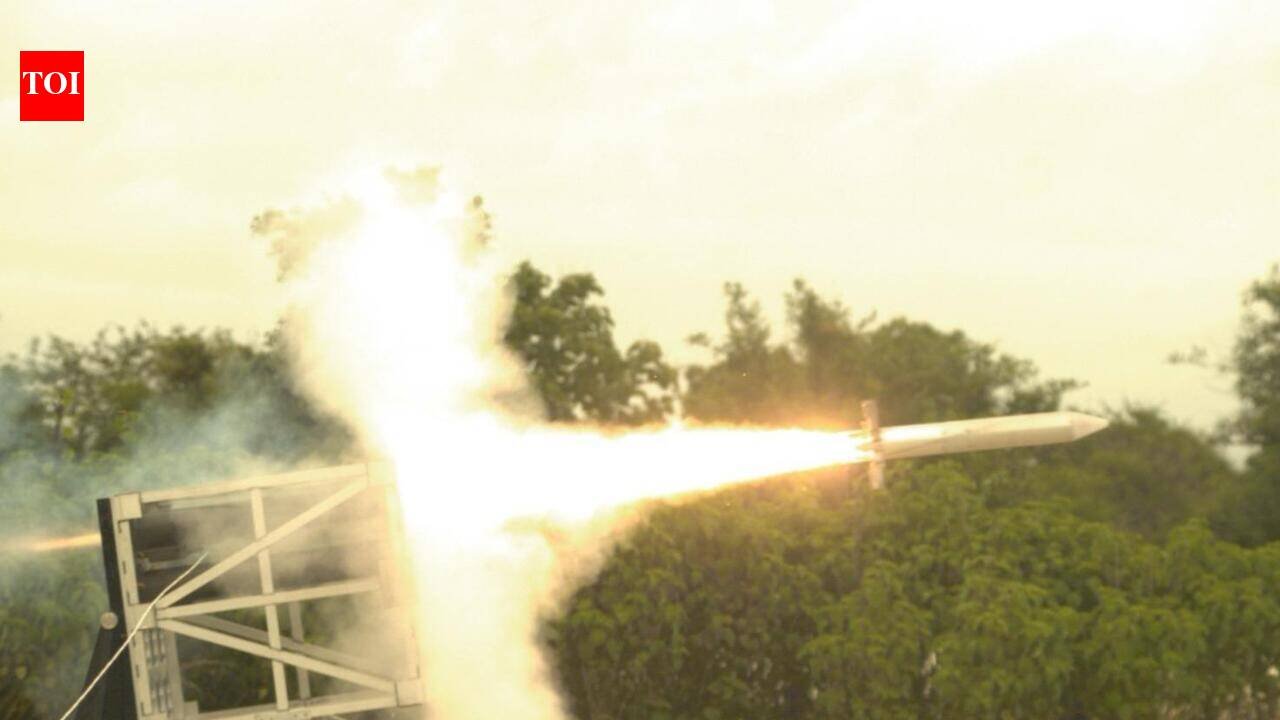
At present, Bhargavastra can engage targets at a range of 2.5 km, meeting the Army’s current requirement. However, SDAL is also working on an enhanced version capable of neutralising threats up to 6 km away. Company chairman Satyanarayan Nuwal said the extended-range variant is expected to be ready within the next couple of months.The system has attracted interest not only from the Army, which has already granted acceptance of necessity (AoN), but also from the Indian Navy and the Indian Air Force. Demonstrations have been conducted for representatives of both services.“Engineered specifically for Indian operational conditions, Bhargavastra can be deployed across deserts, plains and mountainous regions up to 5,000 metres above mean sea level,” the company said in a note. The system integrates a radar capable of detecting unmanned aerial vehicles (UAVs) up to 10 km away, an electro-optical/infrared (EO/IR) surveillance suite and passive radio-frequency sensors.According to the company, these sensors provide multi-layered target detection, tracking and classification, creating a comprehensive air situation picture and enabling operators to engage either individual drones or coordinated drone swarms.On Friday, the system was demonstrated in its full configuration before representatives of the armed forces. During the exercise, a swarm of drones was launched and successfully detected by the radar system. The sensors tracked and identified the targets and zeroed in for the hit.Actual rocket firing was not carried out at the plant due to safety restrictions. However, the demonstration showcased the system’s complete command-and-control capabilities, including situational awareness, threat assessment and drone attack alerts. The entire process, from detection to target acquisition, was completed within seconds, sources said.Officials explained that the radar detects drones based on their radio-frequency signatures, while EO/IR systems provide visual confirmation. The engagement mechanism is designed to strike the centre of a drone swarm, increasing the probability of destroying multiple drones in a single attack. Bhargavastra can operate with both guided and unguided missiles, with the latter following a predetermined trajectory towards the target area.Unlike conventional soft-kill counter-drone systems that rely on jamming or spoofing, Bhargavastra offers a hard-kill solution capable of neutralising autonomous drones that may be resistant to electronic countermeasures.According to the company, “Bhargavastra is believed to be among the world’s first fully integrated, vehicle-mounted, multi-layer counter-swarm drone systems employing unguided rockets and micro-missiles with dedicated swarm-neutralisation capability.”


