






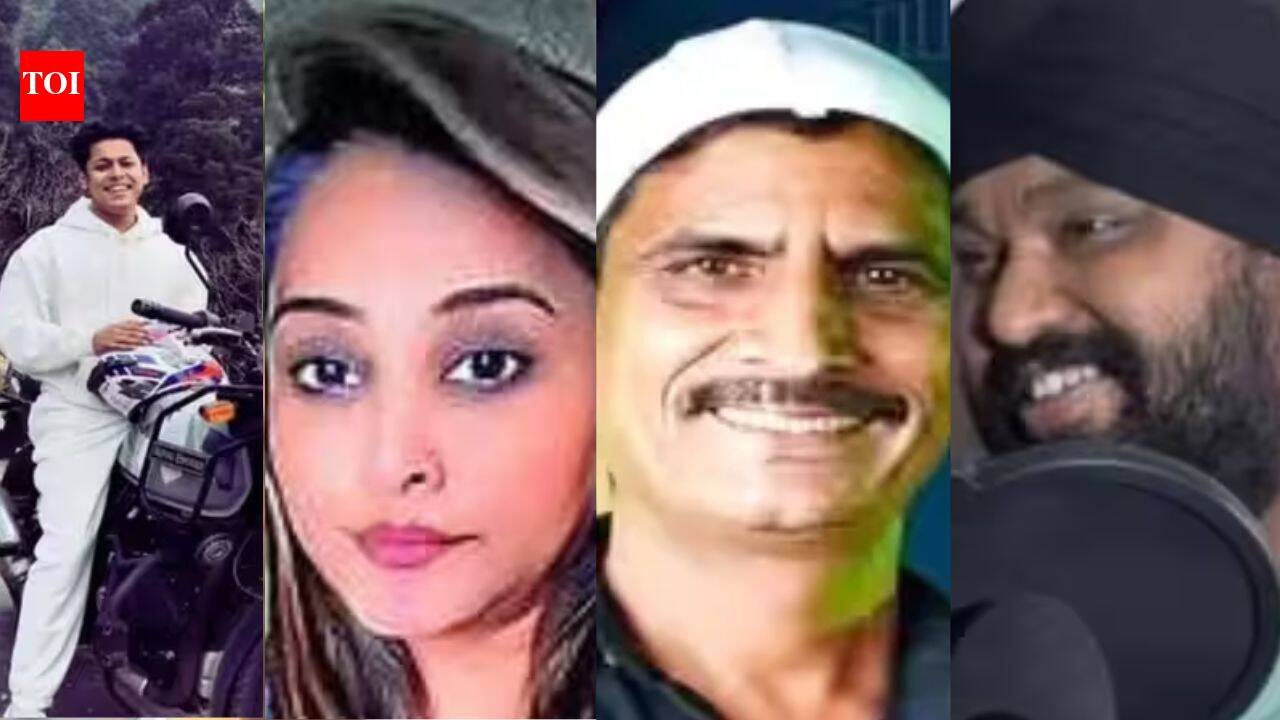
NEW DELHI: The arrest of online personalities has brought allegations ranging from harassment and extortion to sexual offences and a decades-old murder case into focusA video goes viral. Followers increase. An online personality becomes a familiar face, with an audience that can turn a post, an allegation or a confrontation into a widely discussed event.
Salim Wastik jumped bail In 2000, assumed a new identity
But the same digital presence can also become part of a police investigation. In several recent cases, YouTubers and social media influencers have found themselves facing arrest over allegations involving their online activities, personal disputes, alleged intimidation and, in one case, a murder dating back to 1995.
YouTuber targeted riders to boost followers
The circumstances vary sharply. A YouTuber in Delhi was accused of deliberately targeting women riders to create viral videos. In Mumbai, a self-proclaimed influencer was arrested in an alleged extortion case involving claims that insects had been found in paneer. In Gujarat, influencer Kirti Patel was arrested after a part-time YouTuber accused her and her associates of harassment, threats and attempted extortion.In Kolkata, an influencer faced allegations of wrongful confinement, assault and sexual offences. In Tamil Nadu, YouTuber Maridhas was arrested over remarks allegedly directed at chief minister C Joseph Vijay and state ministers.And in a case that reaches far beyond the world of online content, YouTuber Salim Wastik was arrested in connection with a 1995 kidnapping and murder for which he had previously been convicted.Together, these cases illustrate the range of allegations that can bring online personalities into the criminal justice system. They also underline an important distinction: an arrest marks a stage in legal proceedings, not, by itself, proof of guilt.A Crash, A Camera And A ‘Sorry Didi’: When Likes Lead To Legal TroubleIn Delhi, police arrested 32-year-old YouTuber Gurman Singh, also known as Road Safety Wala, in June 2026 over allegations that he deliberately targeted women riders and minor girls to generate viral content.According to the TOI report, the investigation followed a complaint by a resident of Raja Garden. The complainant alleged that two men on a motorcycle rammed his minor daughters’ scooter from behind on June 2, followed them and made inappropriate remarks and used abusive language.The family later discovered videos featuring the girls on social media and a webpage.Police examined Singh’s social media accounts and found videos allegedly featuring women riders and minor girls. Investigators said his YouTube channel had around 21,000 followers, while another social media account had approximately 2.1 lakh followers.During interrogation, Singh allegedly told police that he made such videos to increase his following, attract online engagement and earn money through monetisation. Police also alleged that he deliberately targeted women riders and used the phrase “Sorry Didi” to avoid suspicion after hitting their vehicles.A mobile phone was seized as part of the investigation, and police said action had been initiated to take down the alleged accounts. An FIR was registered under provisions of the Bharatiya Nyaya Sanhita and the POCSO Act.The case raises questions about the boundaries between online entertainment and conduct that allegedly puts people at risk. The central issue for investigators was not simply what appeared in the videos, but whether the incidents depicted were deliberately engineered and whether the women and girls featured had been targeted without their consent.Rs 2 Lakh A Month To Remove Reel? How A Paneer Complaint Turned Into An Extortion CaseIn Mumbai, a dispute over a claim involving paneer led to an investigation into alleged extortion.The crime branch arrested self-proclaimed social media influencer Randeep Singh Gujral in June 2026 over allegations that he tried to extort money from Amandeep Behl, who runs Punjabi Paneer in Mulund West.According to the TOI report, Gujral had claimed that insects were found in the vendor’s product. Police said the complaint led to visits by police personnel and civic officials, who issued notices and temporarily shut the establishment.Behl later found a reel published by a media outlet that allegedly damaged the business’s reputation. Investigators said Gujral then sought money to settle the matter with the media outlet and civic authorities.Police alleged that Behl was directed to Ajish Pannikar, who was linked to the media outlet and allegedly demanded Rs 2 lakh per month for six months to remove the video and help restore the shop’s reputation.According to investigators, Gujral, his son Harbinder Singh Gujral and his wife, Arvi Randeep, allegedly negotiated a settlement of Rs 2.85 lakh. Behl transferred Rs 56,000 before the police laid a trap.The report identified Randeep as the accused influencer and said his son was absconding at the time, while his wife had been detained and later served a notice to join the investigation. Pannikar was also reported to be absconding.Rape Case Threat, Rs 20 Lakh Demand And A Desperate Cry For HelpIn Gujarat, social media personality Kirti Patel was arrested in Udaipur, Rajasthan, in February 2026 in a case involving allegations of harassment, attempted extortion and criminal intimidation.The complaint was filed by Abjal Sida, a 27-year-old labourer and part-time YouTuber from Junagadh. Sida alleged that Patel and her associates demanded Rs 20 lakh and threatened to falsely implicate him in a criminal case, including a rape charge, if he did not comply.According to the TOI report, the dispute began after Sida uploaded videos criticising Patel’s conduct at a religious fair during Shivratri. He alleged that Patel and her associates subsequently contacted him through calls and Instagram messages, abused him and pressured him to remove the videos.Sida reportedly consumed phenyl at his residence and later near the Jetpur railway bridge. A woman noticed him near the bridge and rushed him to Jetpur Government Hospital.Junagadh rural police traced Patel to Udaipur and arrested her on February 22. She was produced before a court, which granted one-day police remand for further investigation.Police also said two other cases had been registered against Patel at Bhavnath police station and that at least three complaints had been lodged against her in Junagadh district within a week.Investigators said they wanted to establish whether extortion money had been collected, trace other accused and identify people who may have sheltered Patel while she was absconding.The case illustrates how disputes over online criticism can move beyond social media and into allegations of intimidation and financial demands. However, the accusations made in the complaint remain allegations to be examined through the legal process.‘Compromising Photos, Threats’: Kolkata Influencer Faces Rape ChargeIn Kolkata, social media influencer Shamik Adhikary, 25, was arrested in February 2026 in connection with allegations of wrongful confinement, assault and sexual offences involving a 22-year-old woman who identified him as her friend.Police added a rape charge after the woman submitted a further complaint alleging that Adhikary had sexually assaulted her without consent on February 3. The woman’s statement was recorded by a woman police officer, according to the TOI report.The police told the court that the complainant had undergone a medico-legal examination at MR Bangur Hospital.Investigators also said they had verified Adhikary’s presence through phone tower location data and confirmed the woman’s presence at the place mentioned in her complaint.Police further alleged that Adhikary had told investigators he possessed compromising photographs of the woman and had used them to threaten her during the incident.The defence disputed the allegations, saying the two had known each other for a long time and describing the events as a misunderstanding. It denied that Adhikary had attempted to force himself on the woman and questioned the need for police remand.Adhikary was produced before a court and remanded in police custody until February 16.The case is distinct from disputes over viral content or monetisation. It centres on allegations of violence and sexual offences, with investigators relying on the complainant’s statement, medical examination and other evidence as they pursued the case.Salim Wastik: From A Schoolboy’s Disappearance To A 2026 ArrestThe case involving YouTuber Salim Wastik stands apart from the others because it concerns an old murder conviction rather than allegations arising primarily from online activity.Delhi Police’s Crime Branch arrested Wastik in April 2026 in connection with the kidnapping and murder of 13-year-old Sandeep Bansal in January 1995.According to TOI, Sandeep, the son of a cement businessman, disappeared on January 20 while travelling to attend classes at Ramjas School in Daryaganj. The following day, his father, Sita Ram, received ransom demands totalling Rs 30,000.Police suspicion fell on Salim Khan, then a martial arts instructor at the school. Investigators said a neighbour had reported seeing the boy leave in a rickshaw with a tall man known as Masterji.According to the report, Khan confessed during interrogation and led investigators to a drain in Mustafabad, where the boy’s body was recovered. His alleged accomplice, Anil, later surrendered. Both men were sentenced to life imprisonment in 1997.The case took another turn in 2000, when the Delhi High Court granted Khan interim bail. He subsequently remained beyond the reach of police for years.In the intervening period, he became known publicly as Salim Wastik, a YouTuber and social activist. In February 2026, he survived a stabbing at his office in Loni, Ghaziabad, suffering multiple injuries to his neck and abdomen. The attack was linked in the report to his religious commentary.After Wastik recovered, the Crime Branch arrested him in connection with the old case. TOI reported that he was returned to Tihar Jail to serve the remainder of his life sentence.Unlike the other cases, this was not simply an arrest following a fresh complaint: the reported proceedings were connected to a prior conviction and his subsequent disappearance.YouTuber Arrested Over Remarks Against Tamil Nadu CMIn Tamil Nadu, YouTuber Maridhas was arrested by the Cyber Crime Wing in Madurai on June 8, 2026, in connection with a case over remarks allegedly made about Chief Minister C Joseph Vijay and certain state ministers during a YouTube interview.According to the TOI report, cybercrime police registered a case after examining the online content. Police traced Maridhas to his residence in Madurai and arrested him before bringing him to Chennai for further proceedings.He was produced before a magistrate and remanded in judicial custody. Police also seized his mobile phone and laptop for examination as part of the investigation.The arrest drew political criticism.AIADMK general secretary Edappadi K Palaniswami, BJP leader Tamilisai Soundararajan and NTK leader Seeman described the arrest as unwarranted and said it reflected intolerance towards criticism by the Tamil Nadu government.The case brings another dimension to the relationship between online influence and the law: the scrutiny of statements made on digital platforms, particularly those concerning elected representatives and public officials.The investigation was intended to determine the nature of the remarks and whether they attracted offences under the relevant legal provisions. The arrest itself does not establish that the alleged remarks constituted a crime.The Line Between Online Popularity And AccountabilityThese cases differ in their facts, allegations and legal status. Some concern videos allegedly made to attract attention; others involve claims of intimidation, demands for money or serious offences against individuals. The Wastik case, meanwhile, concerns a decades-old murder conviction.What connects them is the role of public visibility. Social media accounts, uploaded videos, messages and digital devices have featured in several of the investigations, either as the source of a dispute or as material examined by police.Online popularity can expand a person’s reach, but it does not place their conduct beyond legal scrutiny.The larger question is not whether influencers or YouTubers should be judged differently from others. It is whether the same legal standards of evidence, accountability and due process are applied, regardless of how many people follow them online.As these cases proceed, the distinction between a viral controversy and a criminal offence will ultimately depend on evidence and the outcome of the legal process.


