






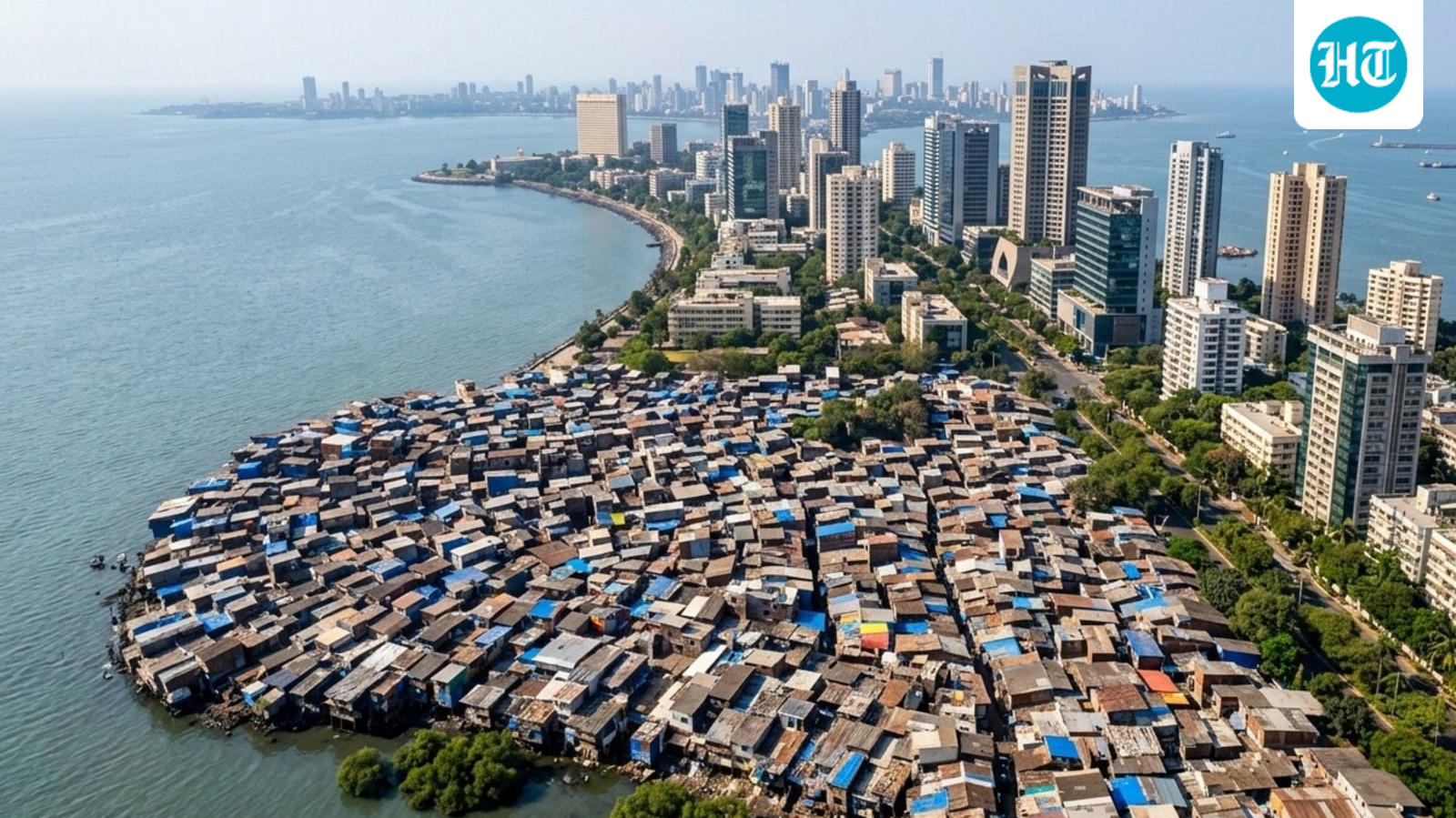
Maharashtra Chief Minister Devendra Fadnavis’ assertion that Mumbai can become 100% slum-free within the next 10 years experts said is not merely a housing target, it signals a potentially significant change in how the city’s redevelopment and land resources could be planned.

Fadnavis, while speaking at a NAREDCO Maharashtra event last week said the government would use a cluster-based redevelopment approach, alongside the redevelopment of Dharavi and other large land parcels, to transform informal settlements and older urban areas.
What is cluster redevelopment?
Cluster development is an urban redevelopment approach in which multiple adjoining buildings or plots are combined into a single large project. It enables better planning, improved infrastructure, wider roads, open spaces, and amenities, while supporting the rehabilitation of existing residents and more efficient land use in crowded cities.
Examples of cluster redevelopment in the Mumbai real estate market include MHADA layouts such as Motilal Nagar (Goregaon), Abhyudaya Nagar (Parel), Adarsh Nagar (Worli), Bandra Reclamation, and GTB Nagar (Sion), as well as Kamathipura. Several private housing societies also undergo cluster redevelopment.
Under the Maharashtra Housing and Area Development Authority (MHADA)’s Construction and Development Agency (C&DA) system, developers are appointed to redevelop entire housing clusters while eligible residents receive rehabilitation apartments, transit rent compensation and corpus funds. MHADA has said the objective of these projects is to improve residents’ quality of life through planned urban development and modern infrastructure.
At present, MHADA is undertaking 11 major redevelopment projects under the Construction and Development Agency (C&DA) model across nearly 925 acres in Mumbai. According to the authority, these projects are expected to benefit more than 80,000 residents living in ageing colonies constructed decades ago. Along with MHADA, the slum rehabilitation authority (SRA) has also identified slum clusters in the Mumbai real estate market, which will be taken up for redevelopment.
So, what does ‘slum-free Mumbai’ mean in practical terms?
According to experts, it does not necessarily mean that every existing slum structure will simply disappear. The broader idea is to replace informal settlements with planned housing and infrastructure, while rehabilitating eligible residents in formal homes. Under the cluster model, instead of redeveloping individual buildings or small plots in isolation, larger adjoining pockets can be planned together. This allows roads, open spaces, utilities, social infrastructure and housing to be designed as part of one integrated development rather than being added piecemeal.
Fadnavis said the government was now moving ahead with a cluster-based redevelopment model for Mumbai, aimed at transforming areas that were largely developed decades ago and have since become increasingly constrained by ageing buildings, informal settlements and inadequate use of land.
“We want to enter Mumbai’s development in a big way. I am very confident that with the measures we have taken, we will make Mumbai slum-free in the next 10 years,” Fadnavis said at the event.
The chief minister said redevelopment would not be restricted to residential construction. The government plans mixed-use developments on prime land, including commercial spaces, museums, playgrounds and recreational areas, while also creating better transport infrastructure.
Also Read: What is driving the growing interest of large corporates in Mumbai’s cluster redevelopment projects?
Dharavi will be the start towards slum free Mumbai?
Dharavi is expected to be a major test case for this strategy. The chief minister has set a target of having the first 10,000 rehabilitation homes ready by early 2029. Eligible residents under the Dharavi redevelopment project are expected to receive 350 sq ft homes in situ, while those found ineligible for in-situ rehabilitation will be housed elsewhere in Mumbai. The redevelopment is spread across about 300 acres and is expected to affect a large residential and commercial ecosystem.
Experts said successful execution could create a substantial pipeline of redevelopment projects for Mumbai’s real estate market and increase the supply of formal housing. However, the 10-year ambition will depend heavily on rehabilitation, resident consent and eligibility, financing, clearances, land ownership and timely execution.
“Slum-free Mumbai is less about eliminating settlements and more about undertaking one of the city’s largest housing and urban redevelopment exercises in a coordinated manner. A lot on making Mumbai slum free will depend on economic stability domestically and globally, along with market factors like demand and supply of properties. Realistically speaking, we can aim for minimal slum presence in the city, however, in the long run, slum presence should be going down with the help of upcoming slum rehabilitation projects,” a developer not wishing to be named said.
Slums cover 24% of Mumbai’s land, house over half its population
Slums now occupy nearly 24% of Mumbai’s land and house more than half of its population, according to data from the Slum Rehabilitation Authority (SRA).
Around 2,156 acres of Mumbai’s slum land have ongoing redevelopment projects. This includes 1,202 slum projects in which 3.21 lakh families reside, according to a Hindustan Times report.
Along with this, 607 slum projects are proposed, housing 2.85 lakh families spread across 1,015 acres. On the other hand, slum projects covering about 595 acres have stalled due to legal, financial or administrative hurdles. This includes a total of 271 projects where over 89,000 families reside, according to the report.
Between 1995 and 2026, as many as 631 slum projects spread across 556 acres rehabilitated 2.94 lakh families. According to data released by Knight Frank India in September 2025, Mumbai’s population is 13.4 million, and the city’s land area is 437 sq km, with a density of 30,600 per sq km.
What is the Slum Rehabilitation Authority?
The SRA is a government body responsible for implementing slum redevelopment projects in Maharashtra. Established in 1995, it enables private developers to provide free housing to slum dwellers while allowing them to build and sell additional apartments on the same land to recover project costs. Instead of rehabilitating slum dwellers, developers obtain additional construction rights, enabling them to build more flats for sale on the open market.


