



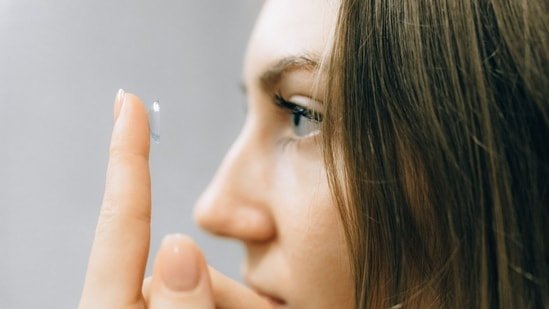
If you wear contact lenses, drifting off for a quick nap without taking them out might seem harmless. After all, it’s only a few minutes. But even a short snooze can increase your risk of eye complications. There’s a reason eye care experts repeatedly advise against sleeping in your contacts. What may seem like a minor convenience is a habit worth breaking, especially if you want to protect your eyes and preserve your vision in the long run.
Dr Kunal Sood, an anaesthesiologist and interventional pain medicine physician, is explaining why sleeping with your contact lenses on is a habit you should avoid. In an Instagram video shared on July 13, he outlines the risks of improper contact lens use, including potentially serious eye infections, and shares simple steps to help protect your vision.
What happens when you sleep with contact lenses on?
According to Dr Sood, sleeping with your contact lenses on can significantly increase the risk of serious corneal infections, some of which may even threaten your vision. He explains that contact lenses naturally reduce the amount of oxygen reaching the cornea, which relies on a steady oxygen supply to remain healthy. Wearing them while you sleep further restricts this oxygen flow, weakening the eye’s protective surface and creating an environment where harmful bacteria are more likely to cause an infection.
The physician notes, “Sleeping in contact lenses does increase the risk of serious corneal infections that can sometimes threaten vision. Your cornea, which is a clear front surface of the eye, depends on oxygen from the air to stay healthy. Contact lenses reduce some of that oxygen flow during the day, and sleeping in them reduces it even further. That combination can weaken the surface of the eye and make it easier for bacteria to cause a serious infection.”
The biggest concern
Dr Sood says one of the most serious complications of improper contact lens use is microbial keratitis, a bacterial infection that can sometimes progress to painful corneal ulcers. In severe cases, these ulcers may leave permanent scarring, leading to lasting vision impairment. He adds that even occasionally falling asleep while wearing contacts can significantly increase the chances of developing these complications.
He explains, “One of the biggest concerns is a condition called microbial keratitis, which is an infection on the cornea that can sometimes progress to a corneal ulcer. In severe cases, corneal ulcers can lead to permanent scarring and affect vision. The risk increases even if sleeping in contacts only happens occasionally.”
How to prevent complications?
The physician emphasises that the good news is most of these complications are preventable with proper contact lens hygiene. He recommends always removing your lenses before going to sleep – even if it’s just for a short nap. Dr Sood also advises seeking prompt medical attention if you experience eye pain, redness, light sensitivity or any changes in your vision.
He highlights, “The good news is that most of these complications are preventable. Removing contact lenses before sleeping or napping, practicing good lens hygiene, and seeking care early for redness, pain, light sensitivity, or blurred vision can dramatically reduce the risk. Contact lenses are generally very safe when used correctly, but your eyes were never designed to sleep with them in.”
Note to readers: This article is for informational purposes only and not a substitute for professional medical advice. It is based on user-generated content from social media. HT.com has not independently verified the claims and does not endorse them.
Dr Kunal Sood, MD, is a double board-certified physician in Anesthesiology and Interventional Pain Medicine. He did his residency and fellowship in anesthesiology at Wayne State University in Detroit, Michigan, followed by a one-year fellowship in interventional pain medicine. He later became the Medical Director of the office in Germantown, Maryland.


