



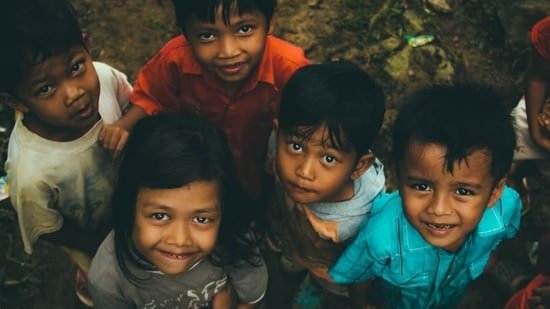
In Bangalore, a ten-year-old named Kripa was asked what play means to her. She didn’t reach for a formal definition; instead, she said that when she plays, she feels free like a bird. That single line captures the essence of Voices of Play: A National Play Manifesto, which is built not from adult theories about childhood, but from the words of children themselves. This effort is India’s first-ever attempt to create a manifesto on play entirely by children and for children.
The manifesto originated from an unusual experiment. Twenty-two organisations across ten states posed a single question to more than 4,000 children: What does play mean to you? The children responded in their own ways — through drawings and songs, neighbourhood maps and skits, poems scribbled between rounds of street games, letters passed during games of Ghor-Ghor and Vish Amrit. Their answers came in English, Hindi, Marathi, Assamese, Odia, and every other language of their expression. No one conducted a survey. No one softened the children’s answers into adult-friendly conclusions. The result is a document with a straightforward honesty, organised into six themes the children clearly articulated: We play, we play here, we don’t like, we want, we promise, and we dream of.
The children’s demands, collected for the manifesto under “we want,” are modest and specific. An eight-year-old requested two-and-a-half hours of play. Others asked for dedicated playtime “just like study time,” separate spaces for younger and older children, clean toilets, safe drinking water at the playground, and grounds free of pits or holes. One simply wished that everyone could play together and enjoy any game they choose.
What’s even more remarkable is what the children did not say. None of them described play as leisure. None asked for permission to do nothing. They described play as the condition in which they feel free, connected, and true to themselves. A seven-year-old said that on the swings, it feels like flying and nothing can stop her. Another mentioned that the playground is the only place she can be herself without worry. Several spoke about friendship, belonging, and a sadness that lifts when a game begins.
They were just as frank about what blocks their way. “At school, PT is on the timetable, but they don’t actually let us play,” one child reported. A girl shared a harsher truth: She’s told she’s a big girl now and must not play, and that it hurts. Others recounted being scolded by neighbours, shooed indoors during the heat, kept off the streets because of stray dogs, or warned that a girl who plays outside has “become spoilt.” For these children, the obstacle isn’t a lack of interest. It’s the adults and the shrinking spaces around them.
That shrinkage is measurable. In Mumbai, there is just over one square metre of accessible open space per person and in Chennai, it is even less. While Bengaluru fares better at 17.32 square metres of open space per person, it is far less in comparison to global megacities like London and New York at 31.68 square metres and 26.4 square metres, respectively. Meanwhile, India’s private tutoring market has exceeded four billion dollars — a vivid illustration of where adult priorities and money are flowing. The pressure is intense in cities like Bengaluru, where one early-childhood organisation working there describes families navigating a fast-paced, achievement-driven environment in which childhood is treated as a race to be won.
There’s urgency to all this. In January 2026, India’s Economic Survey described compulsive scrolling as a “silent scourge” and highlighted digital addiction as an emerging public health threat, particularly among children. The tangible investment of time and space in the real world precisely shapes the young brain’s structure for attention, emotional regulation, and learning from failure, and play is essential for building that structure.
The children in the manifesto already know what they need. As Kripa put it, they want to feel free like a bird. The open question is whether the adults around them are finally ready to listen and are willing to provide public spaces for children to thrive and play.
(The views expressed are personal)
This article is authored by Deepika Mogilishetty, chief of policy and partnerships, EkStep Foundation.


