



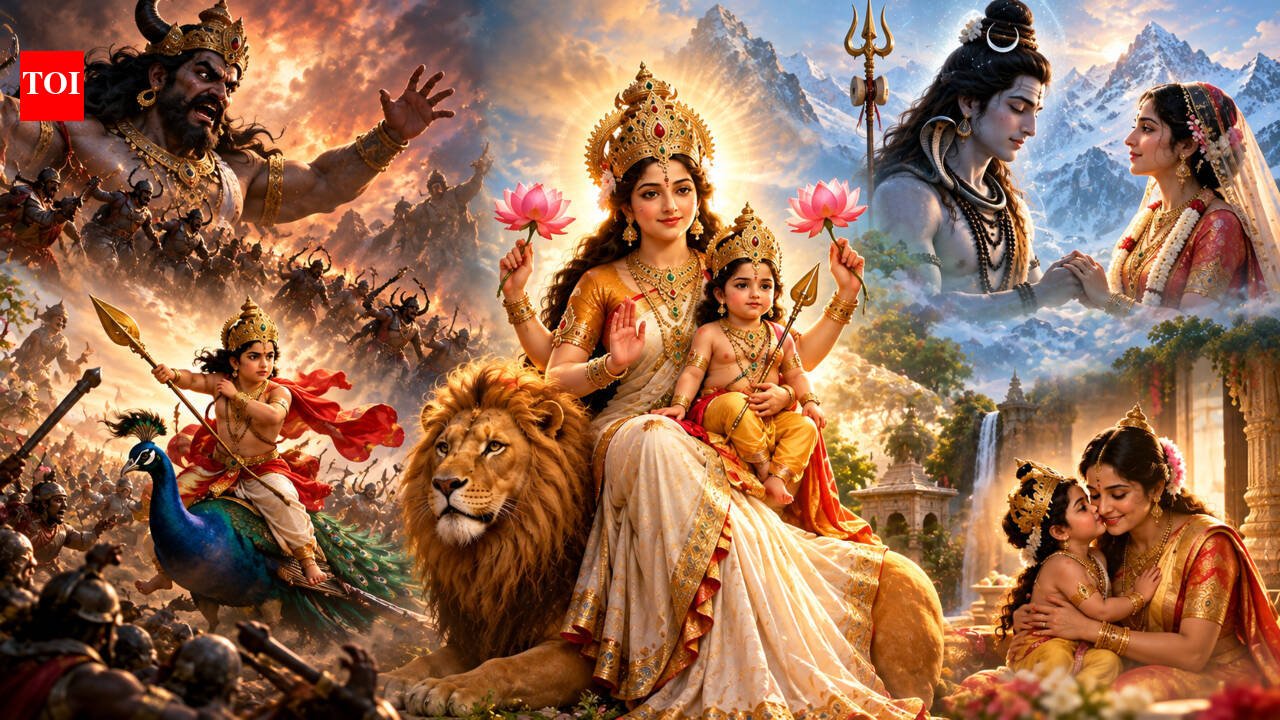
Tarakasura asked for a death that, as far as he could tell, could never come. After performing intense tapasya (austerity) to please Lord Brahma, he was denied outright immortality, so he sought a loophole instead. He could be killed, he declared, only by a son of Lord Shiva.
Why the Boon Looked Like a Fortress
To the demon, the condition seemed airtight. Shiva was a detached ascetic, still grieving his consort Sati, who had immolated herself. A man in mourning who had renounced the world would not marry, and a man who did not marry would have no sons. In Puranic accounts, including versions of the story associated with the Shiva Purana, Tarakasura believed he had named a slayer who would never exist.For a time, the trick appeared to work. Tarakasura grew bolder, and the harm he caused did not remain confined to one place. It spread across the worlds, unsettling the very order of life.
The Turning Point Was a Marriage
The answer came quietly. Parvati was born to the king of the Himalayas, married Shiva, and began a household where the demon had expected none to exist. This detail carries the heart of the story because Tarakasura’s confidence rested on Shiva remaining detached forever. A marriage undid his certainty.In 2026, Panchami, the fifth tithi (lunar day) of Sharad Navratri, falls on Thursday, 15 October. On this day, devotees worship Parvati in her form as Skandamata, a name meaning “mother of Skanda.”
She Never Takes Up the Sword
Skandamata gave birth to Kartikeya, also known as Skanda or Kumara. Some traditions associate him with Mars, although this connection varies across sources. What remains central to the story is how her power is expressed. She does not ride into battle herself. Instead, she brings forth a great divine force and sends her son to lead the gods against Tarakasura, fulfilling the condition of Brahma’s boon exactly as foretold.Her strength is the kind that gives life and sends it forth into the world—tender and transformative at once.
What the Lotuses and the Lion Say Together
Her image tells the same story without words. She has four hands: two hold lotuses, the third is raised in Varada Mudra, the gesture of granting blessings, and the fourth cradles the infant Kartikeya. Beneath her sits a lion, fierce and ready.The calm of her face and the power of the beast are not meant to contradict each other. They coexist in a single image, expressing a simple philosophy: immense power and nurturing grace can belong together.This autumn, with the monsoon receding and the skies beginning to clear, her image is worth holding in the mind for a while: the two lotuses, the raised hand, the child in her arms and the lion below.
Where the Worship Really Happens
Skandamata represents motherhood, compassion, love and protection. Devotees often take these qualities as a reminder to express gratitude towards parents, elders, teachers and everyone who supported them before they could stand on their own.The greatest act of worship, many believe, does not always happen inside a temple. Sometimes, it lies in how gently you speak to your mother this evening, and whether the people gathered around your table feel respected when the meal is over.
