



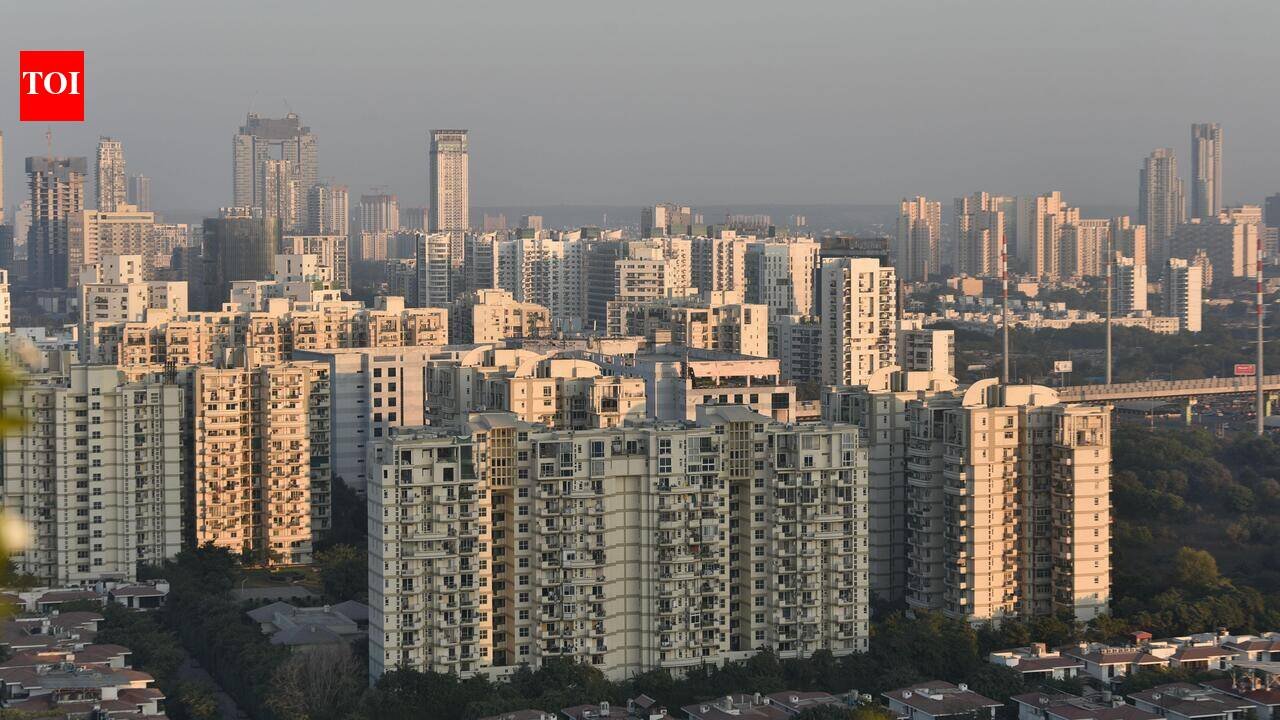
Gurgaon: Chief minister Nayab Singh Saini has directed power distribution companies to frame clear norms for electricity billing in Gurgaon’s group housing societies, following complaints that residents are being charged above the rates approved by the regulator.Saini, after a meeting with discom officials on Tuesday, asked senior power officials to meet resident welfare associations (RWAs), formulate appropriate norms and ensure residents are not inconvenienced. He also asked them to frame an effective policy for complaints about incorrect bills, with grievances registered through helplines and resolved promptly.“CM has expressed concern over increasing complaints from group housing societies about overcharging for power consumption and asked to formulate a policy,” said a senior discom official.The intervention comes as Haryana Electricity Regulatory Commission (HERC) steps up scrutiny of billing practices. In an order dated Oct 8, the commission directed a comprehensive audit of electricity bills at ATS Triumph in Sector 104, where more than 300 flats are occupied, from May 2019. It ordered the developer and associated entities to refund any excess charges the audit establishes. The audit will be supervised by Dakshin Haryana Bijli Vitran Nigam (DHBVN), and the final refund amount is yet to be determined. The commission also held DHBVN accountable for failing to enforce electricity infrastructure and billing requirements at the society.Many residential complexes receive electricity through a single-point connection. DHBVN prepares one bill for the entire society, and the developer or RWA, which provides a branch-out connection, bills individual flat owners. Gurgaon has 502 such connections, serving townships, condominiums and colonies. Disputes can arise over the application of domestic and non-domestic tariffs, common-area consumption, rebates and the reconciliation of meter readings.The problem is not new. DHBVN had issued instructions reiterating that builders and RWAs could not charge occupants more than the approved rates. The instructions also provided for undertakings from such entities and periodic verification by field officials. HERC has passed a few orders against tariff violations in the last one year. Yet complaints have continued, raising questions about enforcement and the transparency of billing in large complexes.In 2022, DHBVN introduced a unified billing system for single-point connections to check excess billing and violations of HERC tariffs. Under it, bills were to be generated through software created by the discom, and residents were expected to get relief from paying more than the approved tariff and more than they consume. The system has not been implemented to date.HERC launched a suo motu inquiry in Sept into what it described as “deliberate, continuous, and systemic non-compliance” with rules governing electricity supply to group housing societies, including implementation of the unified billing system. It has also initiated proceedings over alleged non-compliance with its single-point supply regulations.Separately, the chief minister directed officials to expedite the installation of an additional transformer at the 220kV substation in Sector 57, construction of a boundary wall at the Sector 38 power house, and infrastructure work at substations in Gharaunda, Nangal Chaudhary, Malikpur and Manesar. He stressed that uninterrupted supply must be ensured to industries in Faridabad, a major industrial hub.
